The genetics technician faces a highly complex environment where exposure to pathogenic biological agents, mutagenic chemicals, and sharp materials is constant. Needle sticks, glass breakage, and UV radiation from transilluminators add to the stress of precision and postural fatigue. We analyze how 3D simulation and digital twins are transforming the prevention of these risks. 🧬
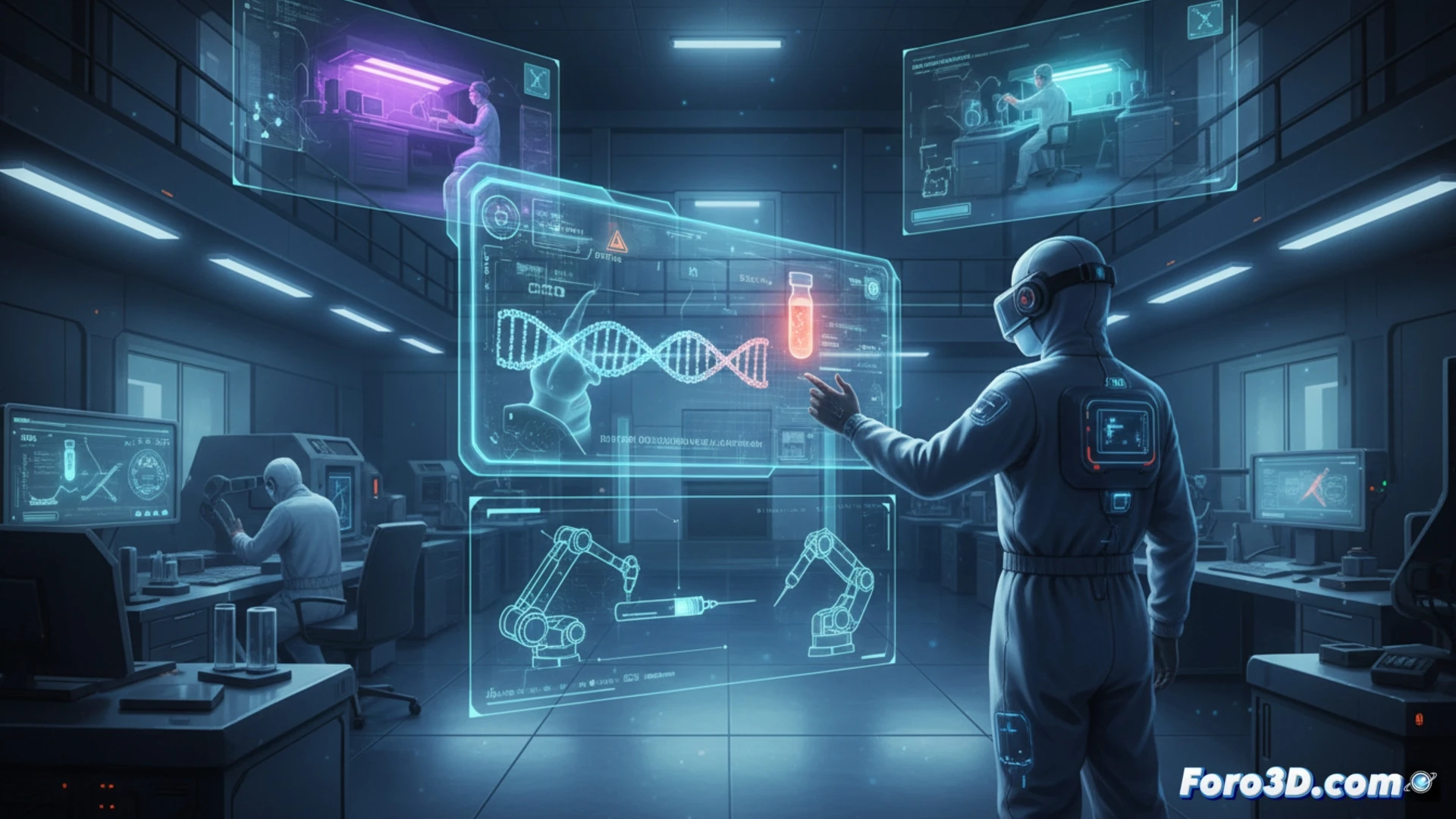
Digital twins and simulations for biosafety protocols 🛡️
3D modeling technology allows for digitally recreating the laboratory and its equipment, from biosafety cabinets to UV radiation sources. Through interactive simulations, the technician can practice handling infectious samples or opening corrosive reagent ampoules without real danger. Visualization of airflow and cross-contamination zones in virtual environments helps design safer workflows. Additionally, digital twins of electrical equipment allow for identifying hot spots or shock risks before physical intervention, reducing accidents due to inadequate maintenance.
Ergonomic prevention and immersive training against fatigue 🧘
Forced postures and visual fatigue from microscopy or repetitive pipetting are chronic risks. Virtual reality applied to ergonomics allows for analyzing the technician's biomechanics in 3D, adjusting bench heights or screen positions before installation. Immersive training in handling broken glass or chemical spills, recreated with realistic physics, prepares the professional to react calmly in emergencies. Integrating these 3D tools into training not only reduces accident rates but also decreases precision stress by automating the practice of critical protocols.
How can 3D printing of customized biological containment devices minimize the risk of pathogen exposure in gene editing procedures?
(PS: If you print a heart in 3D, make sure it beats... or at least doesn't cause copyright issues.)