For years, it was repeated that thirst was a late indicator of dehydration, a sign that we had already failed. But current science debunks this myth. Feeling thirsty is not an emergency alarm, but a precise navigation system that our body activates to maintain water balance. Trusting it is more effective than following rigid consumption rules.
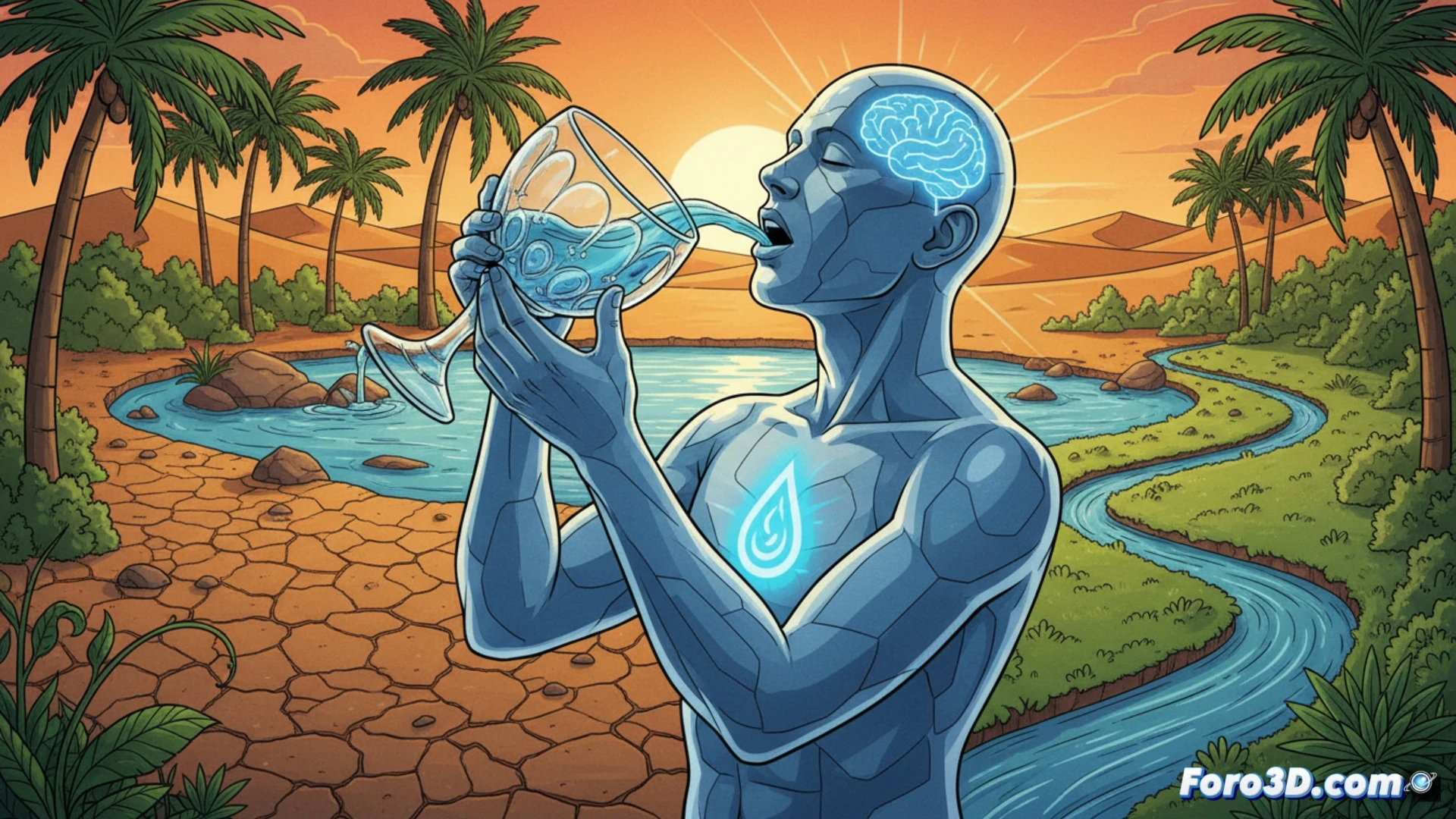
The biological algorithm of hydration 💧
The thirst mechanism operates through sensors in the hypothalamus that detect changes in plasma osmolality and blood volume. When sodium concentration rises by 2%, the signal is triggered. This system, perfected by evolution, is faster and more accurate than any reminder app. Recent studies show that drinking according to thirst maintains cognitive function and physical performance without risks of overhydration, something that fixed guidelines fail to achieve.
The myth of eight glasses and the water guru 🚰
So forget that 2-liter bottle you carry around like a penitent. Your body is neither a cactus nor an aquarium fish. If you are thirsty, drink. If not, don't force the swallow. Next time someone tells you that you are already dehydrated because your mouth is dry, remember: it's your operating system working, not a breakdown. And if your fitness app scolds you, tell it to hydrate itself.