The court clerk faces a lethal combination of stress from procedural deadlines, forced postures, and visual fatigue. From Foro3D.com, we propose visualizing these risks through three-dimensional graphics that simulate the judicial office environment. Modeling anxiety flows, regulatory burden maps, and static postures allows identifying critical points to implement improvements in occupational compliance and prevention.
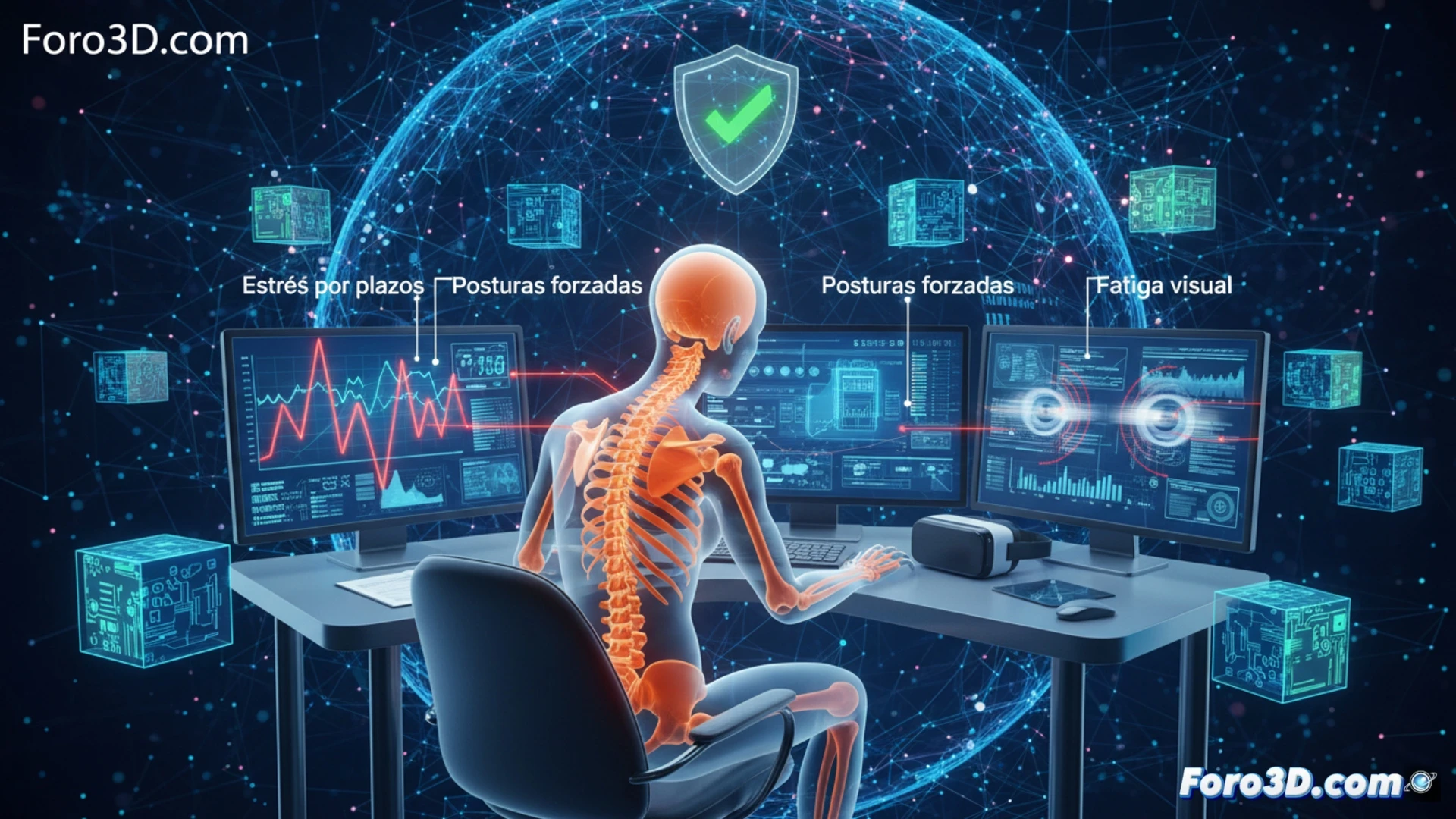
3D simulation of psychosocial and ergonomic risks 🖥️
We can digitally recreate the clerk's workspace: a desk cluttered with case files, a computer screen with procedural management windows open, and a clock marking deadlines. In the simulation, stress factors are represented as deep red nodes that grow as deadlines approach. Simultaneously, a human avatar shows in real time the muscle tension in the neck and shoulders from maintaining forced postures for hours. This 3D model allows anticipating musculoskeletal disorders and proposing ergonomic adjustments validated through visual data.
Digital compliance as a preventive shield 🛡️
The simulation not only diagnoses but also projects solutions. By integrating regulatory risk maps into the 3D model, the court clerk can visualize how mental overload and verbal aggression increase the likelihood of procedural non-compliance. Implementing virtual active breaks, redesigning the layout of judicial furniture, or creating visual fatigue alerts are measures that digital compliance can validate before applying them in real courtrooms.
As a director of digital compliance in the judicial sector, what 3D ergonomics and procedural deadline management strategies would you recommend to mitigate the stress and visual fatigue of the court clerk without compromising the legal security of electronic case files?
(PS: complying with the law is like modeling in 3D: there is always a polygon (or an article) that you forget)