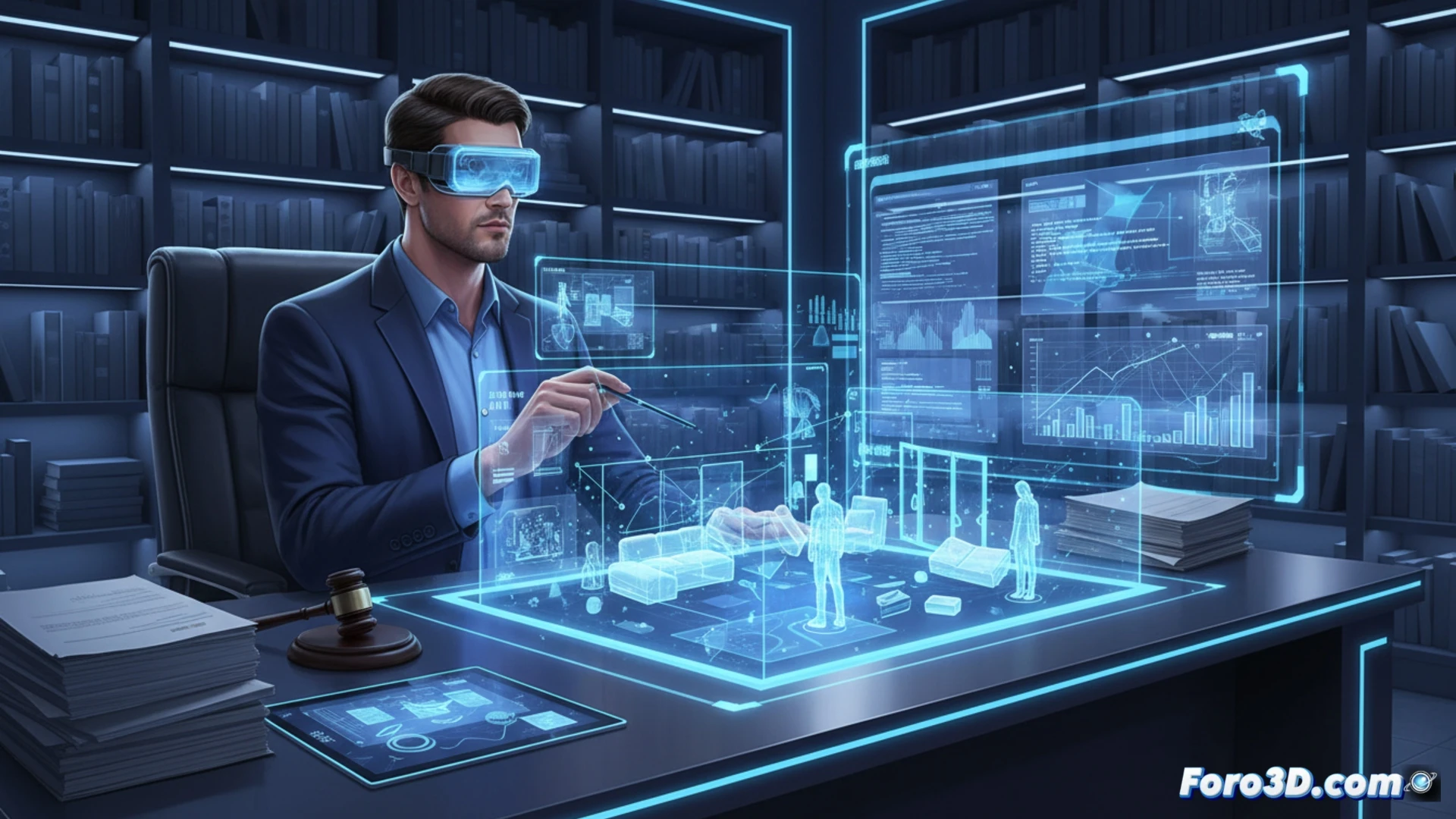
3D technology can transform the role of the court clerk by enabling the virtual reconstruction of crime scenes or accidents. Instead of relying on flat photographs, a three-dimensional model offers precise spatial insight that can be examined from any angle during the trial, making it easier to understand the facts.
3D Tools for Managing Judicial Evidence 🛠️
To create these models, photogrammetry software such as RealityCapture or Agisoft Metashape is needed, which converts hundreds of photos into 3D meshes. Modeling programs like Blender also allow for cleaning and preparing the scene. The court clerk must coordinate data capture with forensic technicians and ensure the model is admitted as digital evidence, using viewers like Sketchfab or Unity to present it in the courtroom.
When the Judge Asks to Rotate the Camera and There's No Joystick 🎮
The fun part comes when the judge, excited, asks you to rotate the 3D model with a Jedi gesture, and you're standing there with a nineties office mouse. Or when the lawyer insists that the shadow of a virtual tree proves their alibi. In the end, the court clerk ends up being more of a special effects technician than a civil servant, just without the movie box office.