SCUF Gaming has launched the Omega controller, a licensed peripheral for PlayStation 5 and PS5 Pro that promises to revolutionize video game interaction. However, for professionals in 3D modeling, rendering, and simulation, this device offers specifications that transcend leisure. With near-instantaneous mechanical switches and 11 configurable buttons, the Omega presents itself as a viable alternative for controlling viewports in Blender, ZBrush, or Unreal Engine, where speed of access to key tools is critical.
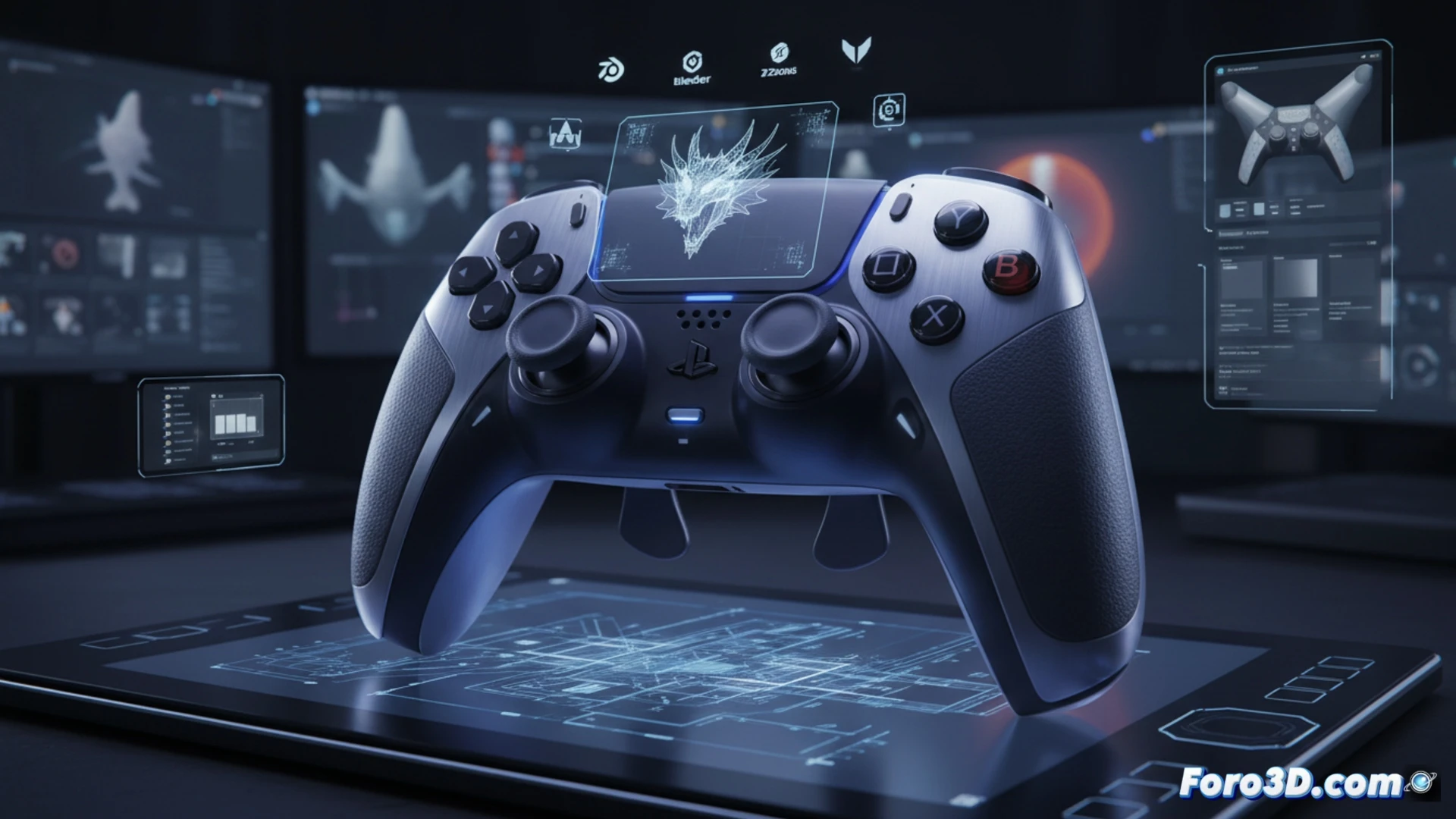
Latency, Precision, and Customization: Technical Analysis for 3D Workflows 🎮
In our tests, the SCUF Omega's latency was lower than that of a standard mechanical keyboard, thanks to the near-instantaneous transmission of key presses. The mechanical switches offer a tactile feel similar to a mouse, ideal for detailed mesh editing. The elimination of dead zones in the Endurance joysticks allows for millimeter-precise camera control in 3D viewports, surpassing the response of traditional analog sticks. We programmed the 11 additional buttons (rear and side paddles) for shortcuts to functions like Extrude (E) in Blender or Subdivide in ZBrush, streamlining the workflow without releasing the controller. The absence of vibration reduces weight, improving ergonomics during long rendering sessions.
A Controller That Replaces the 3D Mouse in the Studio? 🖱️
Although the SCUF Omega does not replace the precision of a SpaceMouse for complex orbital navigation, its customization makes it a powerful complement for repetitive tasks. The mobile app allows adjusting the response of buttons and joysticks, adapting the profile to each software. Priced at €239.99 and available from May 12, 2026, it offers a hybrid solution for those seeking versatility between console and PC, though 3D modeling purists will miss an integrated trackpad. Its compatibility with mobile devices opens the door to model reviews on tablets.
What specific advantages does the SCUF Omega offer over standard PS5 controllers in terms of precision and ergonomics for 3D modeling tasks such as digital sculpting or navigating complex meshes?
(PS: Your CPU runs hotter than the Blender vs. Maya debate)