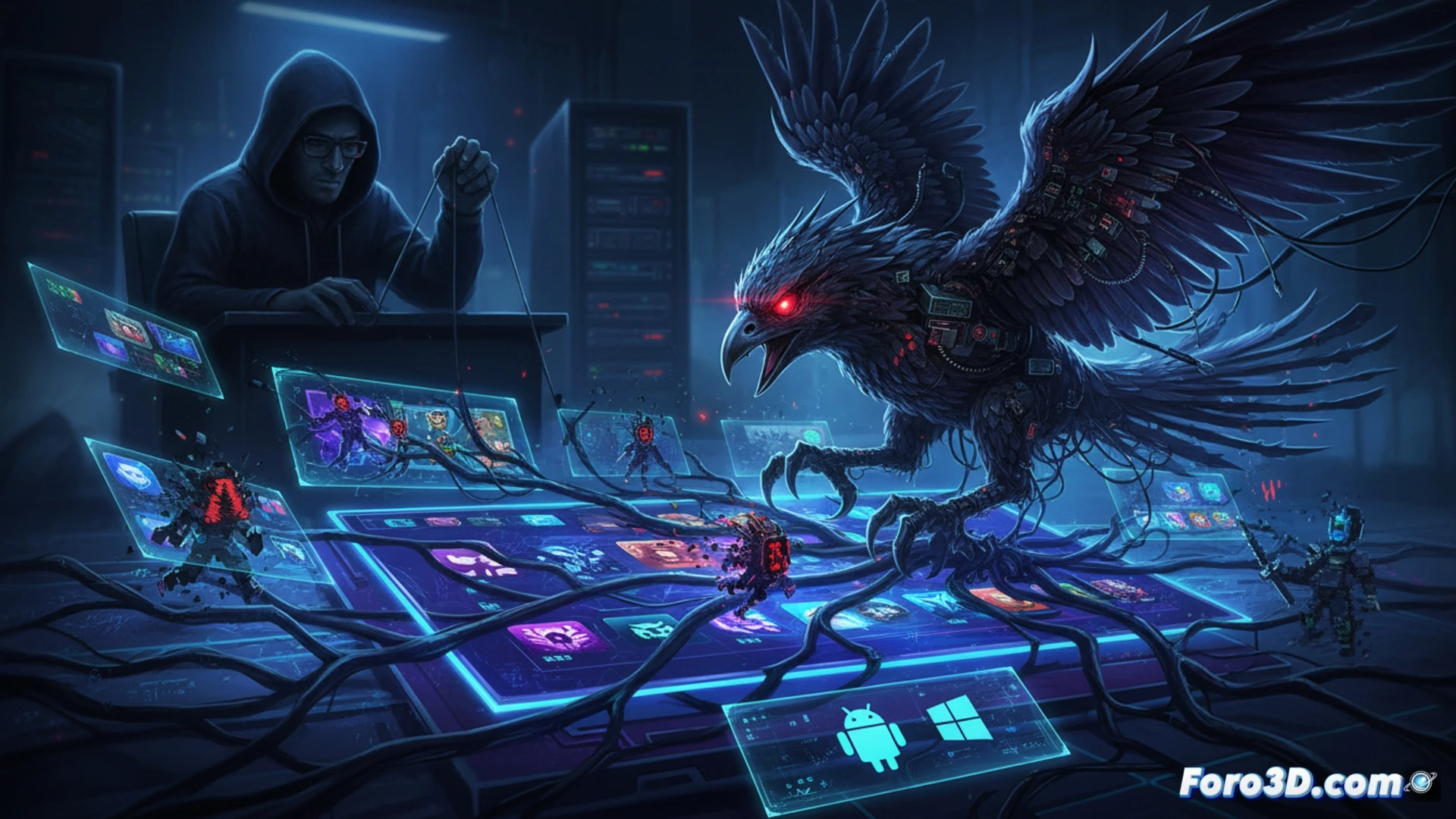
The North Korean group ScarCruft has compromised a video game platform to distribute the BirdCall malware on Android and Windows devices. Leveraging user trust, this campaign deploys advanced social engineering tactics to infiltrate spyware and data-stealing software. The attack affects both gamers and corporate systems, demonstrating careful exploitation of vulnerabilities and the ability of state actors to use digital entertainment as an entry vector.
Technical analysis: social engineering and vulnerability exploitation 🛡️
BirdCall operates as a remote access trojan that collects credentials, screenshots, and sensitive files. On Windows, it disguises itself as legitimate game updates or patches; on Android, it requests excessive permissions after an apparently normal installation. The attack exploits known vulnerabilities in outdated operating system versions and uses stolen digital certificates to evade detection. Researchers note that the compromised platform did not apply critical security patches, allowing the malware to persist for weeks.
Update the game or your data takes a trip to Pyongyang 🎮
Because sure, nothing says relax and play like discovering your saved game now includes your bank passwords. ScarCruft shows that even the most boring patch can be a gateway to your hard drive. So you know: if your antivirus tells you not to click on Update now, listen to it. Or you'll end up sharing your search history with a hacker who definitely doesn't appreciate your favorite cat video.