Satoshi Nishimura, a regular at Madhouse, has earned his place in anime history for his ability to sustain long-running action series with consistent quality. His focus on the physicality of combat, where every blow conveys weight and power, has defined works like Trigun (1998), Hajime no Ippo, and Ushio & Tora. We are talking about a director who understands movement as a choreography of impact.
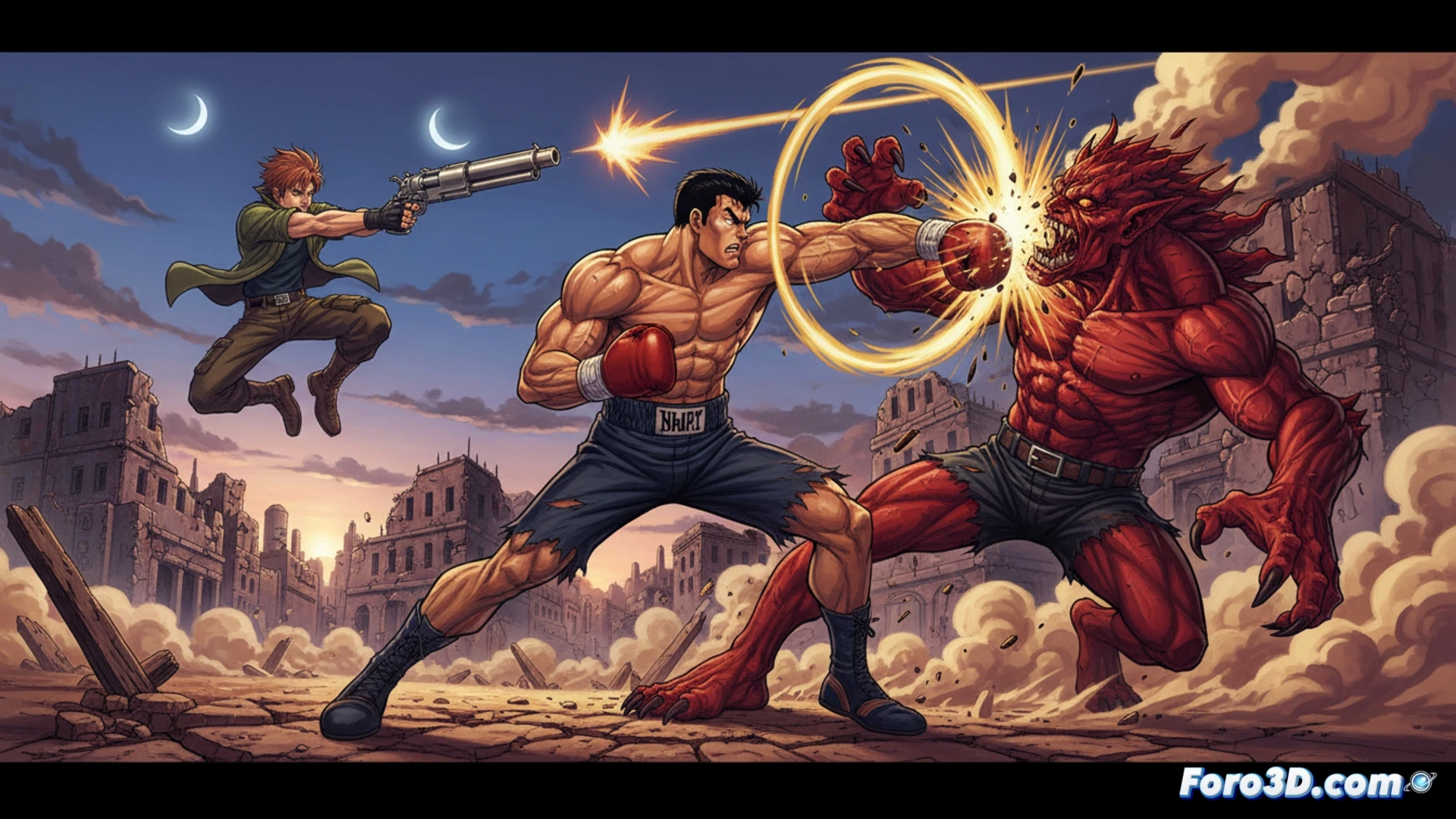
The Physics of Combat: How Nishimura Applies Limited Animation to Generate Impact 💥
Nishimura uses a limited animation technique that prioritizes weight over the number of frames. Instead of fluid but light movements, he employs abrupt accelerations and strategic pauses to simulate the real inertia of a punch or a jump. In Hajime no Ippo, every uppercut feels like a sledgehammer because the director freezes the impact for an instant before showing the opponent's reaction. This methodology, combined with a storyboard that emphasizes posture and center of gravity, makes the viewer perceive physical force without the need for excessive digital effects.
When the Director Reminds You That Bones Crack (And It's Not Because of the Sushi) 🥊
Watching a fight directed by Nishimura is like attending an applied anatomy class, but with more blood and fewer notes. You almost expect the characters to take a break between rounds to wrap their wrists. And although his choreographies are technically flawless, you can't help but wonder how many animators ended up with tendinitis simulating those impacts. Of course, if you ever wonder why your knuckles hurt watching anime, now you know who to blame.