Satoshi Kon passed away in 2010 at the age of 46, leaving behind a brief but dense filmography. His work is characterized by exploring the fragility of identity and perception. Directors like Christopher Nolan have acknowledged his influence, especially on the dream structure of Inception. Kon didn't just tell stories; he built psychological labyrinths where the viewer doubts what they see.
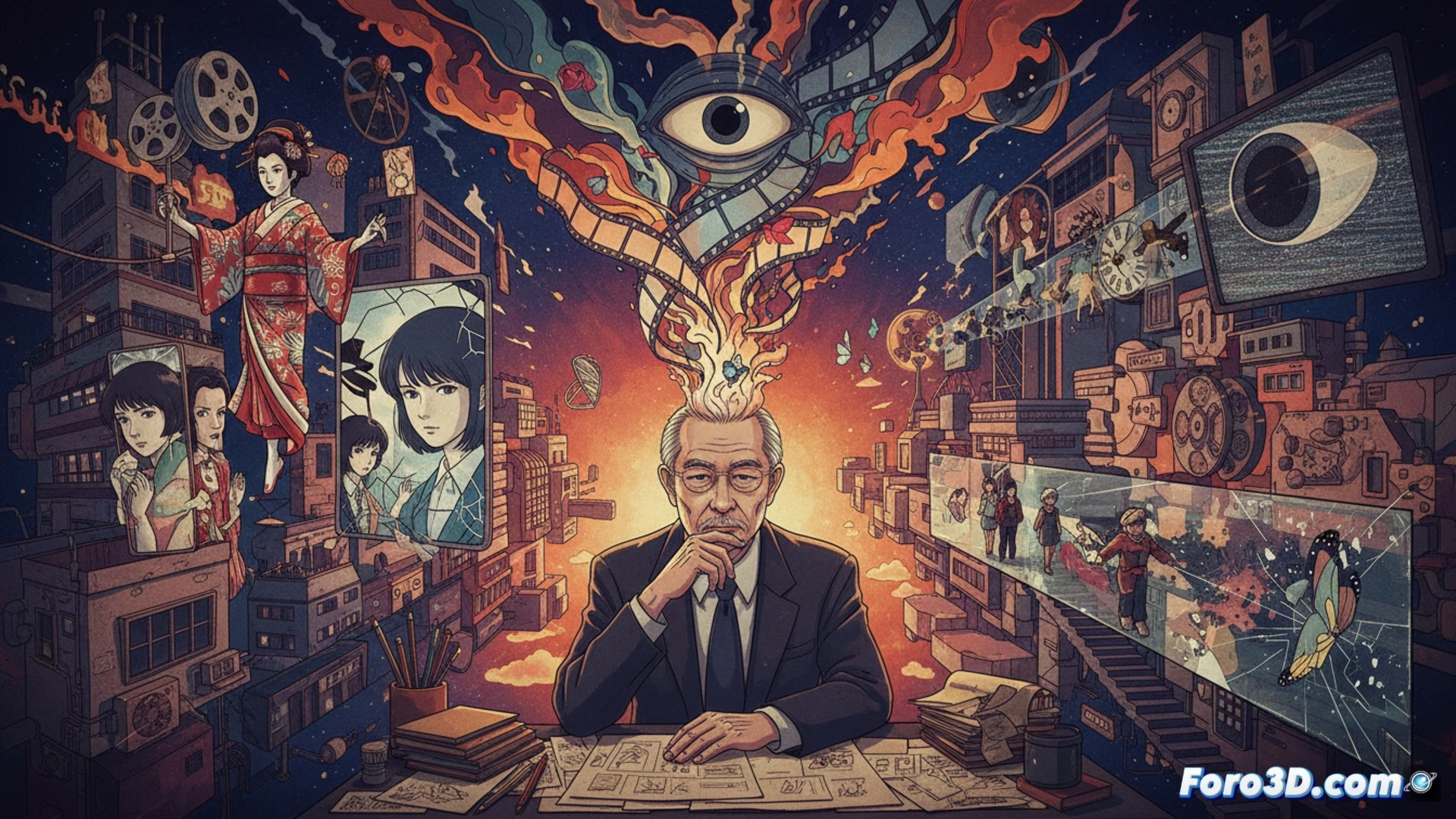
Editing as a tool to break the fourth wall 🎬
Kon used editing to transition between realities without warning, often using match cuts. In Paprika, shots blend seamlessly between a room and a dream. This technique, which demands meticulous storyboard planning, forces the viewer to process information without clear narrative anchors. In Perfect Blue, time jumps and scene repetition create a sense of paranoia that anticipates Darren Aronofsky's cinema. The result is an immersive experience that challenges conventional film logic.
How to explain to your grandma that the reality show isn't real 😅
If your grandma watched Perfect Blue, she'd think the TV had a virus. Kon plays with the idea that virtual fame is a trap, and that pop idols are disposable products. In Tokyo Godfathers, three homeless people find a baby and, of course, don't call the police because that would be too logical. Everything is chaos, confusion, and dark humor that makes you laugh while reflecting on social inequality. Kon makes you feel smart for catching the layers, and a little foolish for not having seen them before.