A measles outbreak shakes Bangladesh as UNICEF reports having vaccinated 18 million children. The UN agency warns that immunization gaps worsened after the 2024 uprising that overthrew the autocratic government. Measles, highly contagious and without specific treatment, primarily affects malnourished and low-income children, many lacking routine vaccines.
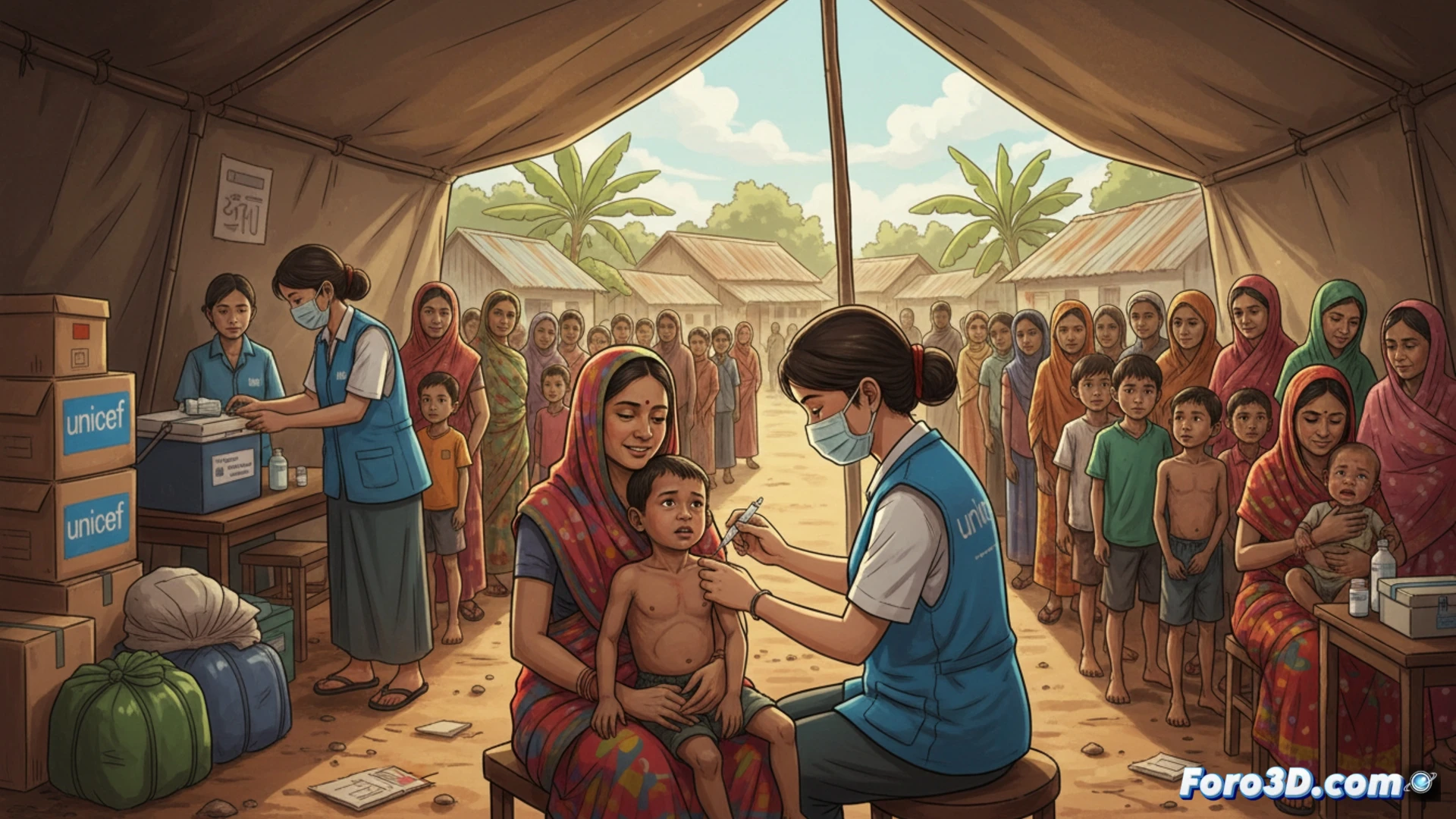
Logistics and data: the technological challenge of vaccinating 18 million 🚀
The campaign required cold chain systems to keep vaccines at controlled temperatures in rural areas without stable electricity. Drones were used to monitor hard-to-reach areas and mobile apps to register vaccinated individuals in real time. However, the real impact will be measured in months, as immunity takes time to establish. The lack of prior data on unregistered children remains an obstacle for healthcare teams.
Measles doesn't understand politics, but children still pay the price 😷
While politicians were busy overthrowing governments, measles took the opportunity to make connections. Now, with 18 million doses administered, it's time to wait for the vaccine to work its magic. Of course, if malnourished children had to choose between a revolution and a vaccine, they would probably ask for something to eat first. Ironies of a country where immunity is weakened more by poverty than by the virus.