Trepang2, developed by Trepang Studios, is not just a tactical shooter; it is a real-time visual effects laboratory. The game uses Unreal Engine 4 to push particle simulation to the extreme, prioritizing blood, metal sparks, and environmental destruction. This approach turns every fight into a visceral experience where visual feedback is as important as shooting accuracy, setting a technical standard for fast-paced action VFX. 💥
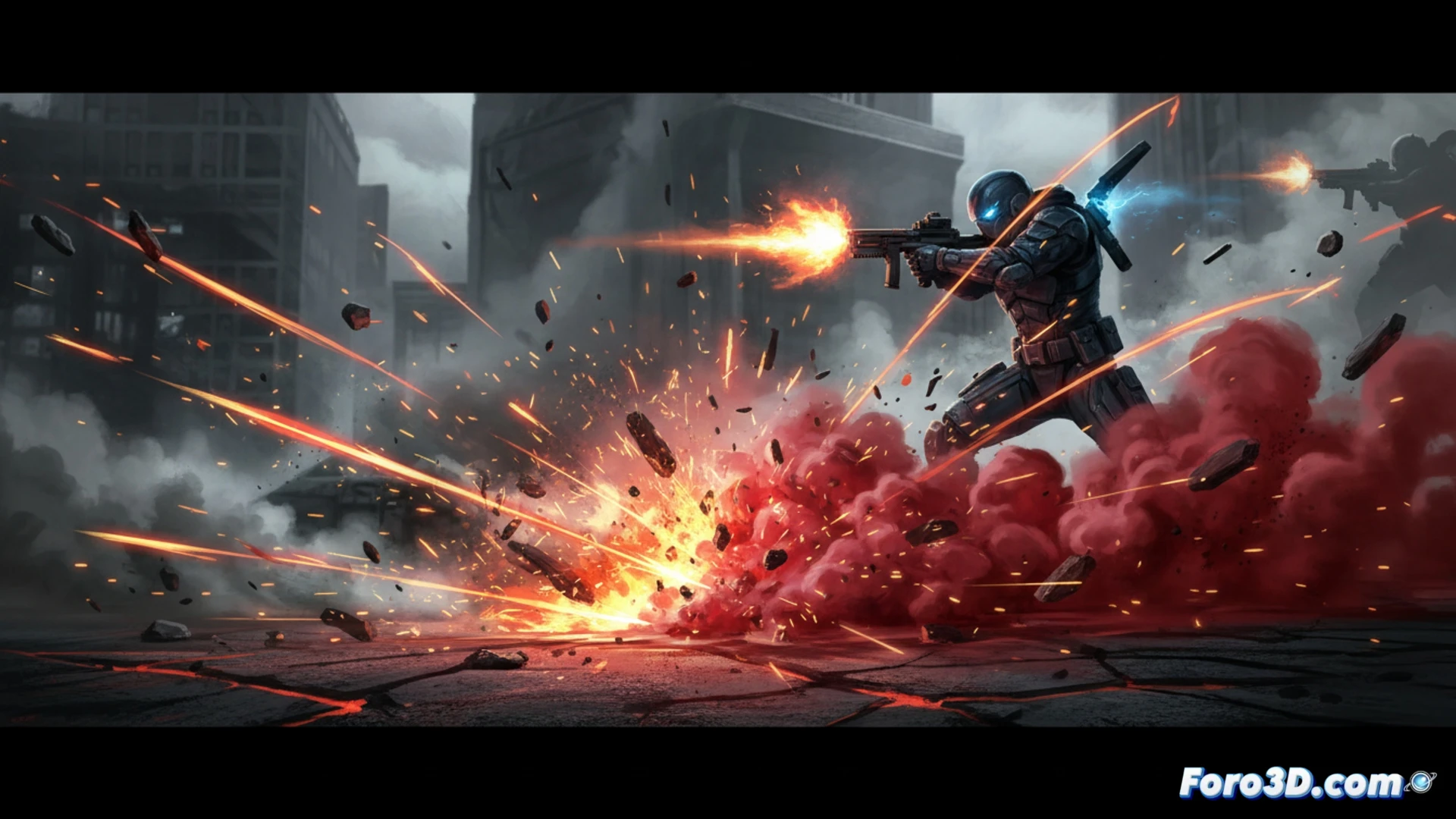
Particle Simulation and Procedural Destruction 🎯
The graphics engine manages modular particle systems that react in real-time to bullet impacts. Blood is not a simple sprite; it is modeled using simulated fluids with high-resolution textures that splatter surfaces and slide across geometry. Sparks are generated by collision emitters that detect the material of the impacted object (metal, concrete, flesh). For destruction, Blender is used to create pre-fractured fragments that the engine activates through procedural physics, knocking down walls and furniture without performance drops, enhancing the feeling of tactical chaos.
Sound Synchronization as a VFX Tool 🔊
The sound design in Trepang2, worked on with Audacity, is not a complement but a pillar of the visual effect. Each particle explosion is synchronized with layers of distorted audio and saturated bass. The crunch of a breaking bone, the hiss of a spark, or the echo of a bullet in a destroyed room create sensory feedback that amplifies the perception of visual impact. This integration demonstrates that effective VFX require a complete orchestration between image and sound to achieve total immersion.
What do you think about this advancement?