Sanabi is a clear example of how high-fidelity pixel art can visually compete with 3D styles when combined with dynamic real-time effects. Developed in Unity, the game leverages per-pixel lighting, particle systems for rain, and custom shaders for neon lights and reflections. This analysis breaks down the technical workflow between Aseprite and Photoshop for creating optimized assets, and how Unity integrates them without sacrificing performance in effect-heavy scenes.
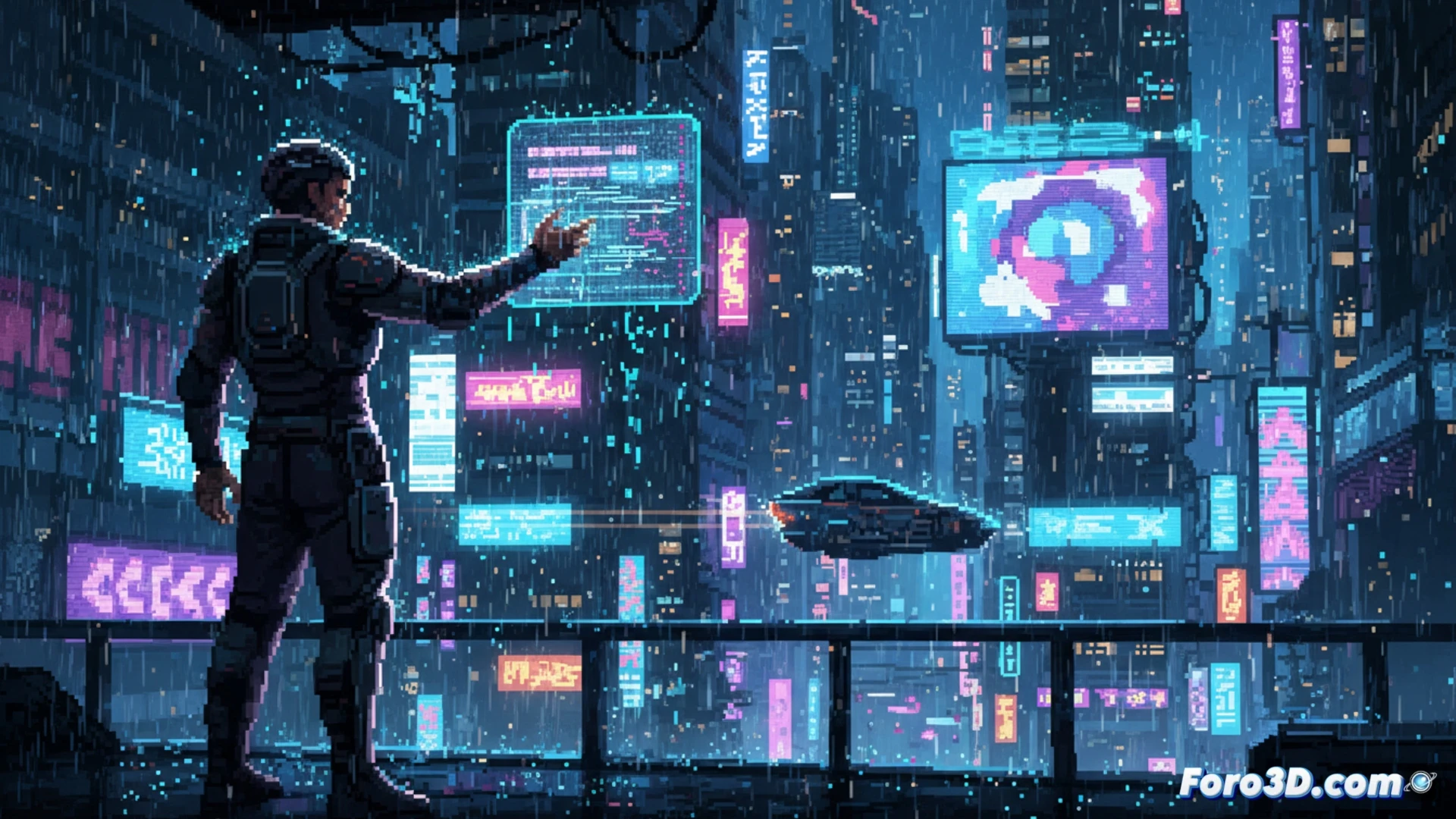
Aseprite, Photoshop, and Unity Workflow for Dynamic Animations 🎮
Sprite creation in Sanabi begins in Aseprite, where animations are drawn frame by frame with a limited palette to maintain visual consistency. Then, Photoshop comes into play to apply color adjustment layers, gradients, and post-processing effects that simulate the ambient lighting of rain and neon lights. The technical trick lies in exporting each frame as a sprite sheet with transparency, importing it into Unity, and assigning a material with the Sprite-Lit-Default shader. This allows puddle reflections and sign glow to respond to the engine's directional lights. For optimization, it is recommended to use texture atlases and reduce the number of simultaneous animations on screen, prioritizing those that interact with the player.
The Challenge of Weather Effects in Pixel Art 🌧️
Achieving believable rain in pixel art requires more than particles. In Sanabi, developers used a layered system: a background layer with static rain sprites to simulate depth, and a foreground layer with animated particles in Unity. Neon lights are achieved with a shader that overrides the sprite's base color with an interpolated gradient, while reflections are calculated by duplicating sprites on the Y-axis with reduced opacity and a blur filter. For indie developers, the key tip is not to overuse transparency: in pixel art, every pixel counts, and an excess of layers can saturate the GPU. Use Unity's Sprite Shape tool to create modular backgrounds that light up with the same logic as the characters.
What lighting and post-processing techniques in Unity allow Sanabi's pixel art to achieve a depth and cyberpunk atmosphere comparable to a 3D environment without losing the essence of 2D art?
(PS: game jams are like weddings: everyone is happy, no one sleeps, and you end up crying)