Samsung has unveiled its new line of 3D digital signage, named Samsung Spatial Signage. This proposal aims to transform traditional signage by integrating three-dimensional graphics into physical spaces such as stores, museums, or airports. The key lies in its lenticular lens, which generates depth and realism without the need for special glasses. A step forward for commercial visual communication. 🚀
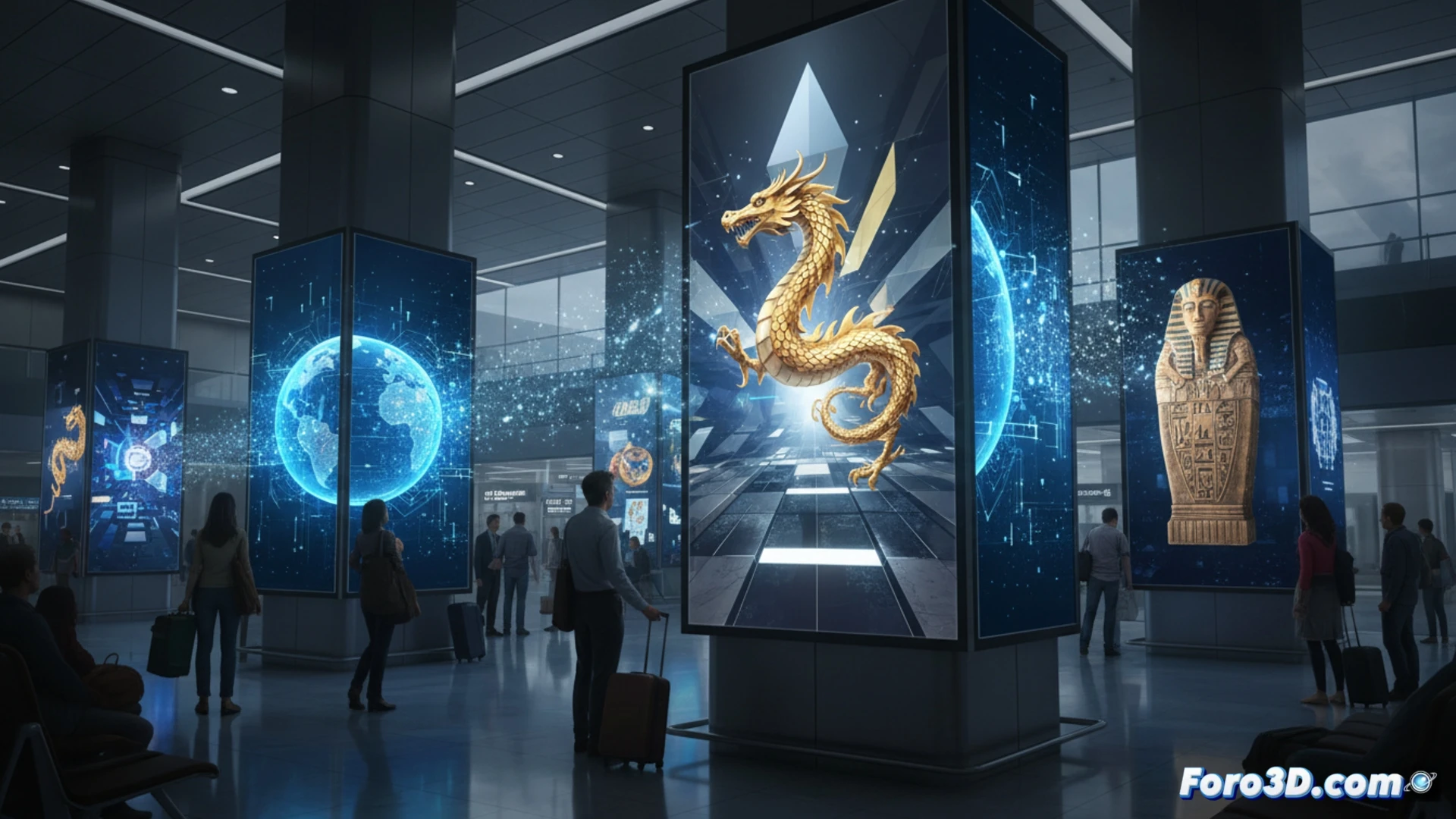
Lenticular lenses and optimized content for the 3D effect 🎯
The system relies on LED panels with a lenticular layer that directs light to each eye independently, creating the illusion of volume. Samsung has developed conversion software that automatically adapts 2D content to 3D, although the most accurate results require material specifically designed for this format. Resolution remains at commercial levels, but the viewing angle is limited, something common in this technology. The panels are designed to attract attention in high-traffic areas.
Now even a sales sign will stare at you 👀
The promise is that the customer will stop to observe a floating logo or a product that seems to come out of the screen. But let's be honest: most likely, people will stare at the sign thinking it's a low-quality hologram or that they haven't slept in too many hours. And watch out, because if you put a 3D pizza ad, the hunger will be real, but the pizza won't. Marketing of optical illusions.