The three-dimensional representation of Sabra, the Israeli mutant and Mossad agent, transcends mere character modeling. In the realm of digital art and activism, each polygon of her cape and every texture of her uniform become a semiotic battlefield. Analyzing her 3D design involves breaking down how digital technology can amplify or question the symbols of national identity, conflict, and power embodied by this character from Bill Mantlo and Sal Buscema.
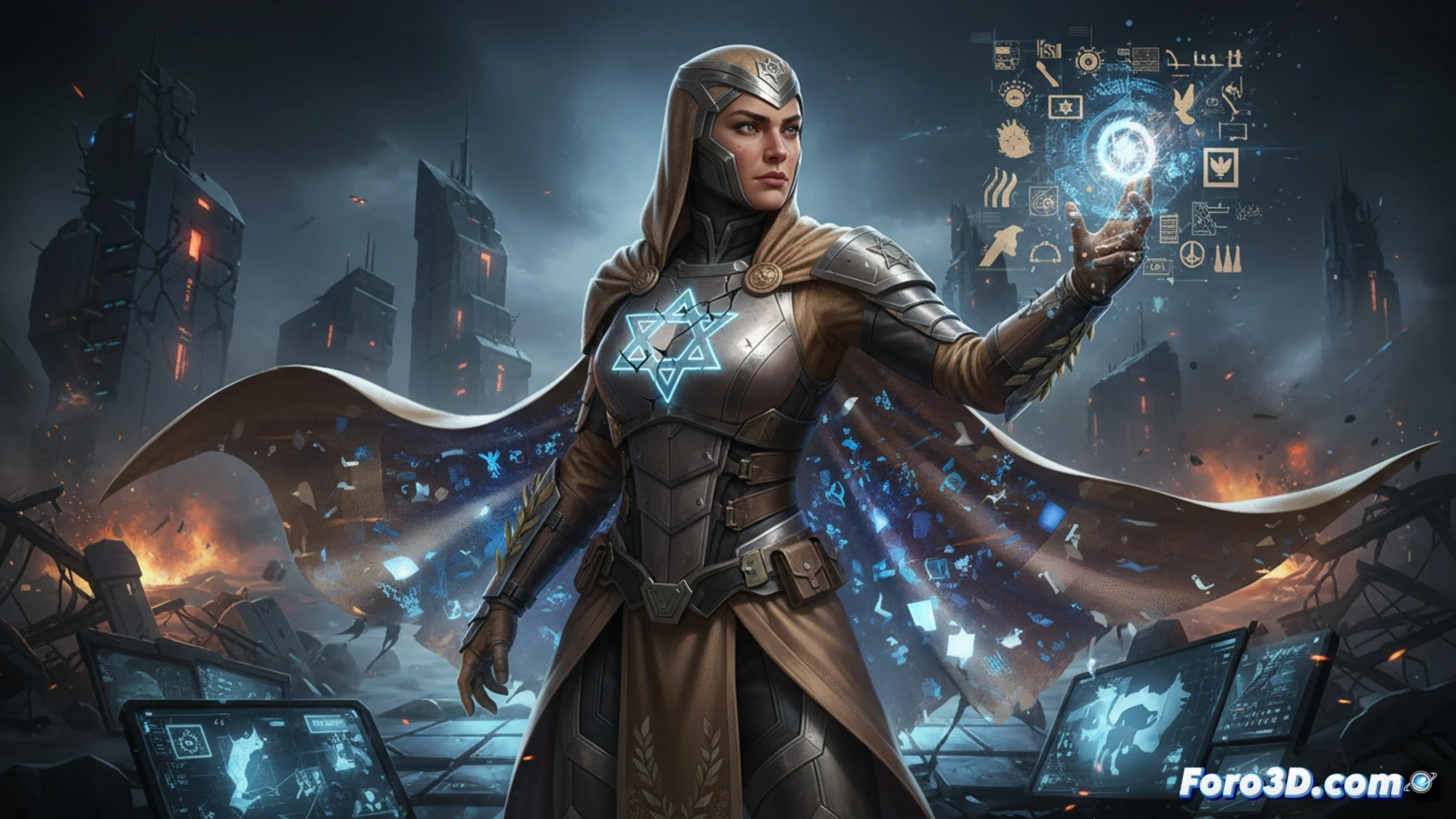
Visual Engineering of the Cape and Energy Spikes 🛡️
From a technical perspective, Sabra's cape is not a simple accessory; it is a flight asset and a weapon system. In a game engine or cinematic model, its animation must simulate both the physics of supersonic gliding and the deployment of her paralyzing energy spikes. The challenge for 3D artists lies in making the transition from a passive to an offensive state believable, where the spikes (energy darts) act as non-lethal projectiles. This design, when rendered, becomes a visual manifesto of soft power and tactical control, ideal for reinterpretation by digital communities seeking to criticize or support geopolitical stances through computer-generated art.
Modeling as a Tool for Political Critique 🎨
The digital art community has already begun using 3D models of Sabra to explore alternative narratives. By modifying the lighting, the color of her cape, or the context of the scene, artists turn the character into an icon of debate. A render of Sabra flying over a ruined city can be a visual statement about conflict, while a static model stripped of its national symbols can represent a critique of dehumanization. In this niche, 3D modeling ceases to be mere aesthetics and becomes a digital poster for activism, where every texture and animation is a vote in the global conversation.
As the 3D modeling of Sabra seeks to balance her symbolism as an Israeli agent with criticism of the conflict, what design techniques and visual narratives do artists employ to avoid falling into one-sided glorification or demonization, and instead foster an activist dialogue in digital art?
(PS: at Foro3D we believe that all art is political, especially when the computer freezes)