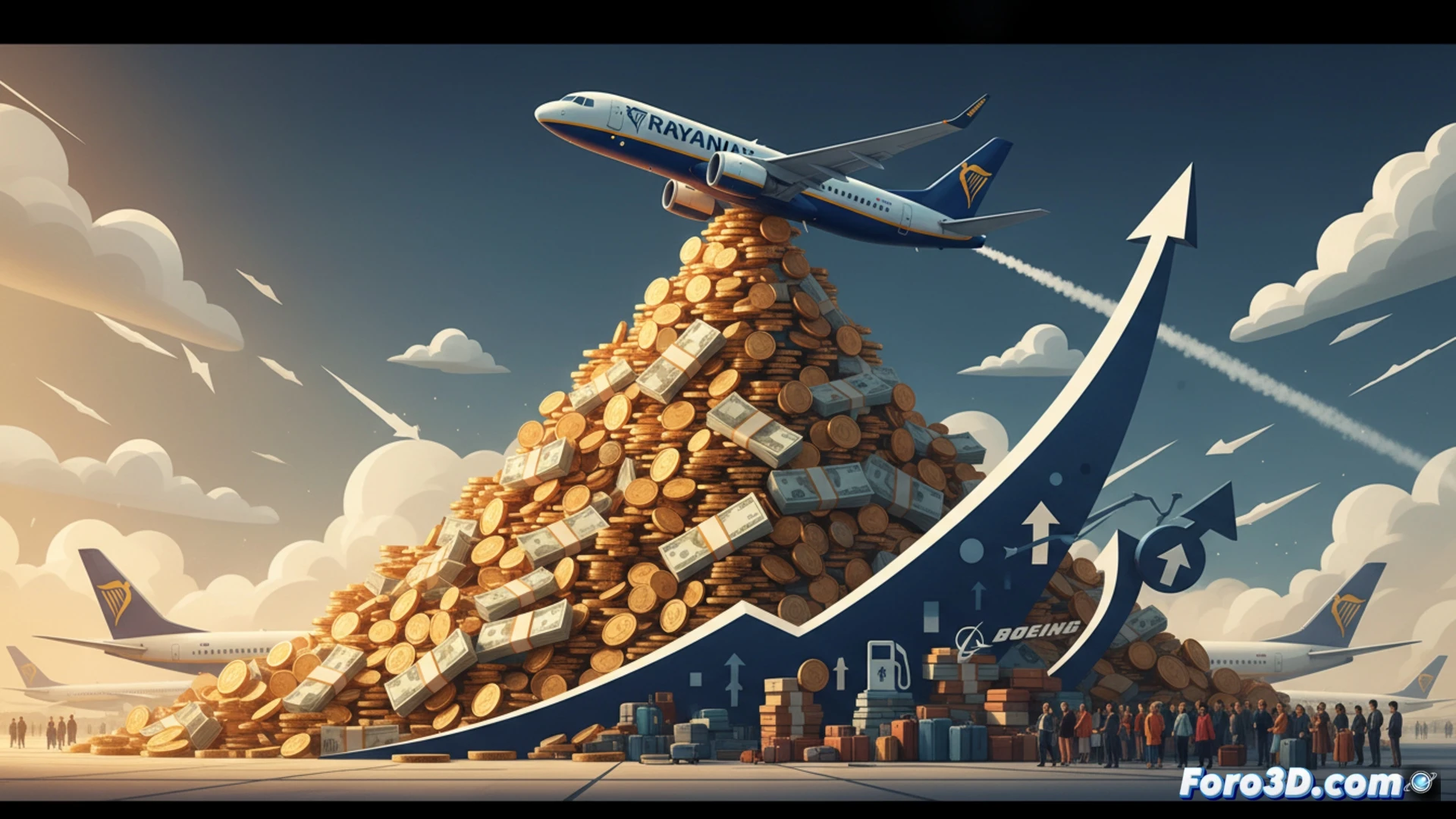
Ryanair closes the fiscal year with a record profit of €2.26 billion, 40% higher than the previous year. The low-cost airline has managed to weather Boeing delivery delays and fuel volatility, driven by higher fares and relentless travel demand. With 208.4 million passengers, up 4%, and revenues of €15.54 billion, the company shows that the sky is not the limit, but the ticket price ✈️
How Ryanair manages the Boeing and fuel crisis 🔧
Ryanair's strategy to dodge Boeing's problems has been based on optimizing its current fleet and putting pressure on manufacturers. Although delays in 737 MAX deliveries affect expansion, the airline has prioritized high-density routes and adjusted frequencies to maintain occupancy. Regarding fuel, uncertainty over the war in Iran has been offset with financial hedges and surgical cost control. The result is an efficient model that squeezes every aircraft and every euro from the passenger.
Ryanair earns so much that even Boeing delays become profitable 💰
While Boeing piles up delays and passengers pay more to fly cramped, Ryanair rubs its hands together. The airline has turned the crisis into business: fewer new planes mean less competition and more power to raise fares. And since fuel goes up, they already have it covered. So, if the plane arrives late, the ticket goes up; and if oil spikes, profit does too. In the end, the only loser is the traveler, who pays more for a seat they'll have to claim at the boarding gate.