Tiny Glade has captured the attention of the indie community with its radical approach to procedural construction. Unlike traditional engines that rely on rigid grids, this project uses the Bevy engine, developed in Rust, to allow each brick and column to adapt organically to the terrain. The key lies in a system that calculates the physics of the structure in real-time, avoiding geometric rigidity and offering an almost handcrafted aesthetic.
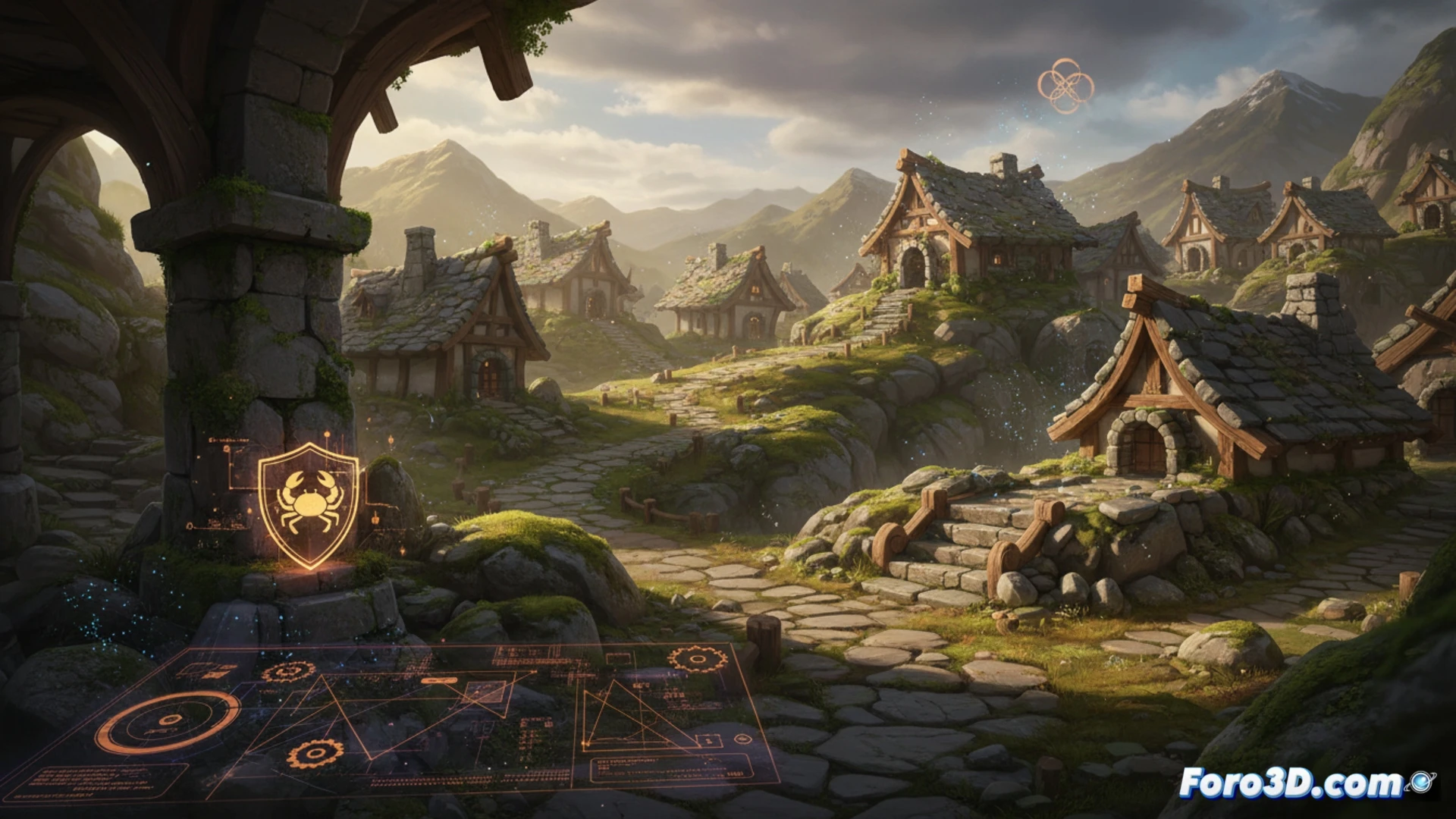
WGPU and Global Illumination: The uncompromising rendering engine 🎨
The visual aspect of Tiny Glade would not be possible without WGPU, Rust's native graphics API that abstracts Vulkan, DirectX 12, and Metal. Unlike Unity or Unreal, which rely on complex and heavy pipelines, WGPU allows Bevy granular control over shading. This translates into soft, diffuse global illumination that dynamically reacts to the shape of buildings. For an indie developer, this combination eliminates the need for costly post-processing, achieving a cozy atmosphere with surprising performance on modest hardware.
Why does this architecture matter to the indie developer? 🧱
While Unity and Unreal offer monolithic solutions, the Rust-Bevy-WGPU stack represents a philosophy of minimalism and control. Tiny Glade demonstrates that you don't need an AAA engine to create unique mechanics; the absence of a grid is a technical challenge that only a lightweight procedural system can solve efficiently. For the developer looking to stand out, this architecture not only reduces technical debt but also allows for faster iteration and a final product with an unmistakable visual identity.
How Tiny Glade implements its gridless procedural construction system using Rust and Bevy, and what technical advantages this approach offers over traditional cell-based engines
PS: shaders are like mayonnaise: if they break, you start all over again 🧩