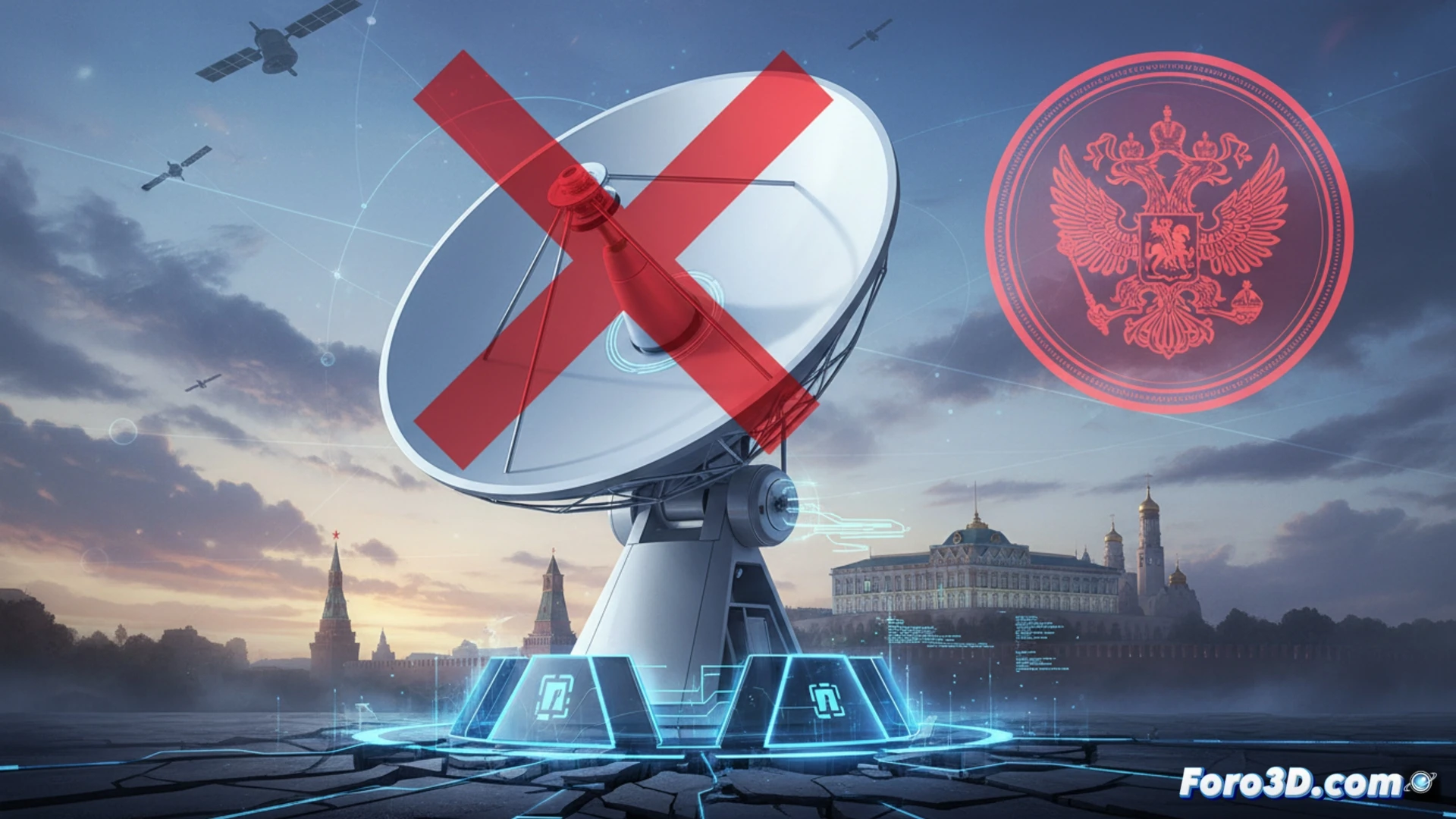
The Russian government announced on May 1, 2026, a temporary six-month ban on the import of satellite terminals of foreign origin, including Starlink equipment and other satellite internet providers. The measure applies to any device capable of transmitting and receiving signals from foreign communications satellites, unless it has an express permit from the State Commission on Radio Frequencies. The decision aims to strengthen control over communications in the country.
Technical and regulatory implications for satellite access 📡
The restriction affects equipment operating in frequency bands such as Ku and Ka, used by constellations like Starlink to provide low-latency internet. Without a permit from the State Commission on Radio Frequencies, users will not be able to legally acquire these terminals, limiting the expansion of alternative networks to Russian terrestrial infrastructure. Foreign manufacturers will need to negotiate local agreements or adapt their equipment to approved standards, a process that may take months. The measure aims to prioritize national systems like the Sphere project.
The Kremlin discovers that wifi is not a Putin invention 😅
The decision comes just as Russians were starting to enjoy downloading memes without waiting three days. Now, for six months, the government will ensure that no one has access to satellite internet that doesn't pass through its filters. Luckily, the plan includes an exception: if you manage to connect the terminal before they detect it, you can say it's for checking the weather. Of course, any unauthorized extraterrestrial signal will be considered Western propaganda.