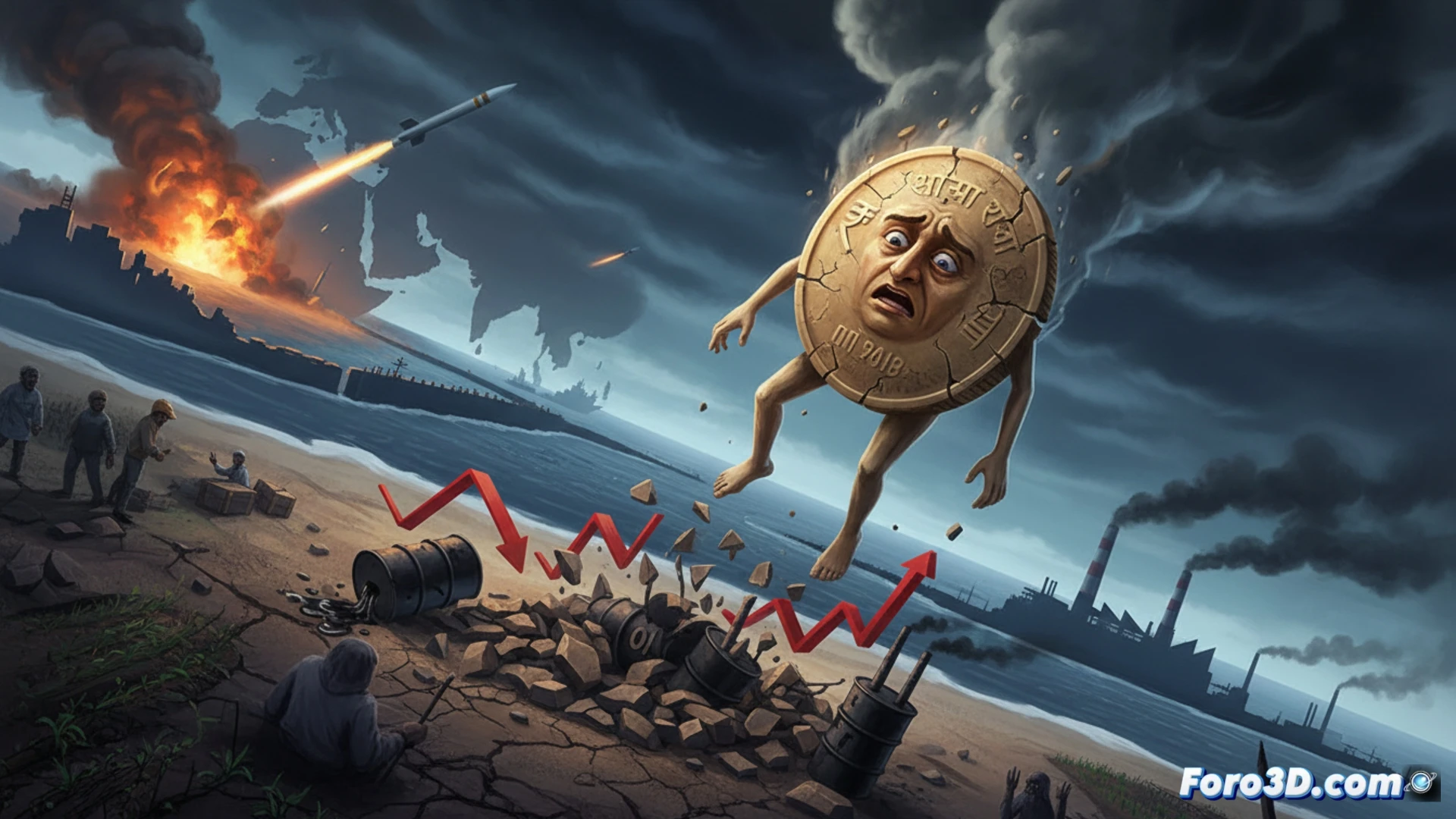
The Indian rupee has depreciated by more than 5% following the attacks by the United States and Israel on Iran and the closure of the Strait of Hormuz. This geopolitical scenario triggers inflation, makes oil imports more expensive, and hits industries that depend on foreign raw materials, creating a complex economic environment for the country.
Technological impact on global supply chains 🌍
The blockade in Hormuz disrupts the flow of resins and metals essential for manufacturing electronic components and semiconductors. Indian hardware companies, which import up to 70% of these inputs, face production delays and rising costs. Migrating to alternative routes such as the India-Middle East-Europe corridor is being evaluated, although its implementation requires years and an investment not contemplated in the current budget.
The rupee takes an unpaid vacation in Iran 😅
While the Indian rupee takes a tourist tour through the Strait of Hormuz without a return passport, local entrepreneurs discover that money yields less than a bad joke in a board meeting. Imports rise like morning coffee, but without the caffeine. At least, the price of excuses for not delivering projects on time remains stable, and that, in these times, is already a luxury.