NVIDIA has launched the RTX 4000 Ada Generation SFF, a professional graphics card that defies space constraints without sacrificing performance. With 20 GB of GDDR6 memory and the Ada Lovelace architecture, this GPU is specifically designed for compact workstations. Its low-profile (SFF) form factor allows integration into reduced chassis, ideal for small studios or multi-GPU setups where every centimeter counts.
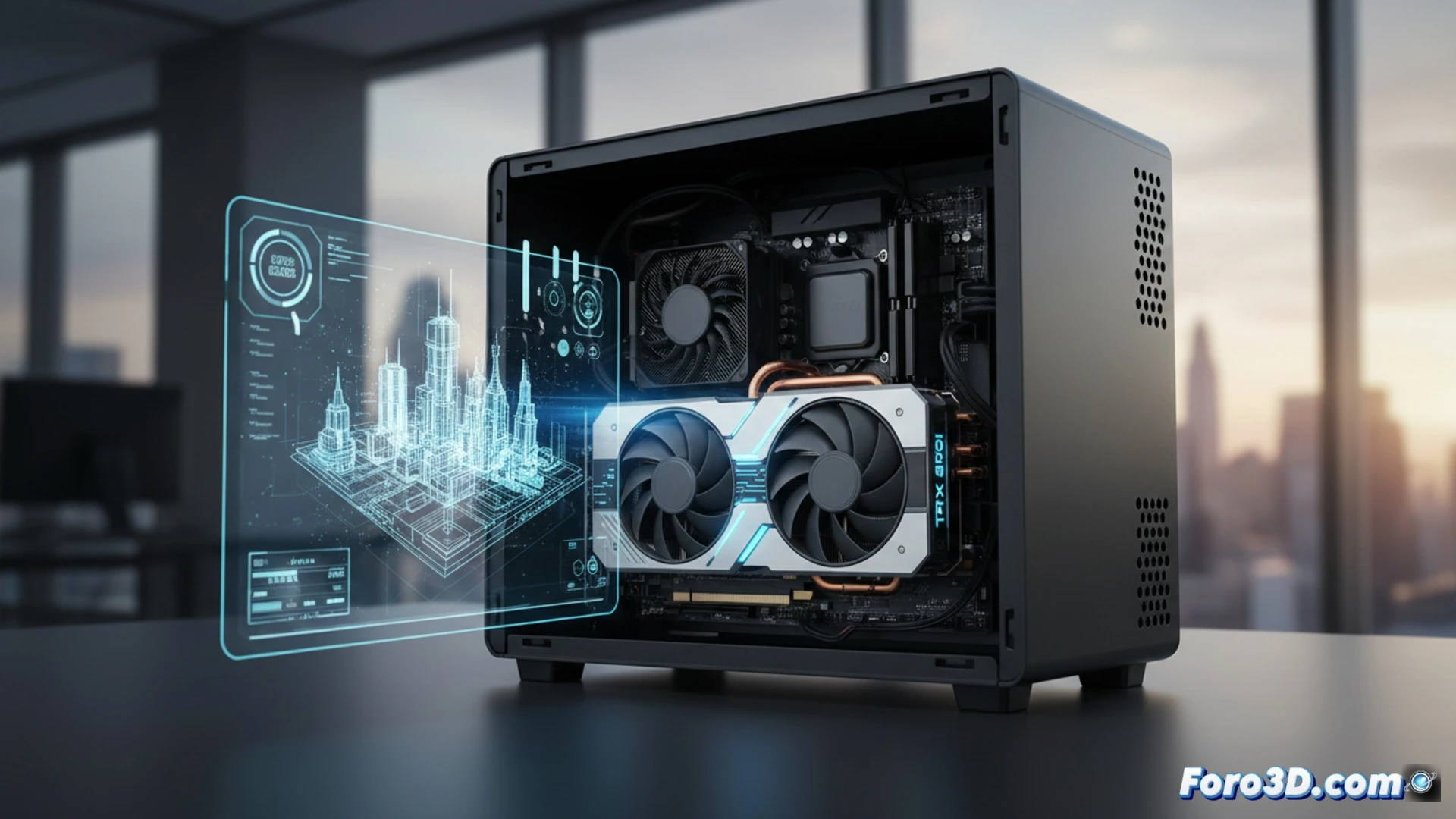
Ada Lovelace Architecture and 20GB VRAM in SFF 🚀
The RTX 4000 Ada SFF inherits the third-generation RT cores and fourth-generation Tensor Cores from the Ada series, making it compatible with hardware acceleration in rendering engines like Blender Cycles, V-Ray, and Octane. Its 20 GB of VRAM is a critical point: it allows loading complex scenes with high-resolution textures and dense simulations without resorting to shared system memory. Compared to the RTX A4000 (16 GB), it offers 25% more buffer capacity, while its 70W TDP keeps it cool and efficient in passive ventilation or limited airflow systems. In preliminary benchmarks, it surpasses the RTX 3080 in single-precision floating-point (FP32) rendering tasks thanks to the new optimized CUDA cores.
Is it the ultimate solution for studios with limited space? 🔍
For professionals working in environments like design labs, 3D video editors, or rack-mounted multi-GPU setups, the RTX 4000 Ada SFF represents an almost perfect balance. Its size allows installing up to four units in a single mini ITX workstation, multiplying distributed rendering capacity. However, it lacks external power connectors (PCIe only), which limits overclocking. If your workflow demands maximum real-time speed and space is not a priority, a desktop RTX 4090 remains superior. But for those who need 3D power in a small chassis, this GPU is the most sensible option in the current professional market.
Comparing with the RTX 5000 Ada, what real sacrifices in bandwidth or CUDA cores does this SFF form factor entail for complex rendering and 3D modeling workflows?
(PS: If your computer smokes when opening Blender, maybe you need more than a fan and faith)