The mutant character Rockslide, created by Nunzio DeFilippis and Christina Weir, presents a unique biology composed of psionic rocks capable of detonating and reforming. This ability for controlled self-destruction, followed by a structural rebirth, offers a fascinating starting point for 3D concept art. We analyze how this Marvel figure can be a powerful visual metaphor for digital activism, representing the struggle for identity and social reconstruction.
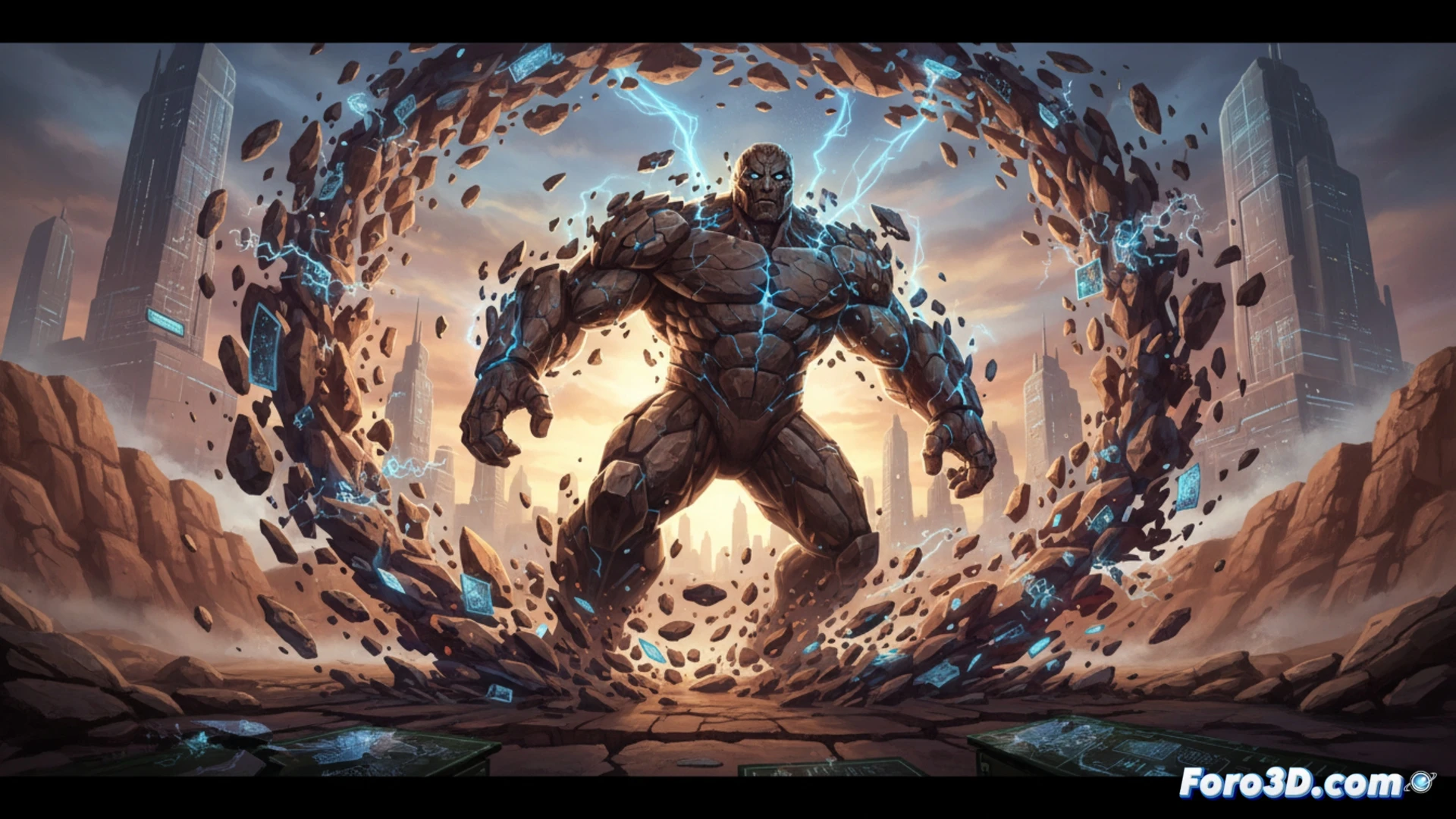
Modeling techniques for a body in psionic fragmentation 🧱
To represent Rockslide as a symbol of activism, 3D modeling must capture the granular texture of the psionic rocks and the kinetics of their explosion. Digital sculpting techniques in ZBrush or Blender allow for creating a polygonal body with visible fault lines, ready to fracture. Animating the detonation requires a particle system to disperse the rocky fragments, while the body's reformation demands dynamic rigging that recomposes the mesh. This technical process not only illustrates the character's power but also symbolizes a collective's ability to disintegrate under oppression and reassemble with greater strength.
The rock that is reborn: a metaphor for identity and social struggle 🔥
In the context of digital activism, Santo Vaccarro's cycle of destruction and reconstruction is an allegory for community resistance. Each explosion represents a moment of crisis or repression, while the reformation symbolizes resilience and the redefinition of identity. Modeling this character in 3D allows artists to create visual narratives where the mutant body becomes a manifesto: the ability to break apart and reassemble is the ultimate act of defiance against a system that seeks ideological rigidity.
How can the 3D modeling of a character like Rockslide, whose biology is based on constant self-destruction and reconstruction, serve as a technical metaphor to represent digital resistance against censorship or surveillance in activist art?
(PS: at Foro3D we believe all art is political, especially when the computer freezes)