An autonomous climbing robot, designed for the maintenance of glass facades, detached from a 40-story building during a gust of wind. The impact against a parked vehicle activated a forensic investigation protocol. The 3D expert analysis, using SimScale for CFD and FARO Zone 3D for the reconstruction of the incident, determined that the suction force of the suction cups was insufficient to counteract the lateral thrust generated by the turbulent flow.
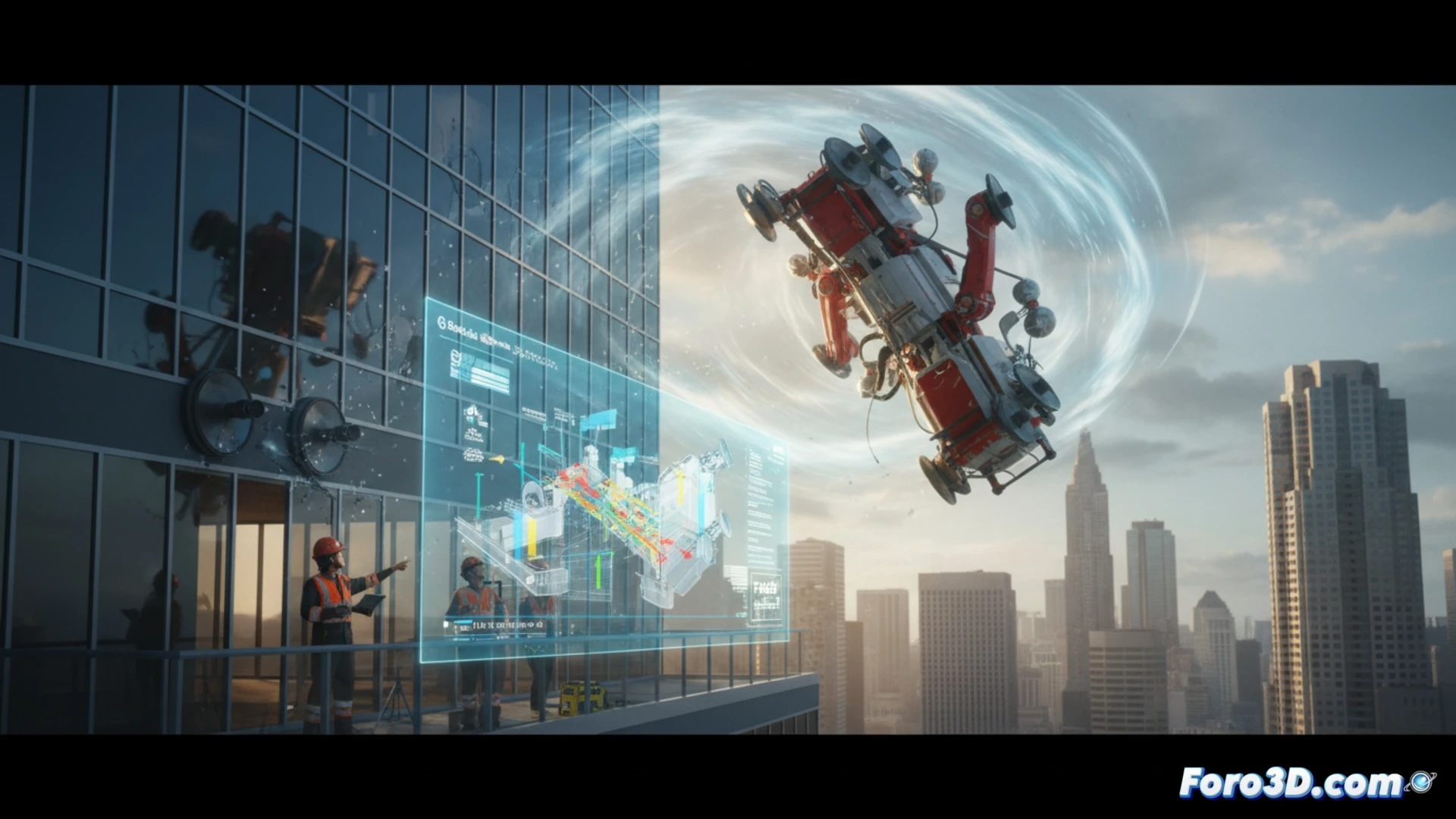
CFD analysis and forensic reconstruction with SimScale and FARO Zone 3D 🛠️
The numerical model in SimScale simulated the behavior of the gusty wind on the facade, revealing low-pressure zones that reduced the adhesion of the suction cups by 34% compared to nominal values. In parallel, the reconstruction in FARO Zone 3D, fed with point cloud data captured with RealityCapture, allowed calculating the actual stress exerted on the safety cables. The simulation showed that, under gust conditions of 80 km/h, the dynamic stress exceeded the safe working load specified by the manufacturer by 22%, causing the failure of the secondary anchoring system.
Lessons for prevention in facade robotics 📘
The accident underscores the need to integrate real-time wind sensors and autonomous response algorithms in climbing robots. Current regulations, focused on static loads, must be updated to include dynamic safety coefficients based on CFD. The methodology used in this expert analysis, combining fluid dynamics simulation and 3D reconstruction, is consolidated as a key tool for the certification of height equipment and the prevention of future workplace catastrophes.
What specific lessons about wind resistance and dynamic anchoring in facade robotics can be drawn from the 3D model of the catastrophic failure of the climbing robot to prevent future accidents on high-rise structures?
(PS: Simulating catastrophes is fun until the computer crashes and you are the catastrophe.)