A team of researchers has demonstrated that it is possible to steal an additive manufacturing patent by intercepting the acoustic vibrations emitted by a 3D printer during operation. By analyzing the sound waves generated by the stepper motors and the movement of the print head, it is possible to digitally reconstruct the geometry of the object being printed. This method, known as an acoustic side-channel attack, poses a critical vulnerability for intellectual property in the rapid prototyping sector. The technique does not require physical access to the equipment, only a high-sensitivity microphone placed several meters away.
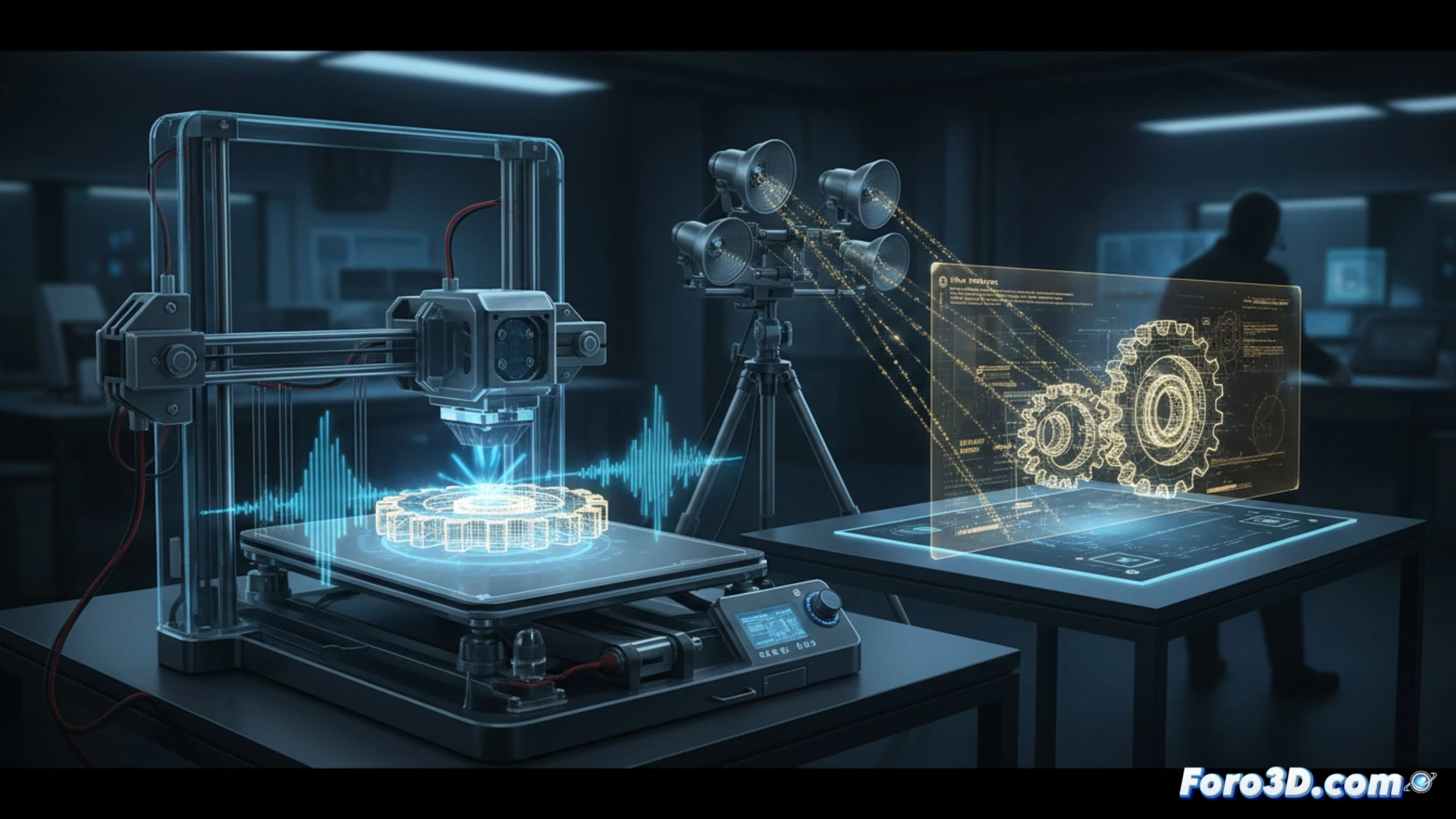
Mechanics of the Acoustic Attack in Additive Manufacturing 🎧
The principle of the attack is based on the correlation between mechanical noise and the print path. Each change in direction, speed, or filament extrusion generates a unique acoustic signature. A machine learning algorithm trains a model to translate these sound frequencies into Cartesian coordinates (X, Y, Z). In a controlled environment, the success rate in reconstructing the 3D model exceeds 90 percent. For creators, this means that a patent-protected design can be duplicated without needing access to the original STL file. The vulnerability is especially severe in open-source printers, where axis movements are predictable and unencrypted.
Legal and Technical Protection for Your Creations 🛡️
Faced with this threat, protection must be dual. On a technical level, the use of soundproof enclosures or white noise generators is recommended to mask vibrations. Encrypting the printer's firmware to randomize movements during non-critical layers is also crucial. On the legal front, it is vital to register designs not only as patents but also as trade secrets, since the mere acoustic reconstruction of the model does not necessarily constitute direct infringement if the design is not registered. Case law in digital law does not yet cover this type of industrial espionage, forcing creators to be pioneers in self-protection.
Is it possible that the theft of 3D patents through printing vibrations will become common practice, and how should intellectual property laws be adapted to protect designs in this new scenario of physical cyberattacks?
(PS: Thaler wanted his machine to be an author, I just want my 3D printer not to jam at 3am)