Biometric security promised to be impenetrable, but a recent safe robbery has proven otherwise. Criminals gained access using a 3D-printed finger, spoofing the owner's fingerprint. However, innovation in forensic science has fought back. The research team employed a scanning and topographic comparison workflow to demonstrate the forgery, analyzing the extrusion marks of the artificial finger against the fingerprint sensor surface.
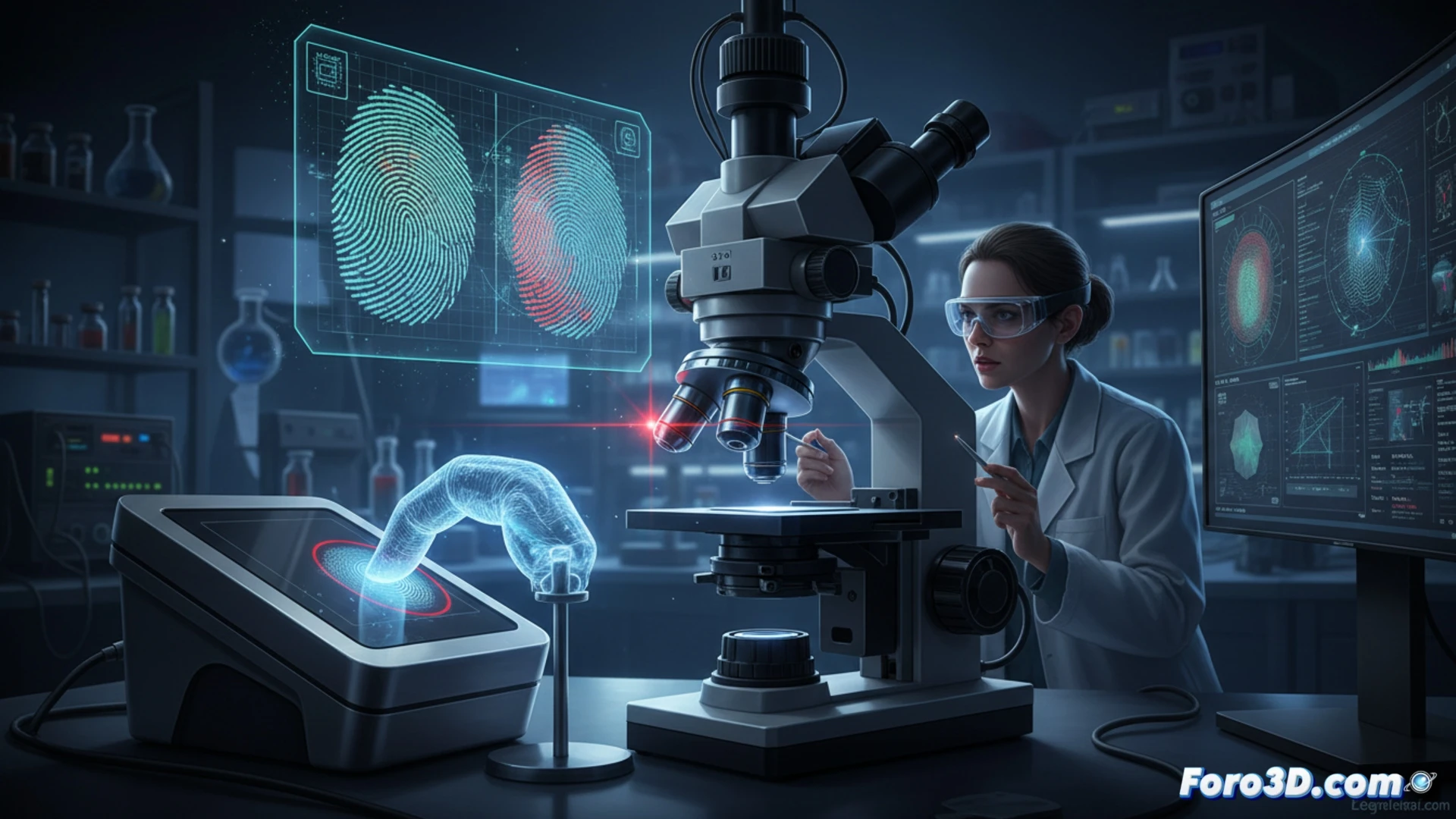
Forensic pipeline: from scanning to topographic comparison 🔬
The technical process began with the digital capture of the seized fake finger and the lock sensor. Using a 3D optical microscope, high-resolution point clouds of both surfaces were obtained. This data was imported into GOM Inspect, specialized 3D metrology software. Here, experts performed a best-fit alignment to overlay the finger's topography onto the sensor's. The discrepancies were evident: while the real fingerprint showed natural pores and ridges, the fake finger exhibited parallel extrusion lines and micro-burrs of polymeric material. To visualize these differences for a jury, ZBrush was used, sculpting a comparison model that highlighted contact areas and manufacturing marks, and KeyShot to generate photorealistic renders documenting the evidence unambiguously.
The digital chain of custody and the future of biometrics 🔐
This case not only exposes a critical vulnerability in physical security but also redefines the chain of custody in the digital age. Each scan, alignment, and render file must be signed and sealed with a cryptographic hash to ensure its legal integrity. The lesson is clear: biometric systems need liveness detection sensors to identify artificial materials. Meanwhile, 3D microscopy is consolidating as the definitive tool to unmask these attacks, proving that the perfect replica does not exist when measured at the micrometric level.
What key microstructural differences between a real finger and a silicone replica did the 3D microscope reveal to detect biometric fraud?
(PS: don't forget to calibrate the laser scanner before documenting the scene... or you might be modeling a ghost)