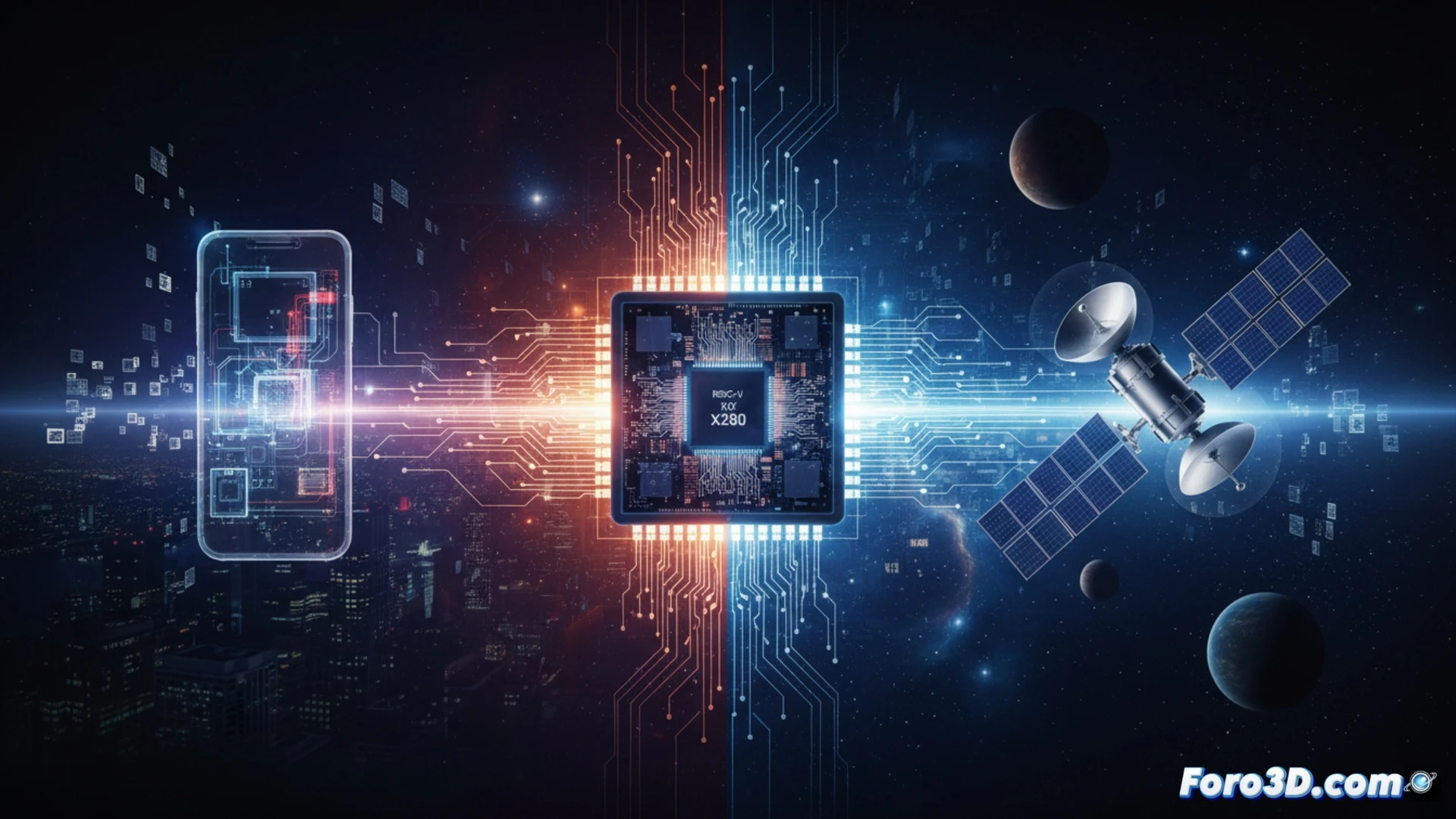
SiFive introduces the Intelligence X280, a RISC-V core with vector extensions designed for AI tasks. Its versatility allows it to be used in both mobile devices and satellites. This processor aims to compete in a market dominated by other architectures, offering an open and scalable alternative for inference and data processing.
Vectorized for the Edge: Performance Under Power Control 🚀
The X280 implements the RISC-V vector specification (v1.0) with support for lengths up to 256 bits. Its modular design allows for multi-cluster configurations, optimizing performance per watt. It includes accelerators for matrix operations (int8, fp16) and a local memory unit (LMU) interface that reduces latency in AI workloads. For space environments, it is hardened against radiation using logic redundancy techniques.
From Earth to the Moon: The X280 Doesn't Need a Spacesuit 🌙
The fact that a RISC-V chip can run AI on a satellite while you can barely get your phone to last a day without a charger has its charm. The X280 promises extreme efficiency, but one wonders if it will also come with a don't lose my signal mode for when the Mars rover decides to take a selfie. At least, if it fails, we'll know it was the fault of cosmic rays and not poor software optimization.