The role of the veterinary assistant is essential in daily clinical practice, but their occupational risk profile is often overshadowed by that of the lead veterinarian. This analysis reveals that physical assaults, exposure to zoonoses, and needlestick injuries are the most recurrent threats. At Foro3D.com, we propose an interactive 3D infographic that transforms these statistics into anatomical models and incidence maps, allowing for immediate visual understanding of the dangers facing this group.
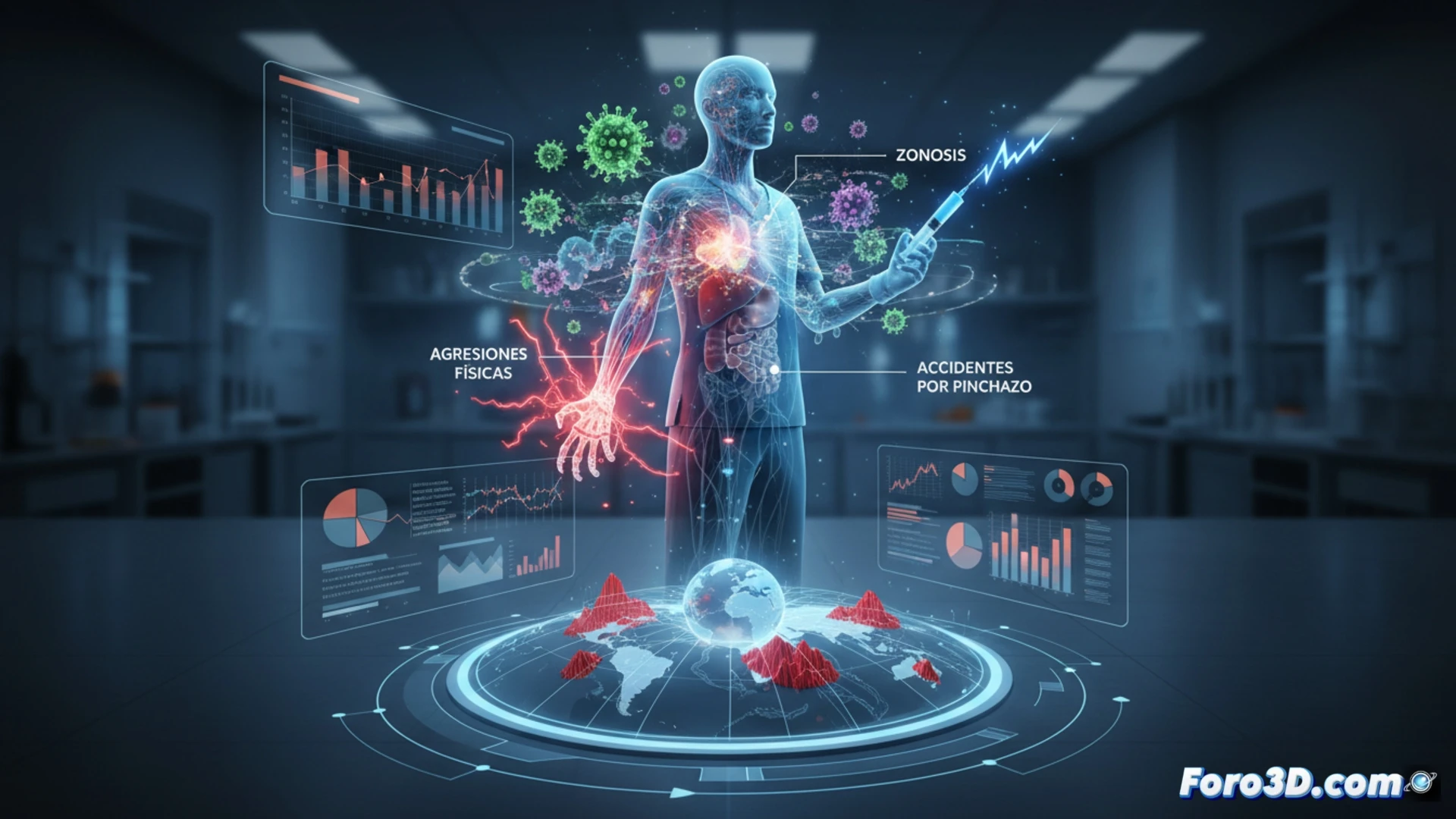
3D Modeling of Risks and Simulation of Infectious Spread 🧬
The proposed infographic is structured into three key visual modules. The first uses 3D anatomical models to locate the areas most affected by bites and kicks, with a heat system indicating the frequency of impact. The second module represents, through animated particles, the spread of infectious aerosols (zoonoses) in a simulated clinical environment, highlighting critical points such as the examination table or the extraction area. The third module incorporates a comparative 3D bar chart, cross-referencing the accident rate of veterinary assistants against other healthcare professions, including a needle stick counter that updates in real-time based on incidence data.
Visibility as the First Preventive Measure 🔍
The graphical representation of this data is not a mere aesthetic exercise; it is a public health tool. Visualizing in 3D the frequency with which an assistant suffers a fall on a wet floor or the density of pathogens on a contaminated surface allows for identifying patterns that textual reports hide. By converting risk into an interactive image, we facilitate staff training and the implementation of more effective safety protocols, raising awareness of a profession that deserves the same visual protection as any other in the healthcare field.
How could a 3D model of epidemiological data reveal patterns of exposure to zoonoses in veterinary assistants that go unnoticed in traditional clinical records?
(PS: at Foro3D we know that the only epidemic affecting us is the lack of polygons)