The veterinary profession faces constant exposure to biological and physical hazards that threaten the professional's health. From bites and scratches to kicks or horn strikes from animals, the risk of injury is high. Added to this is exposure to zoonotic diseases, ionizing radiation in X-ray diagnosis, accidental needlesticks, and a high level of emotional stress. Analyzing this data with visual epidemiology tools allows for creating incidence maps and simulations for prevention.
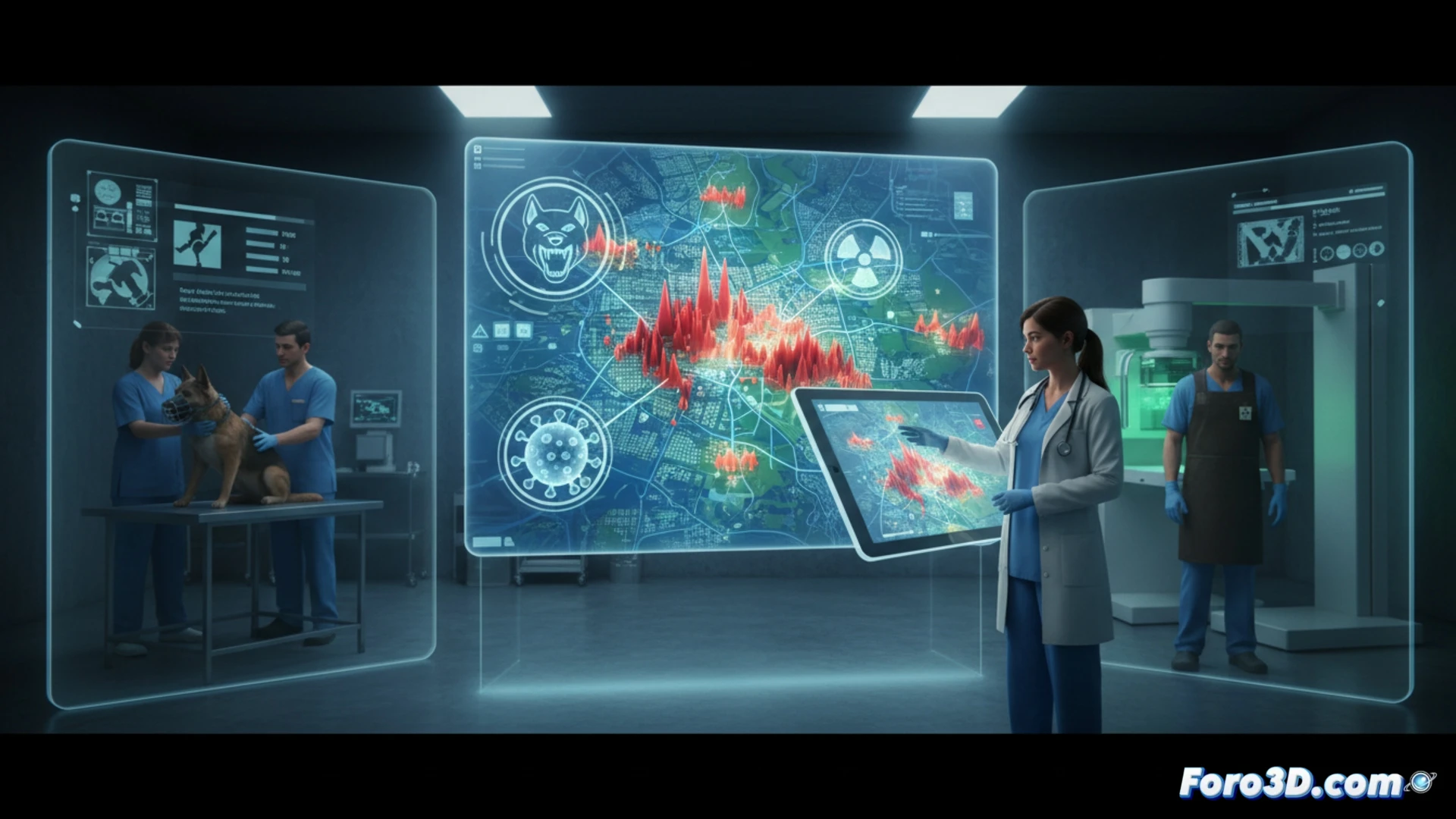
3D Visualization of Biological Risks and Occupational Accidents 🧬
Visual epidemiology applied to the veterinary profession allows transforming accident data into interactive three-dimensional models. We can generate 3D bar charts comparing the frequency of bites versus needlesticks by region, or volumetric heat maps showing the density of zoonosis cases such as leptospirosis or rabies. Furthermore, simulations of pathogen spread in clinical environments, rendered in 3D, help identify critical contagion points. These representations facilitate understanding risk patterns and optimize biosafety protocols in veterinary clinics and hospitals.
The Human Factor and Stress in Daily Clinical Practice 😰
Beyond physical and biological risks, emotional stress is a silent but devastating factor. The pressure of restraining violent animals, workload, and exposure to euthanasia generate professional burnout. Visualizing in 3D the correlation between working hours, number of violent restraints, and cortisol levels would allow designing safer and healthier work environments. 3D technology not only documents accidents; it offers an educational tool to anticipate danger and protect the veterinarian's mental health.
How could a three-dimensional model of the veterinary clinic simulate the dispersion of contaminated aerosols during surgical procedures to improve biological risk assessment and design more effective prevention protocols?
(PS: public health graphs always show curves... just like ours after Christmas)