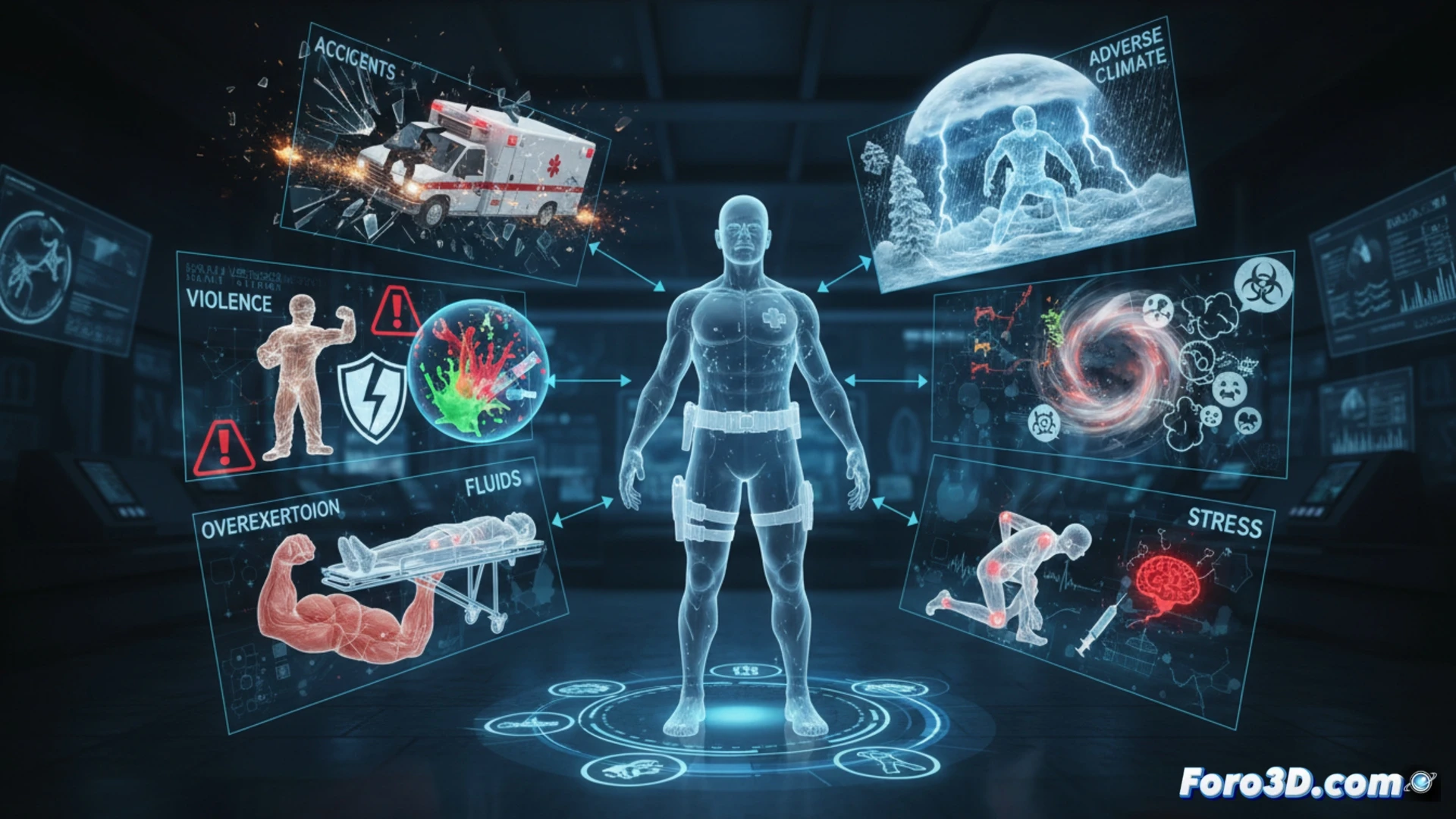
Paramedics face a lethal combination of daily dangers that go beyond medical care. Our epidemiological analysis identifies seven critical risk categories: ambulance traffic accidents, exposure to violence and assaults, contact with biological fluids, physical overexertion, forced postures, post-traumatic stress, and adverse weather conditions. The lack of interactive visual tools hinders preventive training and awareness of these hazards.
Methodology for representing risk data 🚑
To address this gap, we propose an interactive 3D infographic that integrates real-time occupational accident data. The model uses georeferenced heat maps to show the regional incidence of each risk, differentiating between frequency (number of incidents per thousand hours worked) and severity (days off work or permanent sequelae). Scenario simulations, such as a road ambulance accident or an assault in a home, allow the user to explore the variables that increase the likelihood of the incident. This visual epidemiology approach transforms abstract statistics into immersive training experiences.
The human cost of emergency 💔
Behind every graph lies a reality that demands intervention. Post-traumatic stress affects nearly 20% of paramedics, while overexertion from patient mobilization causes chronic back injuries. By visualizing this data in 3D, we not only educate prevention teams but also humanize the numbers. The tool aims to reduce the normalization of risk and promote safety protocols based on visual evidence. Protecting healthcare personnel begins when we understand what they face.
How would you show the relationship between obesity and other variables such as socioeconomic status?