Exposure to ABS fumes and liquid resins during 3D printing poses a real danger to the technician's respiratory health. Added to this are burns from contact with hot nozzles (up to 260 degrees) and platforms, cuts from post-processing tools, and eye strain from long working hours. We analyze the hardware risks and propose protective measures.
Protection against fumes, particles, and hardware chemicals 🛡️
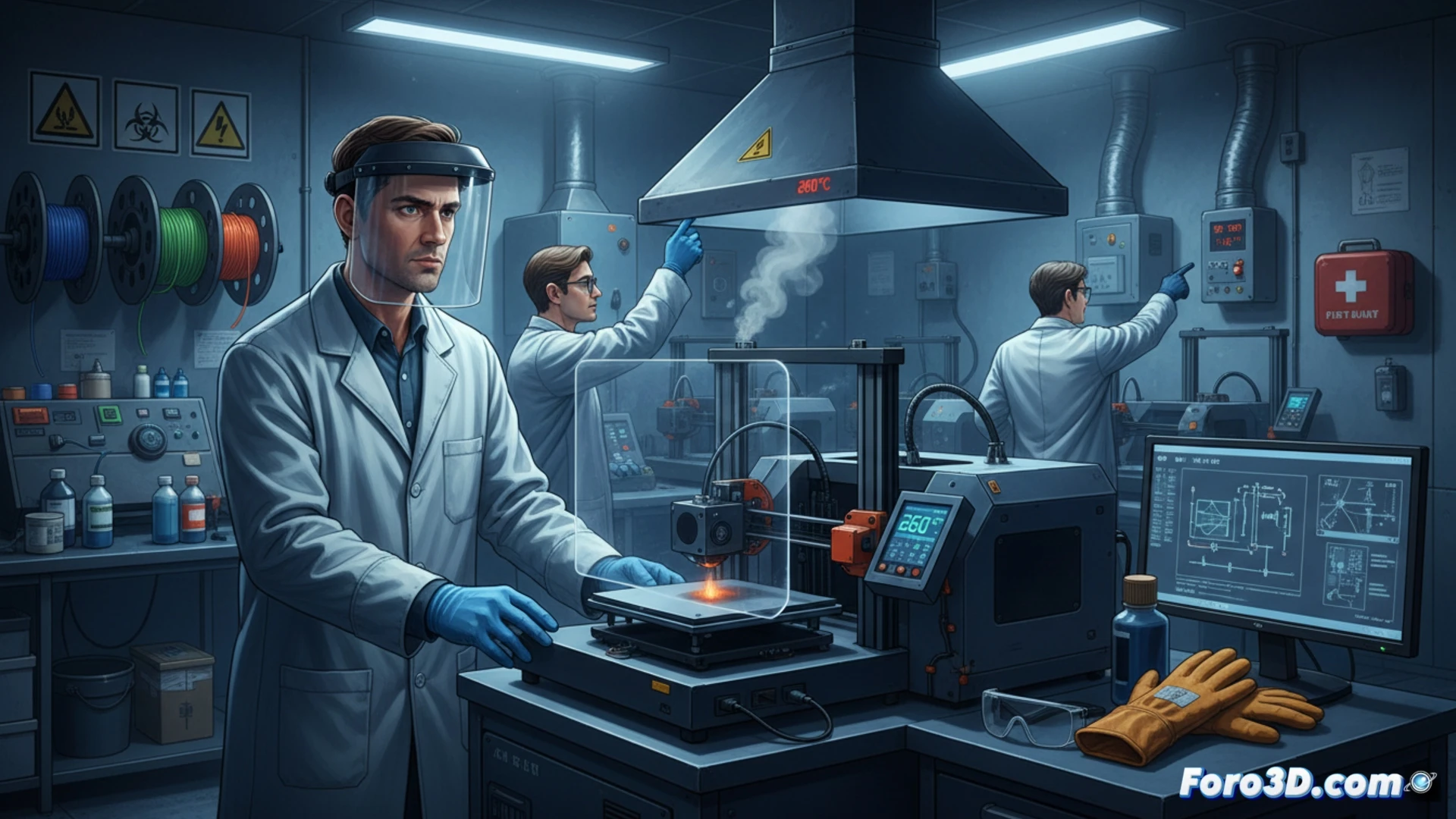
The main chemical risk comes from melted filaments (ABS and resins) that release volatile organic compounds (VOCs) and ultrafine particles. A localized ventilation system with HEPA and activated carbon filters is mandatory near the nozzle. For liquid resins, using nitrile gloves and sealed goggles prevents skin sensitization. Hot nozzles and beds require cooling protocols before any handling; maintenance must be performed with the machine off and using insulated tweezers to avoid burns.
Ergonomics and forced postures in the 3D workshop 🧑🔧
Eye strain from observing thin layers for hours is combated with adjustable LED lighting and anti-glare screens. Forced postures when removing parts or cleaning the hot bed are avoided with height-adjustable tables and armrests. The operator should alternate tasks every 45 minutes to reduce neck strain. Investing in hardware with safety sensors and automatic stops not only protects the technician but also extends the equipment's lifespan.
What ventilation and filtration systems do hardware manufacturers recommend to minimize exposure to ABS fumes and resins in desktop 3D printers?
(PS: Your CPU heats up more than the debate between Blender and Maya)