Nursing is one of the professions with the highest exposure to complex occupational risks. From needlesticks with contaminated needles to the emotional exhaustion of burnout, healthcare personnel face physical and psychological threats daily. We analyze epidemiological data to build a visual representation that allows us to understand the magnitude of the problem and improve prevention strategies in occupational health.
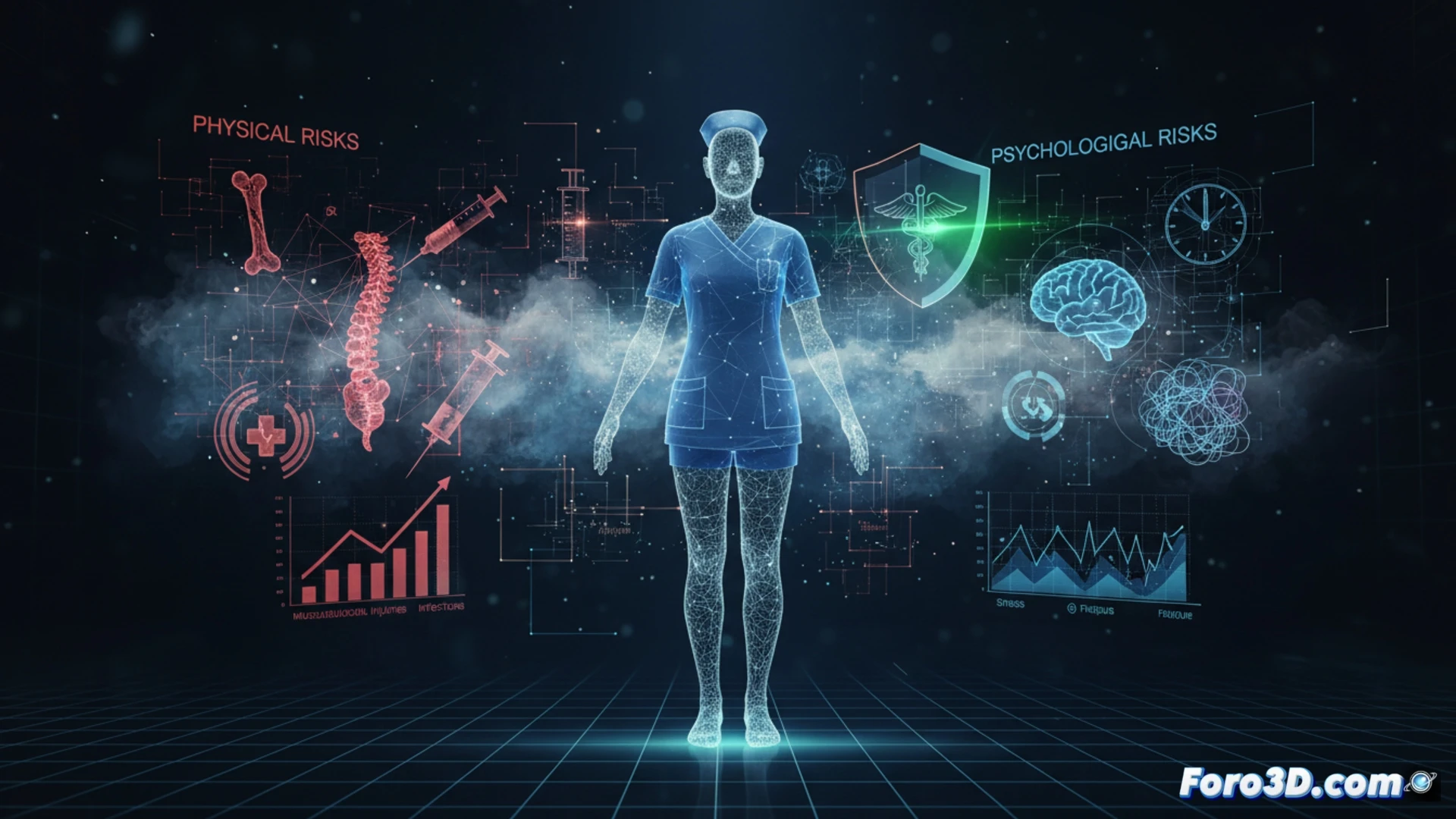
Risk mapping: critical zones and exposure routes 🗺️
For our 3D infographic, we propose an interactive anatomical model that highlights the points with the highest incidence of injuries. The lower back and shoulders concentrate 70% of overexertion from patient mobilization. Hands and forearms are the areas most vulnerable to needlesticks and splashes, with a rate of 12 accidents per 100 nurses per year. Additionally, we will include a heat map showing how night shifts double the frequency of falls on wet floors and errors in handling hazardous drugs such as chemotherapy agents. Pathogen exposure routes will be visualized using dynamic arrows that travel from the patient to the professional's mucous membranes, highlighting the importance of protective barriers.
Visualizing wear and tear: burnout and assaults in 3D 🔥
Chronic stress and assaults from patients or family members are invisible risks that we must make tangible. Our infographic will include a three-dimensional bar chart comparing the incidence of burnout by department: emergency leads with 45%, followed by intensive care with 38%. A second module will show an emotional thermometer recording the frequency of verbal and physical assaults per shift, revealing that 60% of these incidents occur during the evening shift. By visualizing this data in 3D, public health teams can identify patterns and design specific interventions to protect those who care for us.
How can an interactive 3D infographic represent the cumulative impact of needlesticks with contaminated needles on the visual health of nursing professionals throughout their careers?
(PS: at Foro3D we know that the only epidemic affecting us is the lack of polygons)