Nursing assistants face a multifactorial exposure to physical and biological risks that make their work one of the most demanding in the healthcare sector. Data from the National Institute for Occupational Safety and Health (INSST) indicate that musculoskeletal disorders account for more than 60% of occupational diseases in this group, with the lumbar region being the main focus of injury. The daily mobilization of bedridden patients, combined with forced postures during hygiene care, generates a biomechanical load that leads to chronic low back pain and herniated discs. Added to this is the constant biological risk: handling fluids such as blood, urine, and feces exposes the worker to pathogens like the hepatitis B virus, HIV, and multidrug-resistant bacteria. Accidental needlesticks or cuts from scalpels, although preventable, remain one of the most frequent causes of occupational accidents with contaminated material.
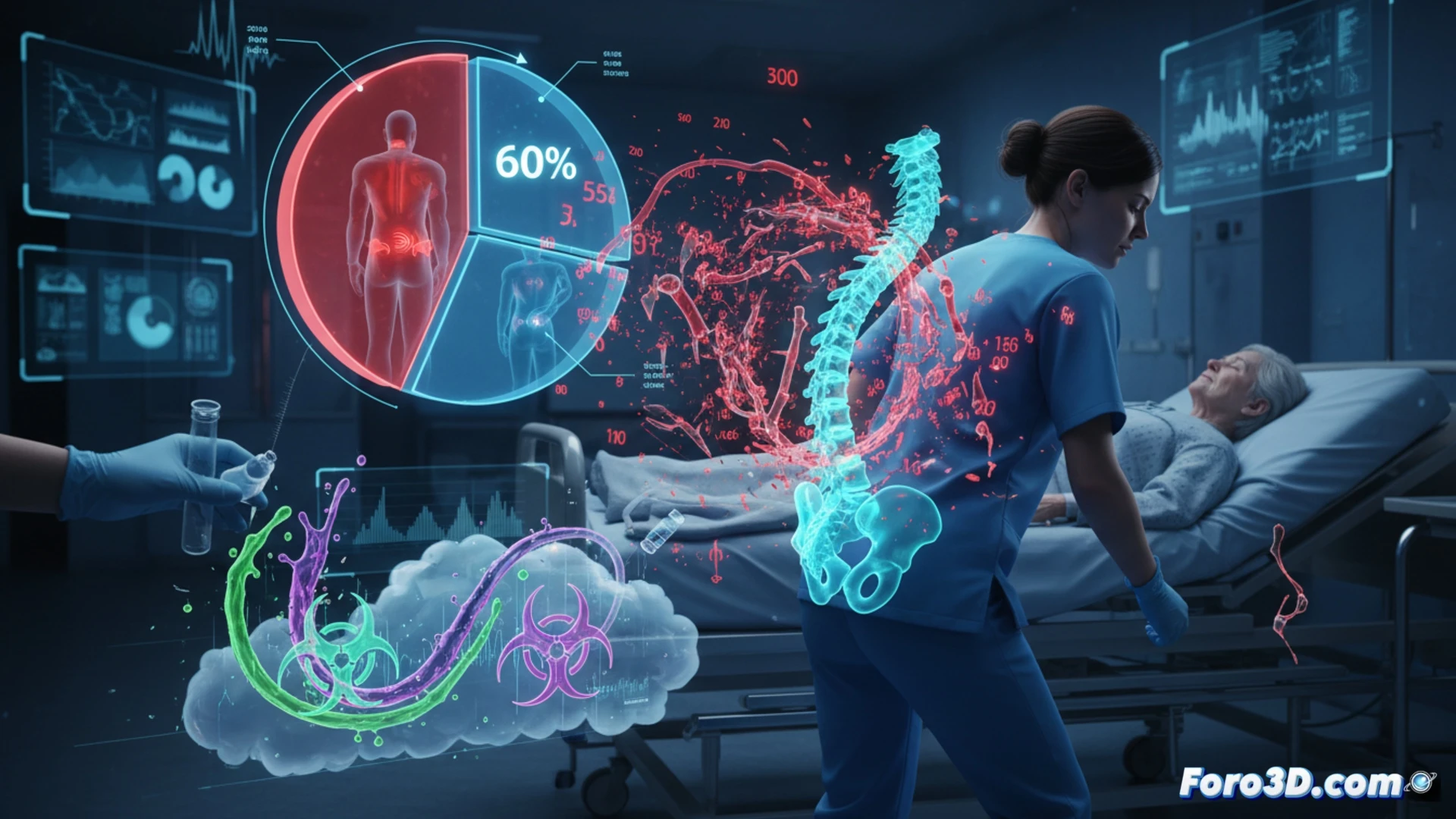
Three-dimensional heat map and biomechanical load simulation 🧬
To visually represent this data, we propose an interactive 3D infographic that integrates three layers of information. The first layer consists of a human anatomical model that, using a color gradient, indicates the body areas with the highest incidence of injuries: the lumbar spine in intense red (overexertion), hands and wrists in orange (dermatitis from frequent washing and risk of needlestick), and shoulders in yellow (forced postures during mobilization). The second layer would show a heat map of the workplace, overlaying risk frequency data on a hospital floor plan: high biological risk areas (beds of patients in isolation), wet floor zones (bathrooms and showers), and the most common points of aggression (rooms of patients with cognitive disorders). The third layer would offer an animated simulation of a typical forced posture: the assistant leaning over the bed to change a sheet, with force vectors on the spine and knees. This simulation would allow real-time calculation of lumbar disc compression (measured in Newtons) and comparison with the safe limit recommended by NIOSH (3400 Newtons). Data from the Spanish Society of Emergency Nursing (SEEUE) place the average compression in nursing assistants at 4200 Newtons during the mobilization of patients weighing over 70 kg, exceeding the risk threshold.
The paradox of care: those who heal also suffer 💔
Daily exposure to bodily fluids, verbal and physical violence from disoriented patients, and the fast-paced work rhythm generate chronic stress that often goes unnoticed. A study published in the Journal of Public Health (2023) revealed that 45% of nursing assistants show symptoms of emotional exhaustion, and that 30% have suffered at least one physical assault in the last year. Contact dermatitis, caused by hand washing up to 40 times per shift, affects 70% of staff, according to the Spanish Academy of Dermatology. Visualizing this data in 3D not only educates but also humanizes a statistical reality. The proposed infographic aims to be a tool for prevention, reminding us that behind every bar chart is a professional who sustains the health of others while risking their own.
How would you show the relationship between obesity and other variables such as socioeconomic status?