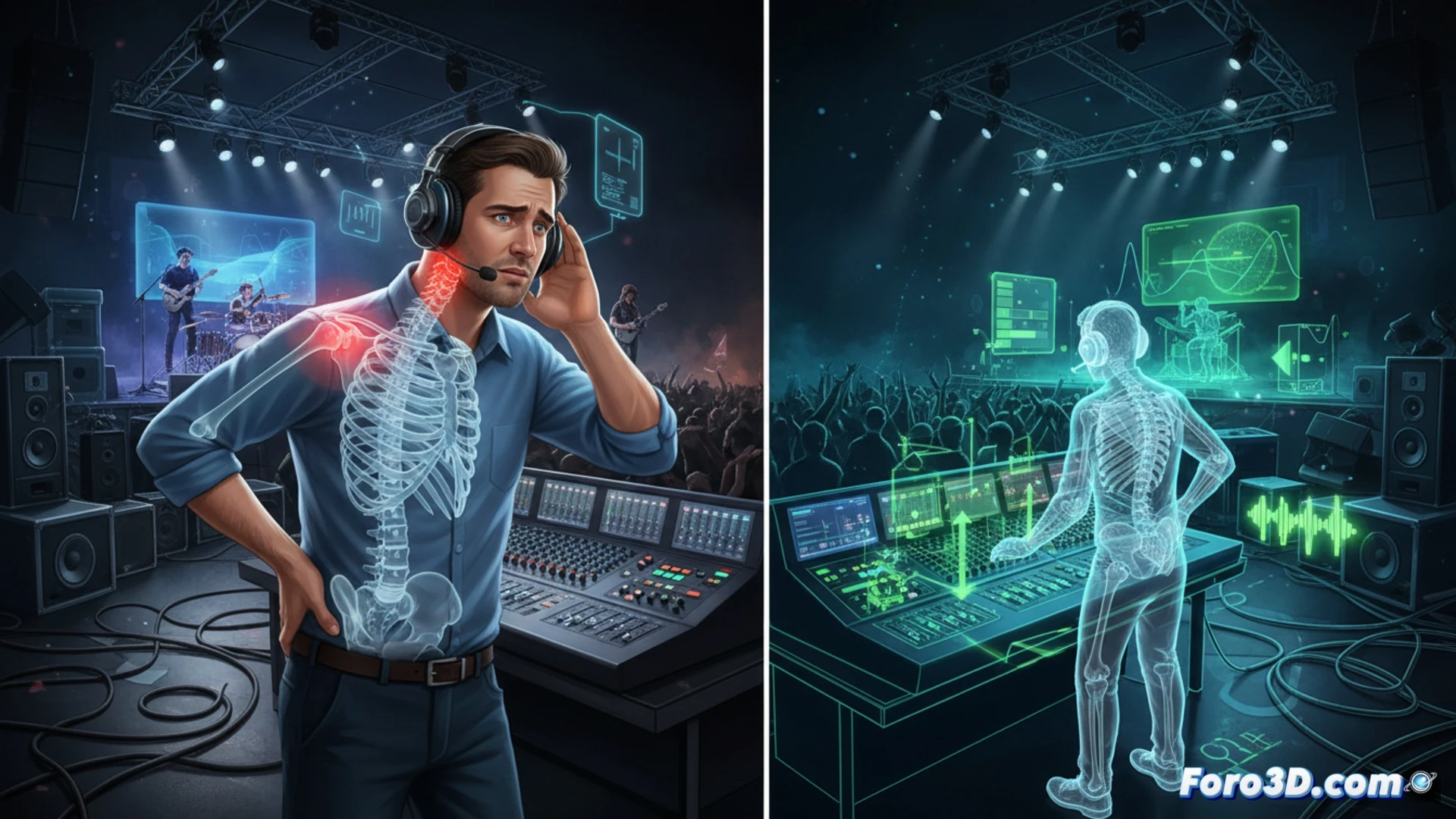
The sound engineer is an essential professional in stage design and live performances, but their work carries specific risks that are often underestimated. Exposure to intense noise causes progressive hearing loss, while transporting heavy equipment leads to overexertion and musculoskeletal injuries. Added to this are forced postures for hours, falls on set, stress from live recording, and mental fatigue. Analyzing these hazards through 3D technology opens new avenues for prevention.
Acoustic simulation and stage modeling to mitigate risks 🎧
3D simulation tools allow for the digital recreation of a venue before the actual setup, optimizing speaker placement and reducing the sound engineer's exposure to sound pressure peaks. Additionally, stage modeling facilitates planning equipment transport routes, avoiding overexertion by identifying safe passage areas and support points. Simulating forced postures in virtual environments helps design ergonomic workstations, while virtual shoots anticipate risks of falls or trips. This methodology transforms occupational risk prevention into a predictive and personalized process.
Towards a culture of digital safety in live entertainment 🛡️
Integrating 3D technologies into event planning not only improves acoustic quality but also protects the sound engineer's health. Reducing mental fatigue and stress derived from live uncertainty is possible when a digital twin of the stage is available. The stage design sector must adopt these tools as a standard, not a luxury. Investing in simulation is investing in longer and safer professional careers.
As a live sound professional, what ergonomic and acoustic exposure risks could you anticipate and mitigate through a 3D simulation before equipment installation on a complex stage?
(PS: modeling an audience in 3D is easier than the real one: they don't complain, they don't record with their phones, and they always applaud) 🎭