The profession of a gravedigger involves constant exposure to physical, biological, and psychological hazards that are rarely analyzed with technical depth. From overexertion due to manual digging to indirect handling of embalming chemicals, each task in a cemetery requires a specific safety protocol. This article proposes the use of an interactive 3D infographic to model a virtual cemetery, identifying each critical risk point and simulating the forced postures that lead to musculoskeletal disorders.
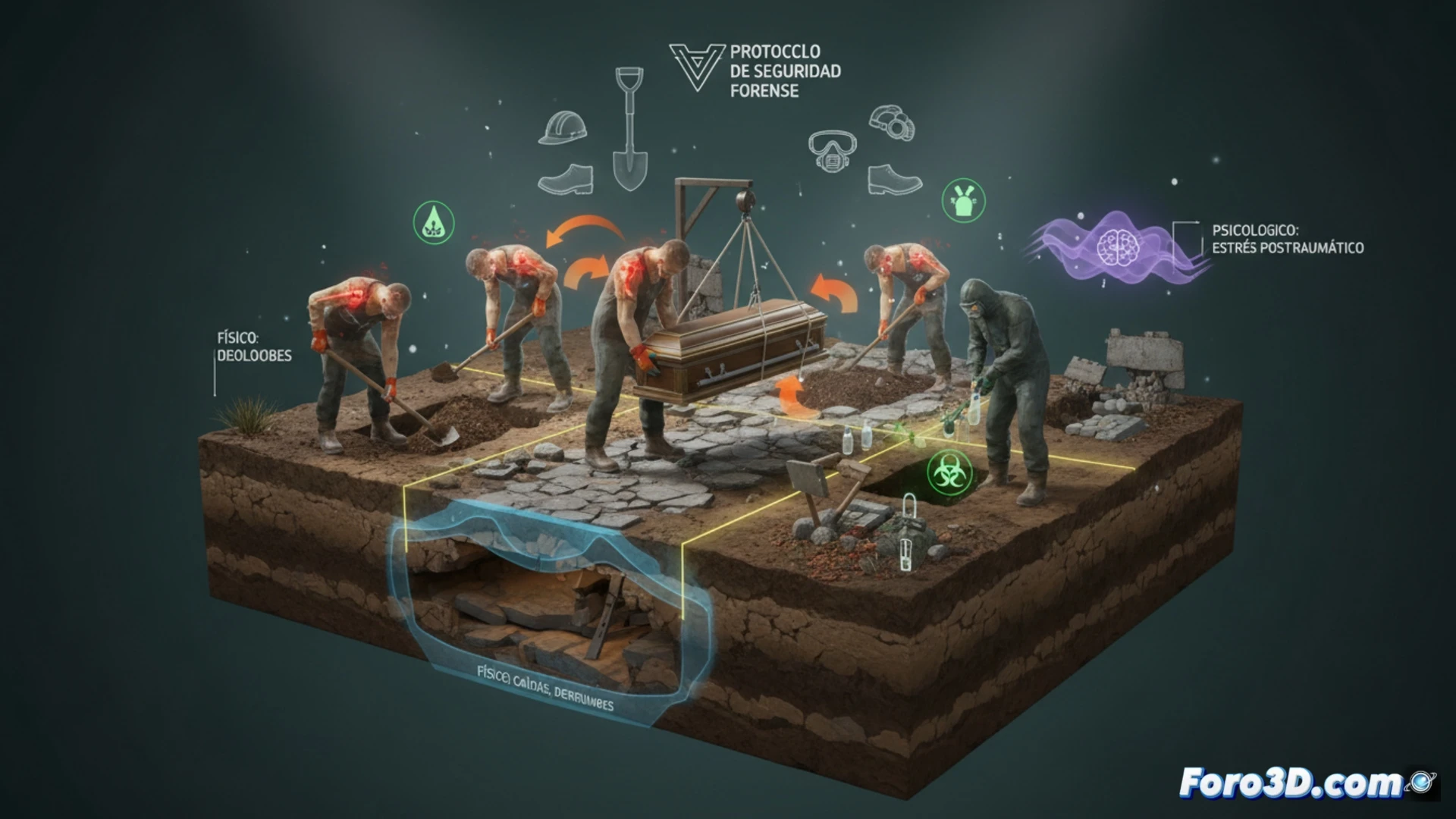
3D modeling of risk scenarios and biomechanical analysis 🛠️
The 3D infographic is built on a digital twin of the cemetery, where open graves, excavation areas with machinery, and chemical storage zones are geolocated. Animated human avatars reproduce typical forced postures, such as lumbar flexion when lifting soil or trunk rotation when handling coffins. Data on pathogen exposure (bacteria, viruses, and fungi) and heat stress maps due to adverse weather conditions are overlaid on these models. This visualization allows for calculating the risk of falls into graves and predicting accumulated muscle fatigue, facilitating the design of active break protocols and task rotation.
Humanizing the data: emotional stress and biosafety 🧠
Beyond physical risks, the gravedigger faces a significant emotional burden due to continuous contact with death. The 3D infographic incorporates psychological stress indicators based on the frequency of critical exposures and workplace isolation. By visualizing this data in the virtual environment, safety teams can design empathetic training and psychological support protocols. The tool not only prevents injuries but also humanizes forensic analysis, integrating mental health as an indispensable pillar in the occupational safety pipeline.
How can an interactive 3D infographic improve the identification of invisible biological risks in the daily routine of a gravedigger?
(PS: In the forensic pipeline, the most important thing is not to mix evidence with reference models... or you'll end up with a ghost at the scene.)