Prolonged exposure to screens, a sedentary lifestyle, and deadline pressure make programming a high-risk occupation for public health. Visual fatigue, dry eye, musculoskeletal disorders, and chronic stress are the most prevalent pathologies in this sector. Our proposal is to visualize this data through an interactive 3D infographic that allows epidemiologists and professionals to understand the real incidence of each condition based on years of work experience.
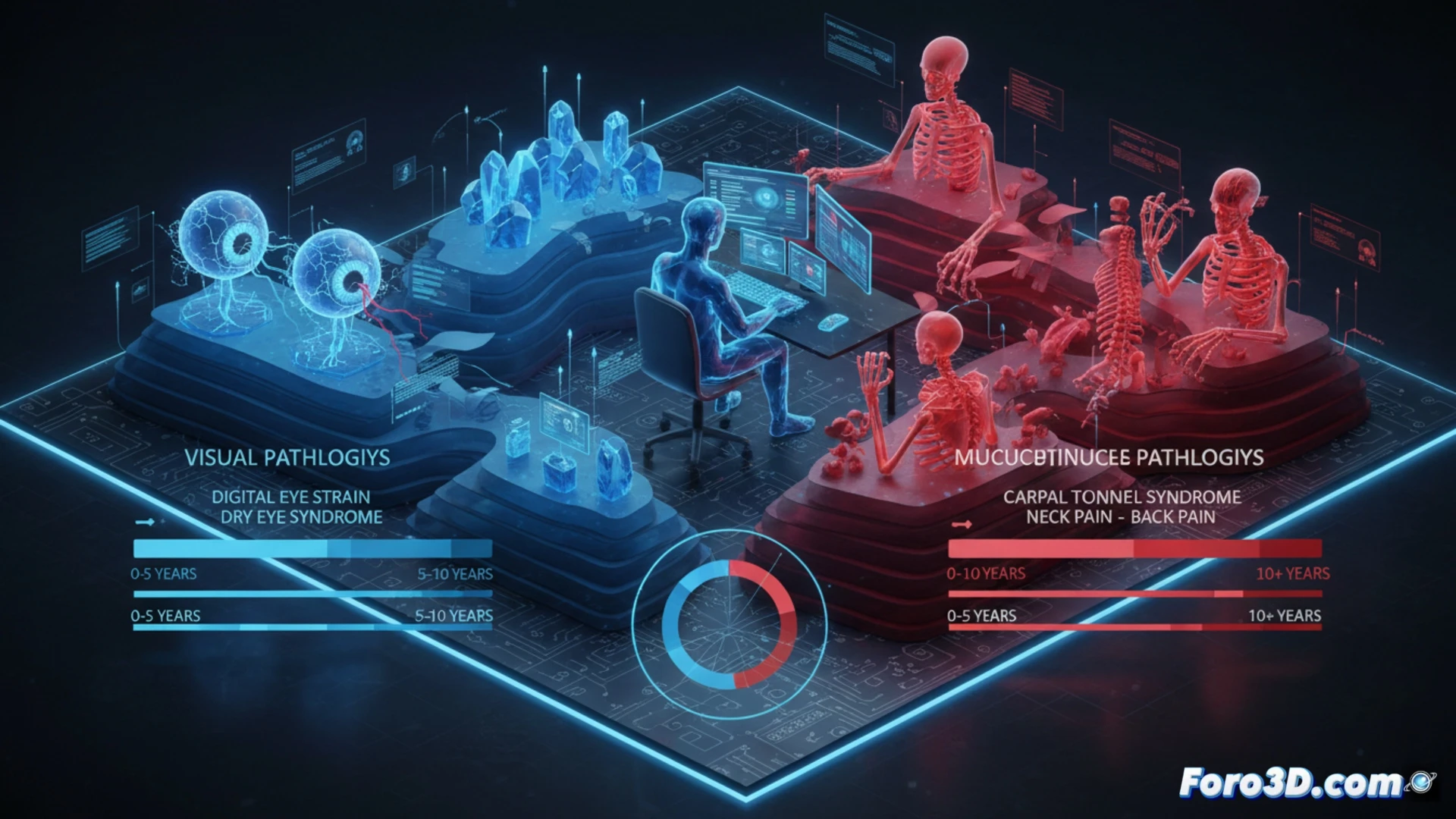
Interactive 3D infographic: prevalence by years of experience and rotatable anatomical models 🧬
The infographic will integrate three main axes. First, a three-dimensional bar chart will show the prevalence of carpal tunnel syndrome, obesity, and anxiety in programmers with 1, 5, 10, and 15 years of experience. Second, rotatable anatomical models of the eye, cervical spine, and wrist will be included, which, when selected, will indicate the affected areas (macula due to visual fatigue, intervertebral discs due to forced postures, and median nerve due to repetitive compression). Third, a comparative data layer will present statistics against other occupations such as administrative workers or graphic designers, highlighting that programmers double the incidence of dry eye and quadruple cases of work-related anxiety.
Beyond the code: a call to visual epidemiology in the tech sector 🖥️
The infographic is not only a technical tool but also a call to incorporate visual and postural health as a key indicator in occupational risk prevention policies. By cross-referencing prevalence data with years of experience, it becomes evident that programmers with over a decade in the profession present 40% more musculoskeletal disorders than the average office worker. It is urgent for public health departments to design specific protocols for this group, and 3D visualization is the first step in making these figures visible.
Can we generate a 3D heat map that correlates hours of screen exposure with the onset of visual and postural pathologies in programmers to predict critical risk points in software development?
(PS: the 3D incidence maps look so good that they almost make being sick enjoyable)