The craft of shellfish gathering, rooted in coastal areas, exposes workers to a range of risks, from forced postures and cuts to drowning from tides and hypothermia. Occupational epidemiology identifies these factors as recurrent causes of morbidity. The creation of an interactive 3D infographic allows each hazard to be visualized in its real context, facilitating understanding of injury mechanisms and prevention strategies from a public health perspective.
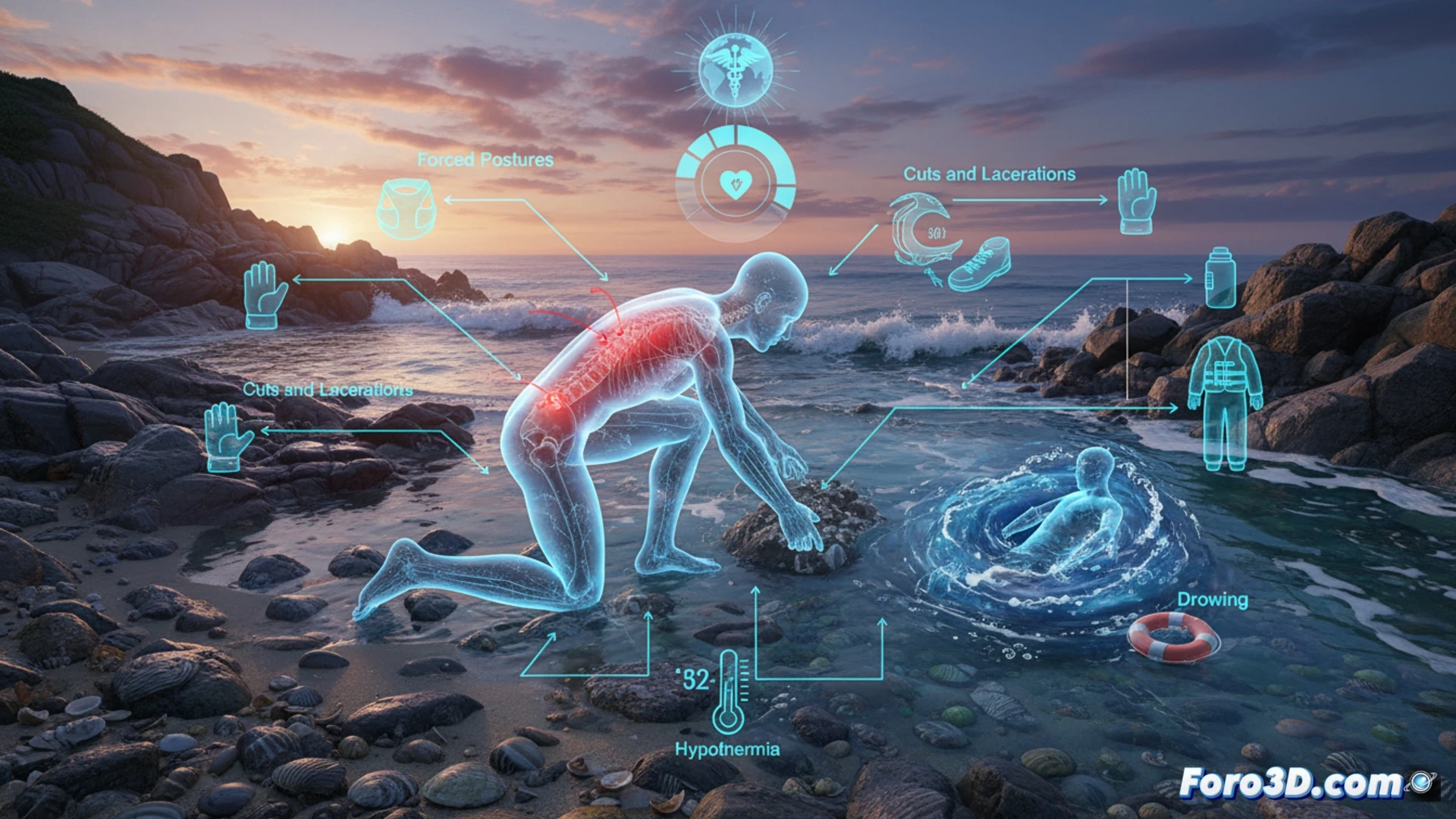
3D modeling of risks: postures, cuts, and environmental exposure 🦞
The infographic incorporates anatomical models that simulate the typical forced postures of shellfish gatherers: working bent over or kneeling on wet surfaces. Strains on the lumbar spine and knees are represented, along with heat maps indicating areas with the highest incidence of cuts from shells or tools. Additionally, simulations of incoming tides are included to visualize the risk of drowning, along with dynamic graphs correlating water temperature with the incidence of hypothermia and the presence of marine microorganisms (Vibrio, Staphylococcus). The animations show correct gripping techniques and non-slip footwear to prevent falls on rocks.
Visualization as a tool for occupational public health 🧊
This visual representation not only documents the risks but transforms epidemiological data into an immersive experience. By showing the progression of hypothermia or the infection route of marine pathogens, awareness of the danger is reinforced. The 3D infographic becomes a didactic resource for trainers and workers, allowing the identification of modifiable risk factors and promoting the use of protective equipment such as waterproof suits and cut-resistant gloves, thereby reducing accident rates in the sector.
How can 3D simulation technology be applied to design ergonomic tools that reduce chronic musculoskeletal and eye injuries in shellfish gatherers during long workdays on reflective surfaces?
(PS: the 3D incidence maps look so good they almost make being sick enjoyable)