The rise of cloud computing has created a critical professional profile: the cloud engineer. However, the pressure to ensure 24/7 availability and control costs generates a cocktail of occupational hazards. This article analyzes, from the perspective of visual epidemiology and occupational health, the incidence of musculoskeletal disorders, stress, and visual fatigue in this group, using 3D visualizations to map pain and mental load.
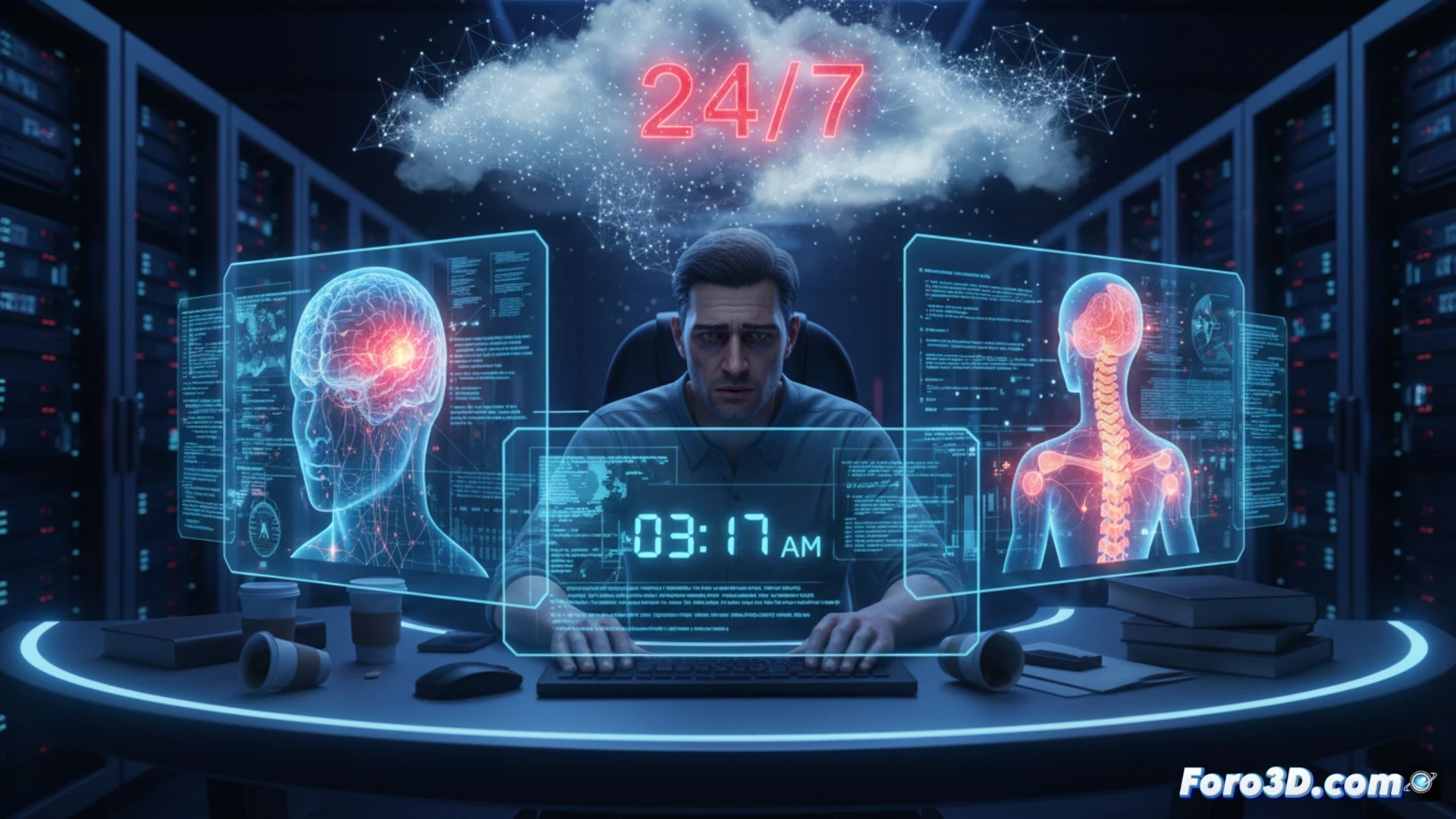
3D Visualization of Prevalence and Body Heat Maps 🧠
To understand the magnitude of the problem, we propose an interactive 3D model that compares the prevalence of musculoskeletal disorders (MSDs) in cloud engineers versus other digital professions, such as software developers or UX designers. A three-dimensional bar chart would show hours in front of screens (exceeding 10 hours daily) against the incidence of ocular symptoms, such as dryness and blurred vision. An animated body heat map would reveal the areas with the most tension: the trapezius, the lower back, and the neck, where forced postures and a sedentary lifestyle concentrate chronic pain. On-call duties, represented as stress peaks on a 3D timeline, would correlate with peaks of anxiety and mental overexertion.
Postural Simulations and Animated Ergonomic Recommendations 🖥️
Prevention must be dynamic. Including 3D simulations of typical forced postures (such as hunching over the keyboard or keeping the neck flexed during video calls) allows for visualizing biomechanical stress in real-time. Animated ergonomic recommendations, such as screen height adjustments or active breaks for visual fatigue, can be integrated into a virtual reality environment. This approach not only educates but also allows cloud engineers to identify their own risk patterns before they lead to chronic injuries or mental health problems.
As a cloud engineer, much of your day involves monitoring 3D dashboards and complex visual environments: what visual ergonomics techniques do epidemiologists recommend to mitigate the risk of chronic eye fatigue without sacrificing productivity in the cloud?
(PS: modeling health data is like dieting: you start with energy and end up giving up)