The craft of spinning remains fundamental in the textile production chain, but it carries severe physical and respiratory risks. Entrapment in spindles and rollers, constant exposure to dust from natural and synthetic fibers, industrial noise, and prolonged static postures are daily threats. The lack of spatial awareness of these dangers increases accident rates. 3D simulation offers an innovative solution to visualize and correct these factors before an accident occurs. 🧵
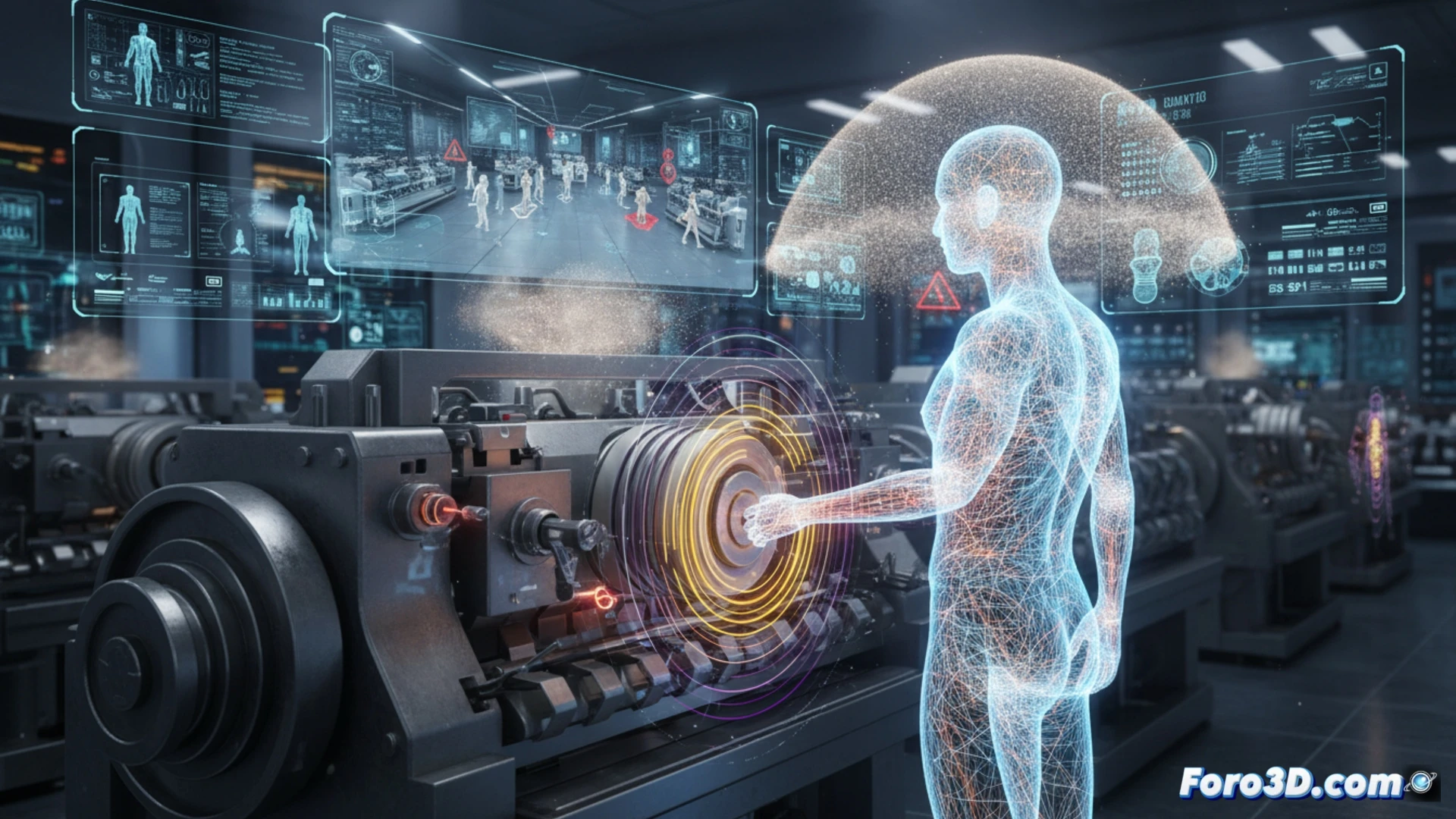
3D modeling of critical points in textile machinery 🏭
Using digital twins of spinning mills, it is possible to recreate with millimeter precision the entrapment zones in high-speed spindles and stretching rollers. Volumetric modeling allows for visually identifying safety distances and blind angles where the operator's hands can become trapped. Additionally, clouds of cotton or wool dust particles can be simulated, mapping the areas of highest concentration to design localized extraction systems. The chromatic representation of noise levels (decibels) on the 3D model helps plan acoustic barriers and rotation schedules.
Immersive virtual environments for preventive training 🥽
Virtual reality applied to occupational safety transforms the spinner's training. The worker can navigate a simulated environment where they identify slippery floors from lubricants, locate repetitive forced postures, and detect arm movements that generate musculoskeletal disorders. This interactive experience, without real risks, allows practicing emergency stop protocols and ergonomic positions. The result is a tangible reduction in accidents and occupational diseases, integrating 3D technology as a direct ally of occupational health in the textile industry.
How can a realistic 3D simulation of fiber and suspended dust dynamics anticipate the spinner's respiratory risks before they manifest in the real work environment?
(PS: Designing fashion in 3D has the advantage that you never have to sew a button.)