Photography, far from being a risk-free profession, exposes workers to a complex risk profile that combines biomechanical, chemical, and psychosocial factors. From forced postures on the ground to chronic visual fatigue from digital editing, the profession requires a detailed epidemiological analysis to design effective prevention strategies in the field of public health.
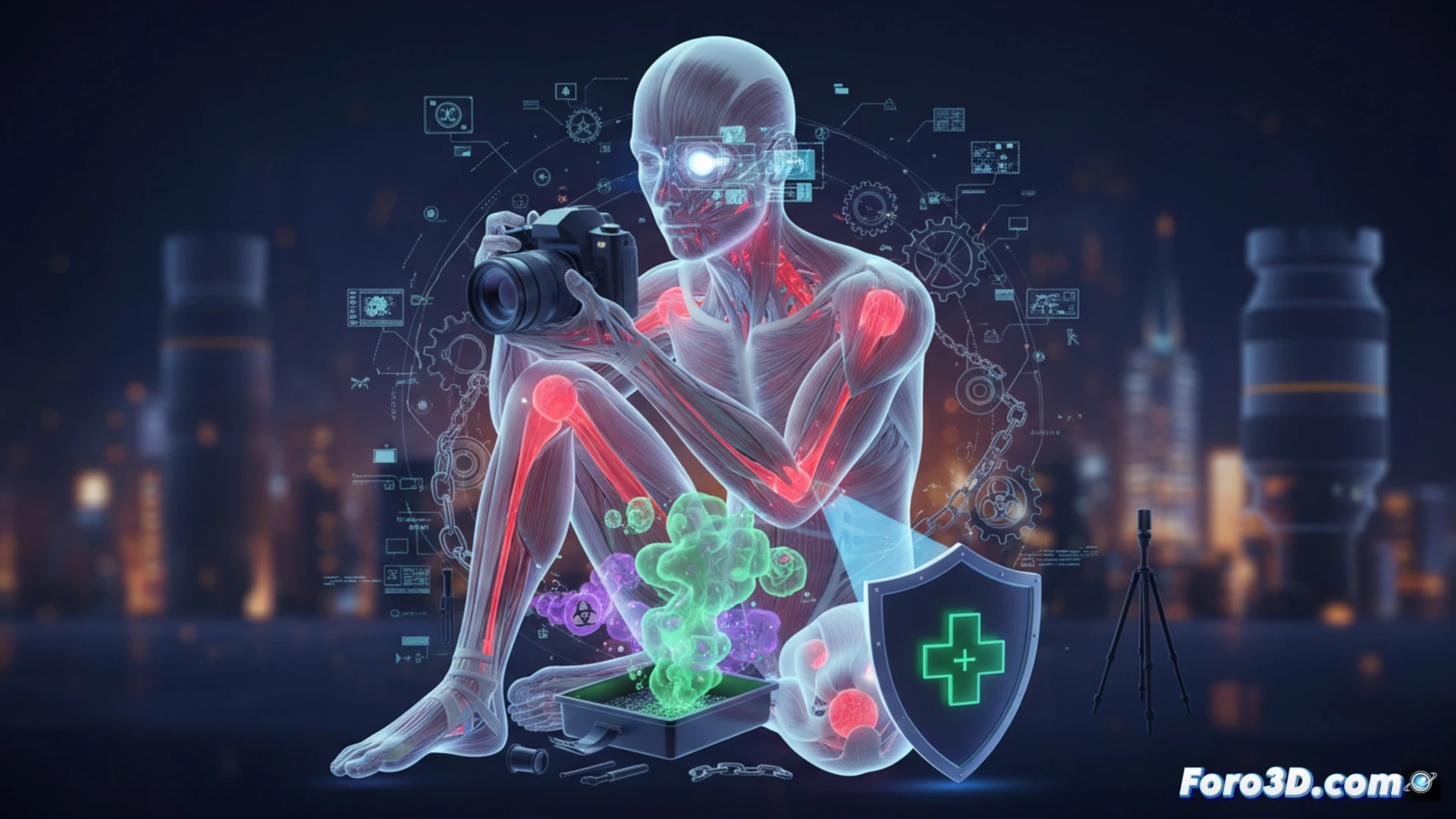
Incidence mapping and biomechanical load by specialty 📊
Using occupational accident data, we propose an interactive 3D infographic that correlates photographic specialty with the prevalence of each risk. For example, a body heat map would show that wedding photographers have a high incidence of low back pain (from bending and kneeling) and contact dermatitis (from environmental exposure), while studio photographers concentrate risk in elevated arms and visual fatigue. Three-dimensional bar charts would allow visualization that overexertion from transporting heavy equipment is the most constant factor, while stress from delivery deadlines shows seasonal peaks. A longitudinal timeline would reveal how visual fatigue and cervical degeneration accumulate exponentially after ten years in the profession, a critical data point for visual epidemiology.
Visualizing to prevent: the value of predictive models 🔍
The graphical representation of this data is not a mere aesthetic exercise, but a public health tool. A 3D predictive model could alert the photographer to their accumulated risk of developing dermatitis from developing chemicals or premature cataracts from screen exposure, enabling early interventions. By transforming abstract risks into tangible visual maps, we make it easier for professionals to become aware of their occupational health and adopt active breaks, ergonomics, and skin protection before the damage becomes irreversible.
How can three-dimensional modeling of exposure trajectories to harmful agents (such as developing dust, chemical vapors, or accumulated UV radiation) predict the risk of specific occupational diseases in photographers of different specialties?
(PS: modeling health data is like going on a diet: you start with energy and end up giving up)