Community and hospital pharmacy faces silent but chronic occupational hazards. Exposure to active ingredients and medication powders can cause allergic sensitization or systemic intoxication. Added to this are forced postures from prolonged standing, stress from customer service, and overexertion when handling heavy batches. Our proposal visualizes these dangers through an interactive 3D infographic, designed for public health prevention.
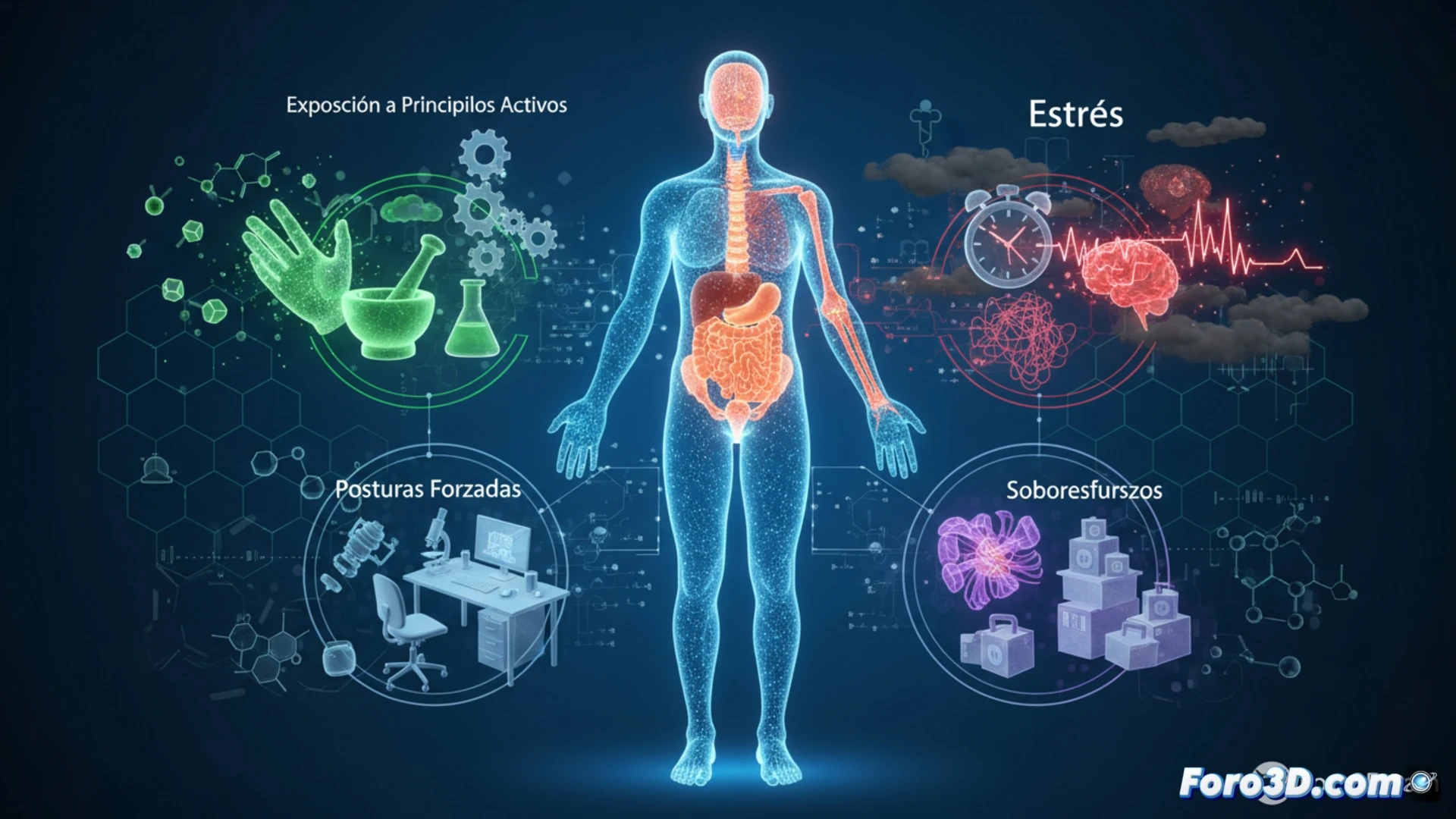
3D modeling of risks: spine, respiratory tract, and heat map 🧬
The infographic integrates 3D anatomical models that highlight the most affected body areas: the lumbar spine from static standing, the legs from venous insufficiency, and the respiratory tract from particle inhalation. Epidemiological incidence graphs are included, correlating years of profession with musculoskeletal injuries. A heat map on the virtual pharmacy floor plan shows areas with the highest concentration of pharmaceutical dust, allowing identification of critical exposure points. Additionally, comparative animations of correct versus incorrect postures during dispensing at the counter are simulated, emphasizing the ergonomics of the gesture.
Visual prevention for an invisible group 🛡️
The tool not only diagnoses but also educates. By visualizing work stress as a color gradient on the model's cranial area, the pharmacist understands the accumulated mental load. The simulation of falls due to tripping in the warehouse reinforces the need for order. This graphic representation transforms abstract data into tangible warnings, promoting active breaks, use of appropriate footwear, and local ventilation systems. Visual epidemiology thus becomes a direct ally of occupational safety.
How can a 3D infographic detail the route of dermal exposure to active ingredients during the daily handling of medications in community pharmacy, and what risk patterns does it reveal that are not evident in traditional safety protocols?
(PS: modeling health data is like going on a diet: you start with energy and end up quitting)