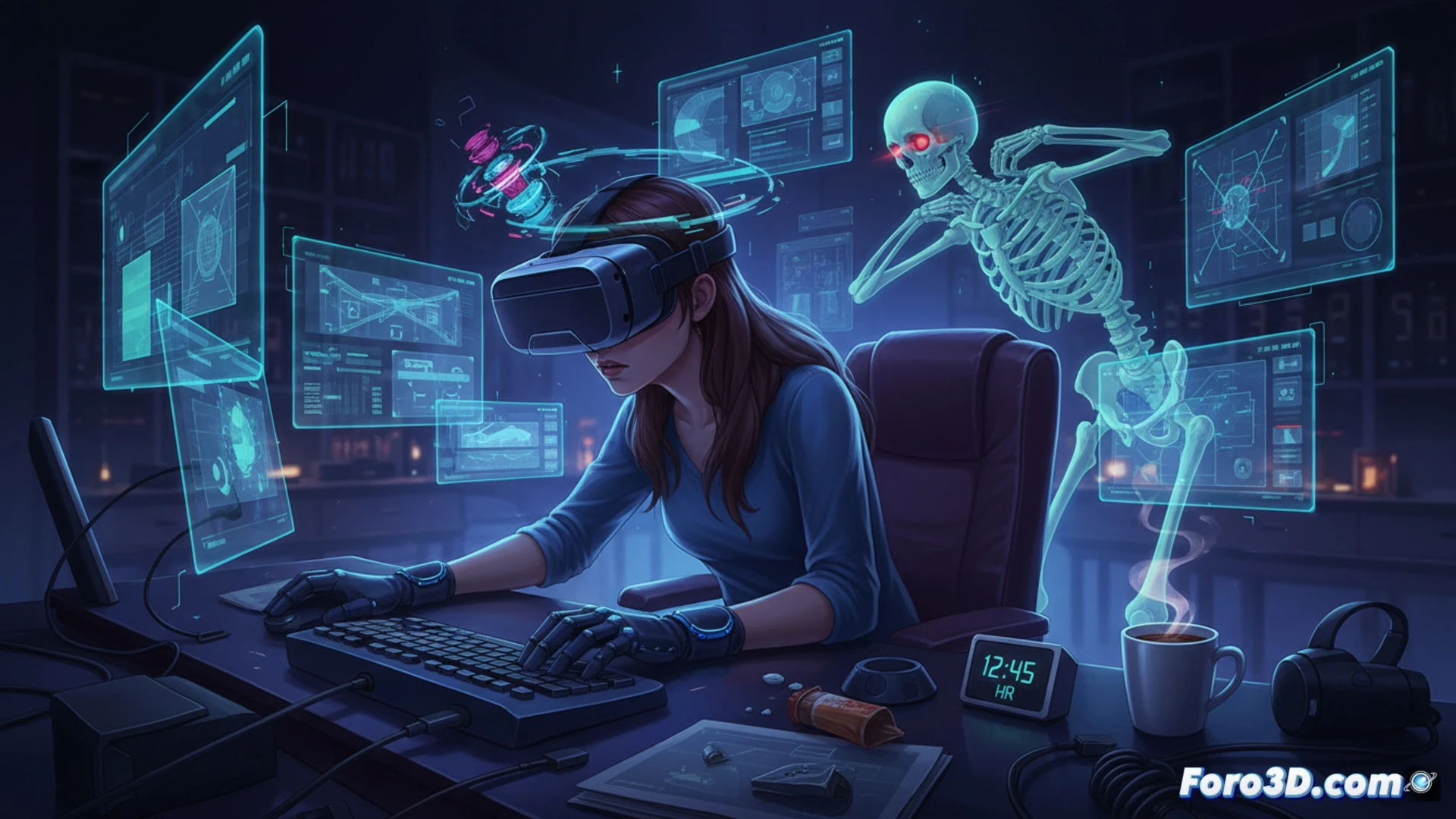
Virtual reality demands long immersive workdays from the designer, exposing them to intense visual fatigue from continuous use of VR headsets, which leads to cybersickness, motion sickness, and dry eyes. Added to this is a sedentary lifestyle and forced postures when working with controllers or keyboards in simulated environments, creating a cocktail of physical risks that are often underestimated in the industry.
Ergonomic analysis and sensory overload 🧠
Visual adaptation syndrome (cybersickness) affects 60% of designers after testing sessions lasting more than two hours. Prolonged exposure to VR lenses causes accommodation spasms and corneal dryness. At the same time, static work sitting or standing at development stations leads to musculoskeletal disorders in the cervical and lumbar regions. Stress from delivery deadlines and anxiety over interaction quality increase mental tension, while sudden movements during immersive tests raise the risk of falls and collisions with real furniture.
Preventive measures for the immersive developer 🛡️
Implementing the 20-20-20 rule (every 20 minutes, look at 20 feet for 20 seconds) reduces eye fatigue. Using anti-slip mats and defining the play area prevents accidents. Active breaks with cervical stretches every hour combat a sedentary lifestyle. Additionally, setting development schedules with 15-minute breaks for every 90 minutes of VR headset use protects mental health and prevents burnout.
What is the impact of long immersive VR workdays on the designer's postural health, and how can its long-term effects be mitigated?
(PS: and if you get dizzy with VR headsets, you can always blame the coffee)