Augmented reality is revolutionizing the industrial sector, but the AR designer faces specific occupational risks that are often underestimated. Prolonged exposure to screens and visors, combined with forced postures and creative pressure, causes eye strain, musculoskeletal disorders, and chronic stress. This article analyzes the ergonomic, visual, and psychosocial hazards of this professional profile, offering preventive guidelines based on current risk prevention regulations.
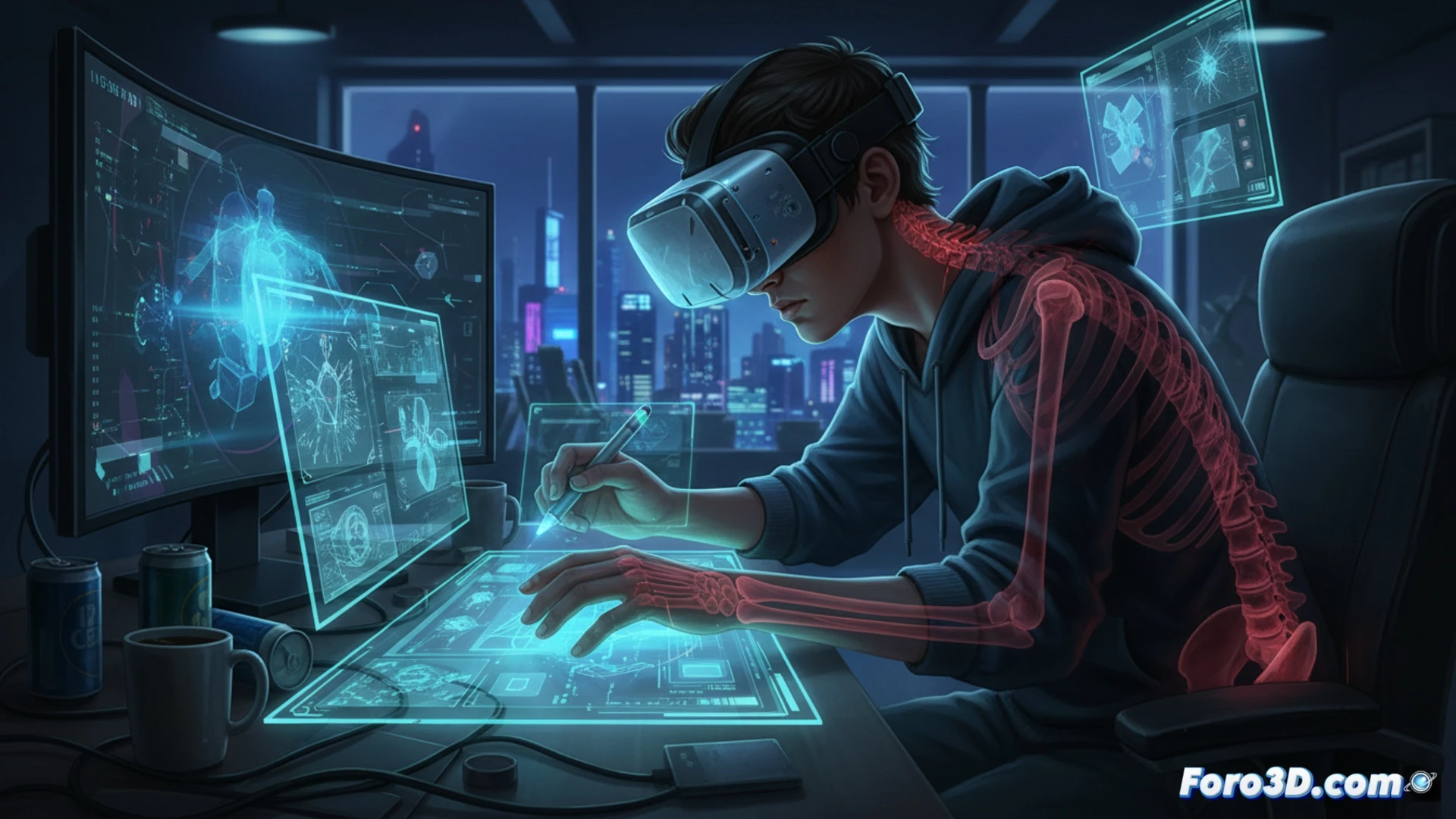
Eye strain and mental overexertion in AR environments 🧠
The main risk factor is eye strain, caused by vergence-accommodation conflict and the blue light from head-mounted displays. The designer spends hours adjusting holograms, which forces the ciliary muscle and can lead to headaches or blurred vision. Added to this is mental overexertion: the need to synchronize the real world with the virtual one demands extreme concentration. Furthermore, stress from tight deadlines and field tests outdoors expose the worker to falls due to uneven surfaces, sudden temperature changes, or UV radiation. To mitigate this, it is recommended to apply the 20-20-20 rule (every 20 minutes, look at something 20 feet away for 20 seconds), use blue light filters, and schedule breaks every hour.
Preventive ergonomics for the AR designer 🪑
A sedentary lifestyle and forced postures are another major challenge. The AR designer often works sitting or standing for long periods, with the neck bent and shoulders raised while handling devices. This causes upper back pain and wrist tendinitis. The solution involves setting up a dynamic workstation: a chair with lumbar support, an adjustable height desk, and a support for the AR visor to avoid carrying extra weight on the head. It is recommended to take active breaks every 45 minutes, stretching the cervical spine and hand extensors. Additionally, outdoors, using non-slip footwear and climate-protective clothing reduces the risk of falls and heatstroke.
What ergonomic and AR interface design configurations do experts recommend to mitigate chronic eye strain and forced postures during prolonged 3D modeling sessions?
(PS: AR applied to maintenance lets you see where the fault is... before the machine explodes.)