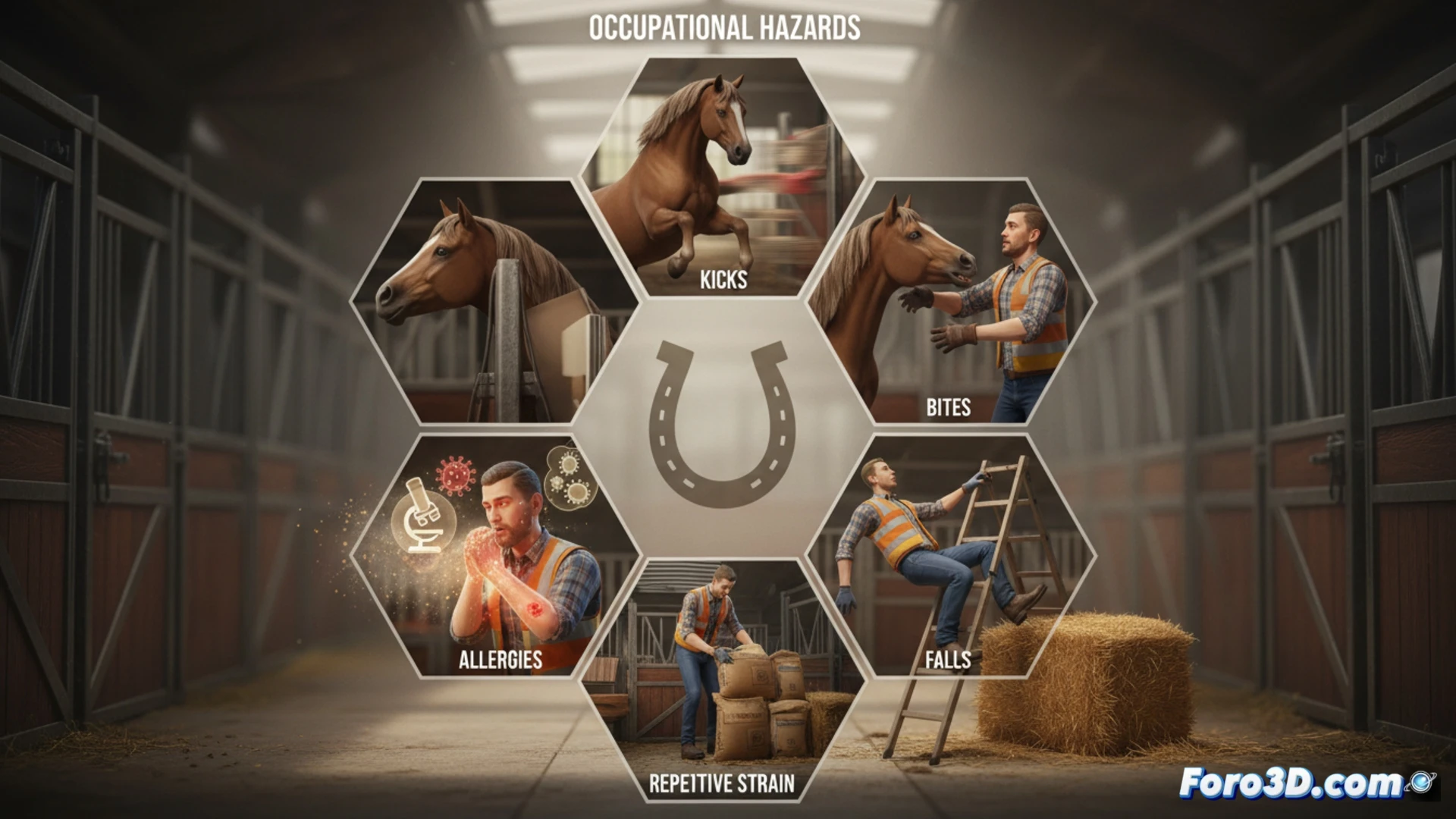
The profession of horse breeding combines the nobility of animal handling with a high exposure to injuries. Kicks, bites, and trampling are the most obvious risks, but not the only ones. Falls from heights, repetitive physical strain, and handling heavy machinery complete a complex work landscape. Added to this are allergies to hair and dust, along with zoonotic diseases such as leptospirosis. Representing these hazards through scientific visualization enables much more effective preventive training.
Anatomical modeling and impact simulation in equids 🐴
The key to the analysis lies in equine biomechanics. A 3D infographic can model the horse's anatomy to identify the most dangerous areas: the hindquarters, source of kicks with an impact force exceeding 500 kg, and the head, responsible for bites that can fracture bones. Simulating fall trajectories, whether from the animal's back or from unstable fences, allows calculating angles and impact points on the human body. Additionally, representing heat maps of exposure to diseases and allergens in the stable helps locate biological risk hotspots. These models, supported by statistical accident data, turn prevention into a visual and quantifiable tool.
Science as a shield in equine livestock farming 🛡️
Visualizing danger is not alarmism, but preventive intelligence. By representing in 3D how a horse reacts to a stimulus or how a fall affects the spine, the breeder understands the risk without having to experience it. This fusion of technology and traditional craft elevates workplace safety to a new standard. The infographic not only educates: it transforms the perception of danger into practical and measurable awareness, demonstrating that the best protection is applied knowledge.
How would you translate the kinematics of a horse kick into a 3D infographic to calculate the breeder's risk zones based on the animal's mass and speed
(PS: modeling manta rays is easy, the hard part is making them not look like floating plastic bags)