The profession of a butcher involves constant exposure to physical and biological hazards, making it one of the occupations with the highest accident rates in the food industry. Deep cuts from knives and meat saws represent the most immediate risk, followed by accidental punctures. However, epidemiological analysis reveals that musculoskeletal disorders from overexertion and infections from pathogens present in animal blood and tissues generate a high long-term healthcare cost.
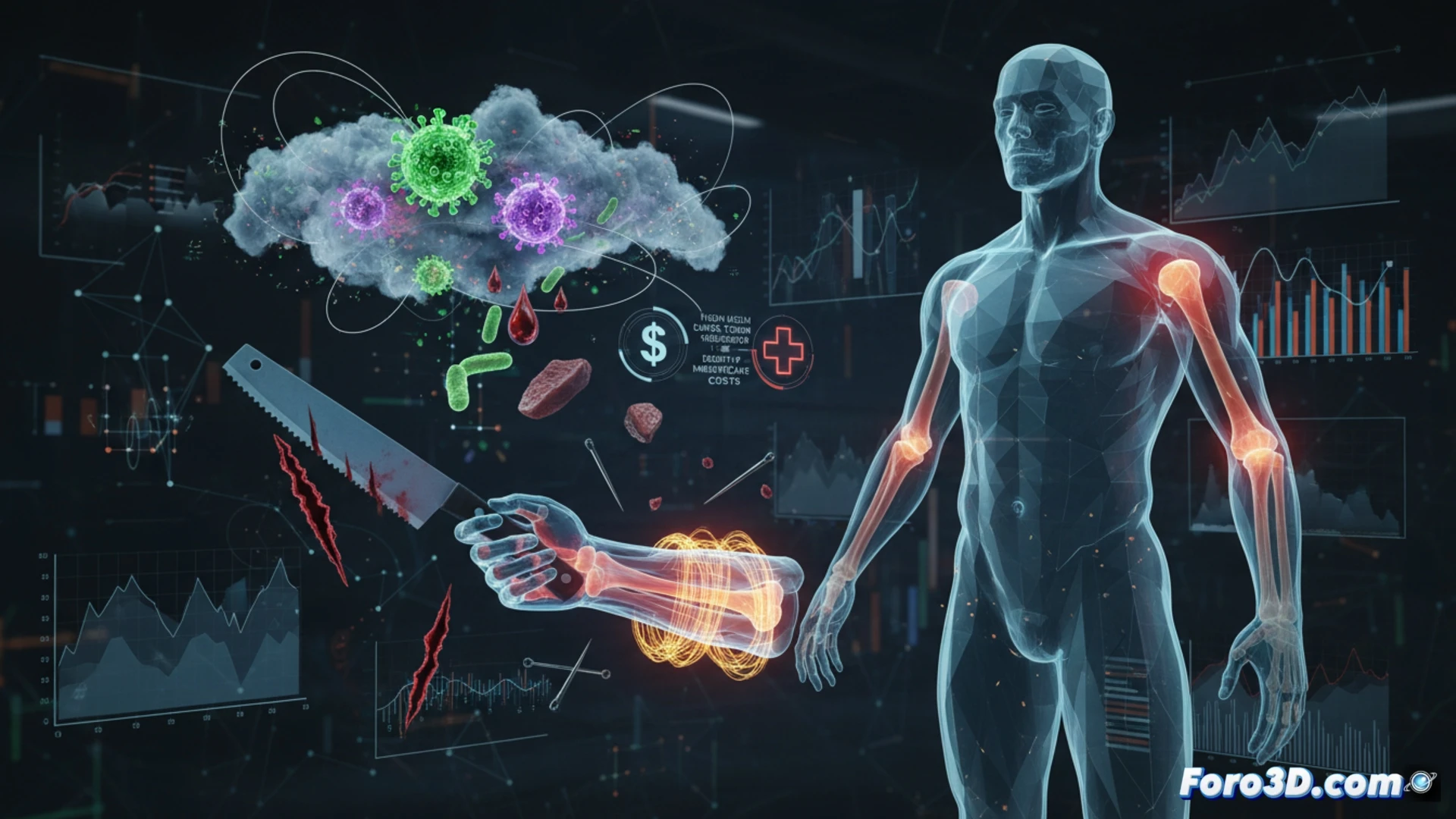
Incidence of Injuries and Occupational Diseases in Butchers 🥩
Our interactive 3D infographic models the real accident rate of the trade using heat maps that indicate the most affected body areas: hands and forearms concentrate 70% of cuts, while the lower back and shoulders register the highest incidence of overexertion disorders when handling carcasses weighing up to 100 kg. The integrated epidemiological data shows a concerning temporal evolution: exposure to low temperatures in cold storage rooms increases the risk of contractures by 30%. Additionally, the simulation of wet and greasy floors visualizes the probability of falls, a factor that, combined with ambient noise, reduces the worker's reaction capacity.
Visualized Prevention to Reduce Pathogen Exposure 🦠
The tool allows exploring how working conditions replicate a high biological risk environment. Animal blood and fluids can transmit pathogens such as hepatitis E or staphylococci, whose incidence is modeled in the infographic. By activating the simulation of a cold storage room, the user observes how extreme cold slows movements, increasing the likelihood of cuts. This visual approach not only educates about the dangers but also promotes the use of cut-resistant gloves and non-slip footwear as essential preventive measures to reduce accident rates in the sector.
Do you think 3D visualizations help raise awareness better than traditional graphics? 🤔