The work of a librarian, far from being a sedentary and safe occupation, exposes the worker to a unique combination of physical and environmental risks. From forced postures when reaching high shelves to inhaling paper dust and mold, each daily task represents a stress factor for the musculoskeletal and respiratory systems. At Foro3D we propose an interactive visual representation of these hazards to improve their prevention.
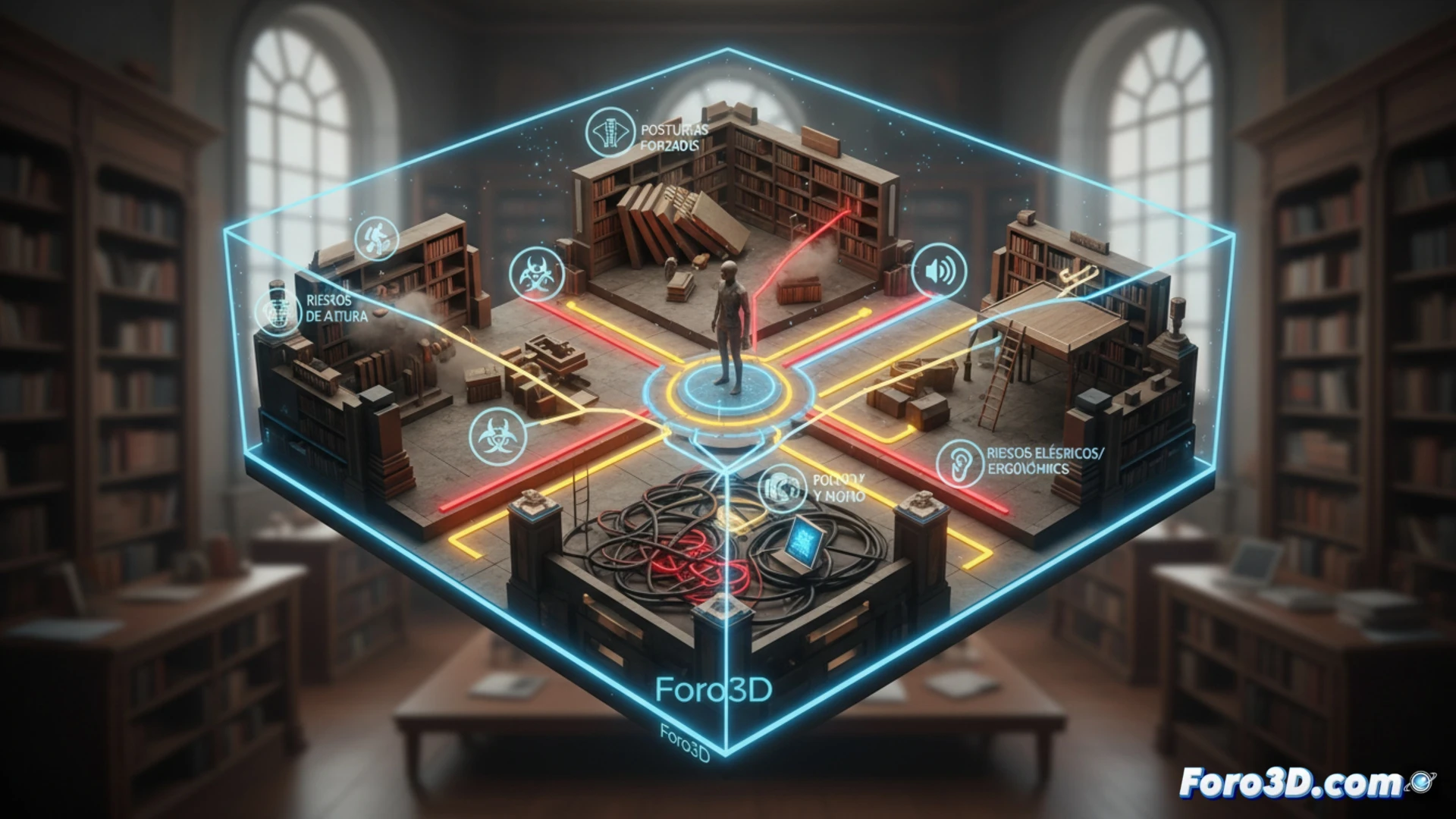
3D anatomical modeling of impact zones 🦴
Our interactive 3D infographic maps the risks onto a human anatomical model. The lower back and shoulder areas light up in red to indicate musculoskeletal disorders resulting from handling book loads and forced postures. A separate module visualizes the airways affected by exposure to dust and mold, including an allergy incidence chart. Additionally, a dynamic comparator contrasts this data with occupations such as warehouse worker or archive technician, showing the relative frequency of falls from ladders and paper cuts. The user can rotate the model and select each risk factor to display detailed statistics.
Visual prevention for a quiet profession 📚
The graphic representation of these risks not only informs but transforms the perception of the position. By seeing the heat map on the virtual body, the librarian immediately understands the need for active breaks, proper use of ladders, and the importance of ventilation in storage areas. This tool turns epidemiological data into an immersive educational experience, facilitating the implementation of real preventive measures in the daily life of the library.
As a librarian, when using a 3D occupational health map, which visual or ergonomic risk factor, not obvious to the naked eye, would be revealed as the most critical in your workday?
(PS: at Foro3D we know that the only epidemic affecting us is the lack of polygons)