The network administrator is a critical technical profile in the digital age, but their work in technical rooms and in front of screens entails physical and psychosocial risks that are often underestimated. From forced postures when cabling to stress from service outages, Law 31/1995 on Occupational Risk Prevention requires technology companies to conduct a thorough assessment of these hazards. Ignoring this obligation not only compromises the worker's health but also opens the door to sanctions for non-compliance with safety and digital compliance regulations.
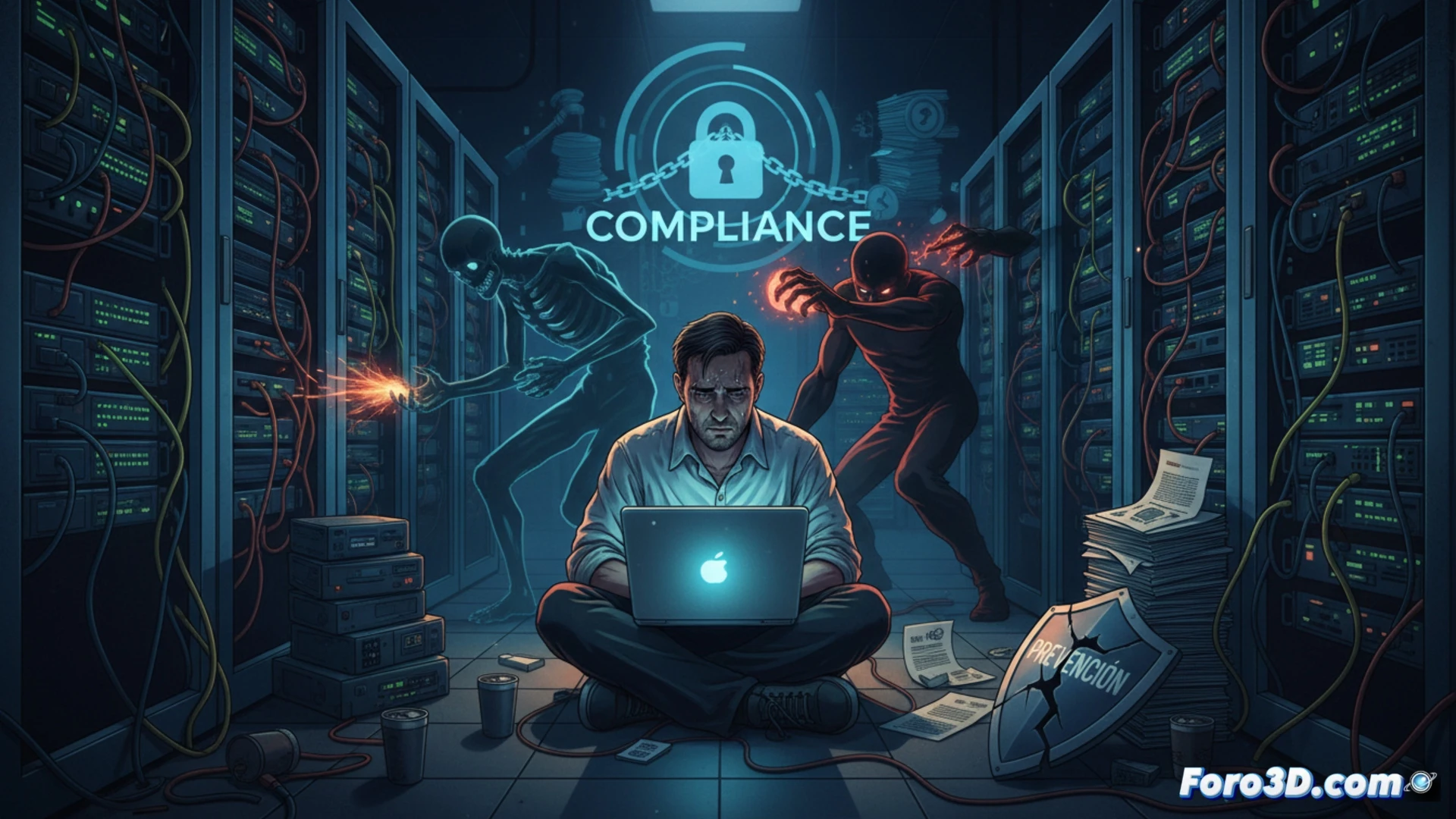
Technical risk assessment in server rooms ⚡
The physical environment of a data center or technical room presents electrical risks from contact with energized equipment, continuous noise that can exceed 85 dB, and extreme temperatures resulting from poor climate control. Added to this are forced postures during structured cabling, which generate musculoskeletal disorders, and the risk of falls at the same level due to loose cables or slippery surfaces. Regulations require a specific risk assessment for this occupation, documenting each condition and establishing corrective measures such as installing cable trays, using personal protective equipment (PPE), and rotating tasks to reduce exposure to noise and visual fatigue.
Stress and visual fatigue: the invisible risks of compliance 👁️
Beyond physical hazards, the network administrator suffers from high mental strain under the pressure of maintaining service continuity. Network outages or cyberattacks generate acute stress that, if not managed, leads to chronic anxiety. Visual fatigue from long hours in front of monitors is another critical factor. To comply with digital compliance, companies must integrate psychosocial risk assessments, offer active breaks, and ensure adequate lighting in control rooms. Designing simulated 3D environments allows visualizing these conditions and proposing ergonomic solutions before damage occurs.
What are the legal obligations of the network administrator regarding digital compliance, and what occupational risks does non-compliance entail in the management of sensitive data?
(PS: fines of €79,380 are like failed renders: they hurt more the longer you've been at it)