The work of the artistic painter, although creative, entails a silent exposure to physical and chemical risks. Forced postures maintained for hours, combined with the handling of solvents and toxic pigments, lead to pathologies such as lower back pain, chronic dermatitis, and severe eye strain. Traditional prevention often relies on generic recommendations, ignoring the unique biomechanics of each professional.
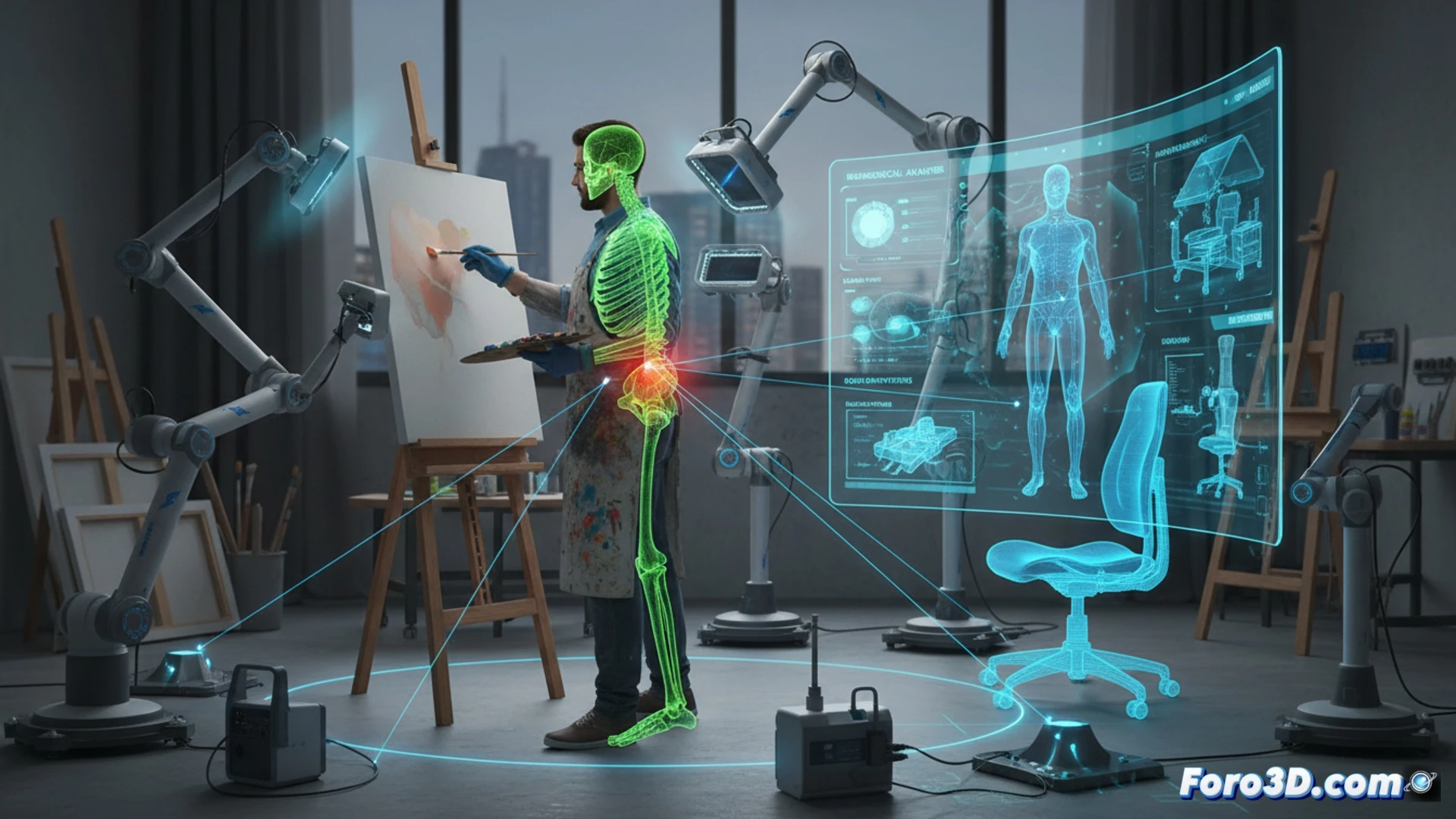
Digital anthropometry for workstation adaptation 🎨
3D body scanning allows obtaining an exact digital twin of the painter in their most critical working postures: standing in front of the easel or sitting on unsuitable surfaces. By overlaying this anthropometric model with the virtual work environment, ergonomists can identify dangerous joint angles and points of overexertion in shoulders and wrists. The resulting data guides the design of furniture adjustable to their actual measurements, such as height-adjustable stools or tilting easels, reducing muscle tension and the risk of repetitive strain injuries.
Beyond posture: data integration 🖌️
The technology not only analyzes statics; motion capture during the creative process reveals micro-gestures that generate cumulative fatigue. Combining this data with pressure sensors on seats or brush handles allows for customizing tools and workflows. The result is an environment that adapts to the artist's body, minimizing overexertion and contact allergies, transforming risk prevention into a proactive, individual-centered strategy.
How can 3D body scanning quantify the repetitive postural deviation of the artistic painter to design lightweight exoskeletons that reduce muscle fatigue without interfering with their creative gesture?
(PS: Scanning your body for an avatar is like taking a 3D selfie, but without a selfie stick.)