The craft of furniture restoration combines artistic sensitivity with technical work, but also exposes the professional to multiple hazards. From handling toxic varnishes and strippers to old wood dust containing lead, each phase of the process requires specific safety measures. This article analyzes the occupational risks in the sector and proposes protection protocols, integrating the use of 3D technologies as a tool to reduce exposure and improve the documentation of pieces.
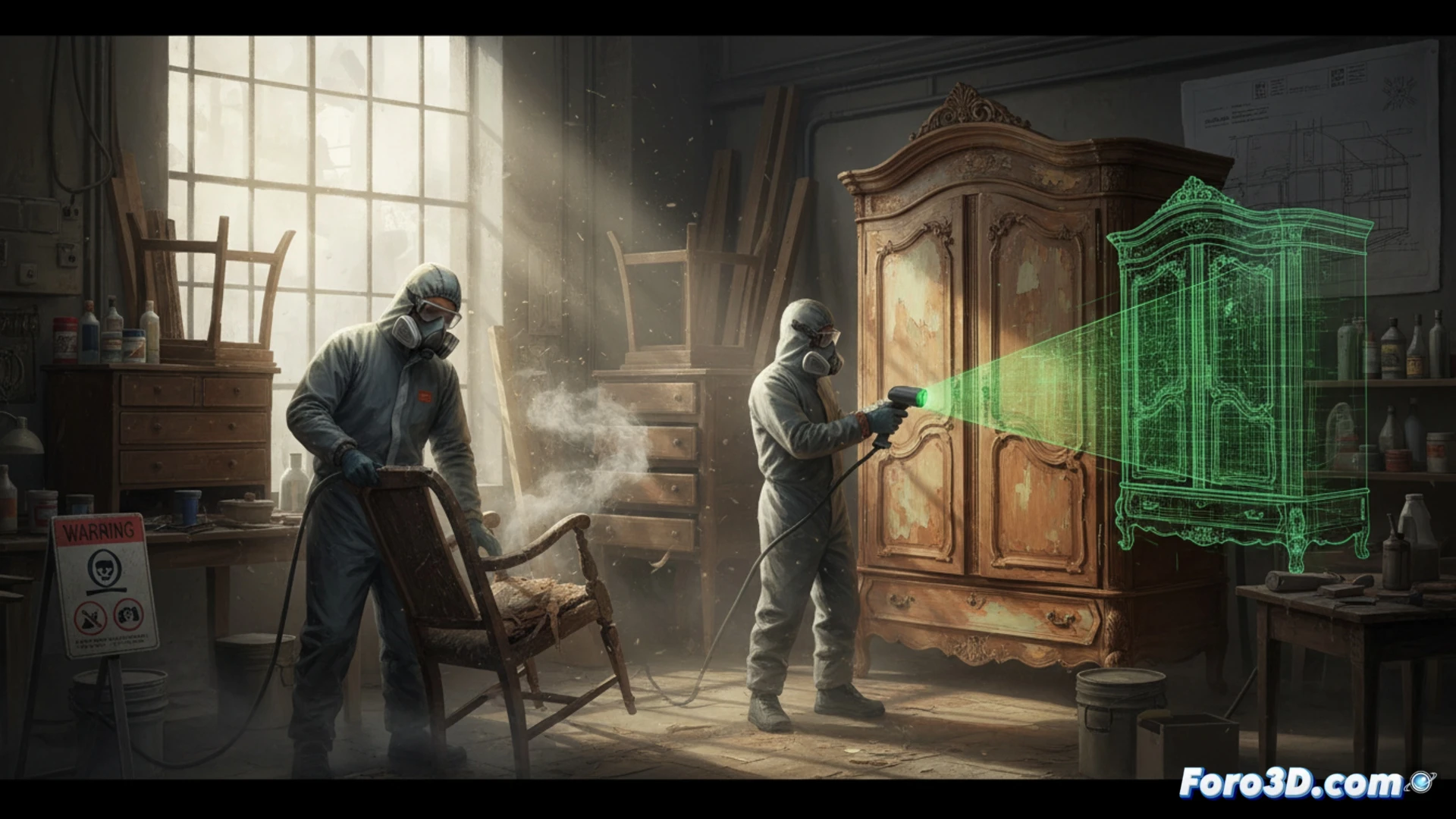
Risk analysis and safety protocols in conservation 🛡️
The main risks are grouped into four categories: chemical, physical, ergonomic, and mechanical. Exposure to solvents and waxes causes vapor poisoning and dermatitis; old wood dust may contain lead or toxic preservatives, requiring the use of P3 filter masks and localized extraction. Hand and power tools cause cuts and particle projection, while heat guns can cause burns. Forced postures and overexertion from loads lead to musculoskeletal injuries. To mitigate these hazards, forced ventilation, personal protective equipment (goggles, cut-resistant gloves, non-slip footwear), and decontamination protocols before eating are recommended.
3D technology as an ally against occupational exposure 🔧
Three-dimensional scanning allows documenting the condition of furniture without direct contact, reducing the need to handle toxic or fragile pieces. By generating digital models, the restorer can plan interventions, measure damage, and simulate treatments in a virtual environment, minimizing time spent around harmful vapors or dust. Additionally, 3D printing facilitates the creation of replicas of missing elements, avoiding repetitive cuts with hand tools. Integrating these technologies not only optimizes conservation but also protects the professional's health, aligning with the principles of prevention and sustainability of the craft.
How can 3D scanning minimize the physical and chemical risks for the restorer by documenting intricate details without needing direct contact with contaminated or fragile pieces?
(PS: Restoring virtually is like being a surgeon, but without blood stains.)