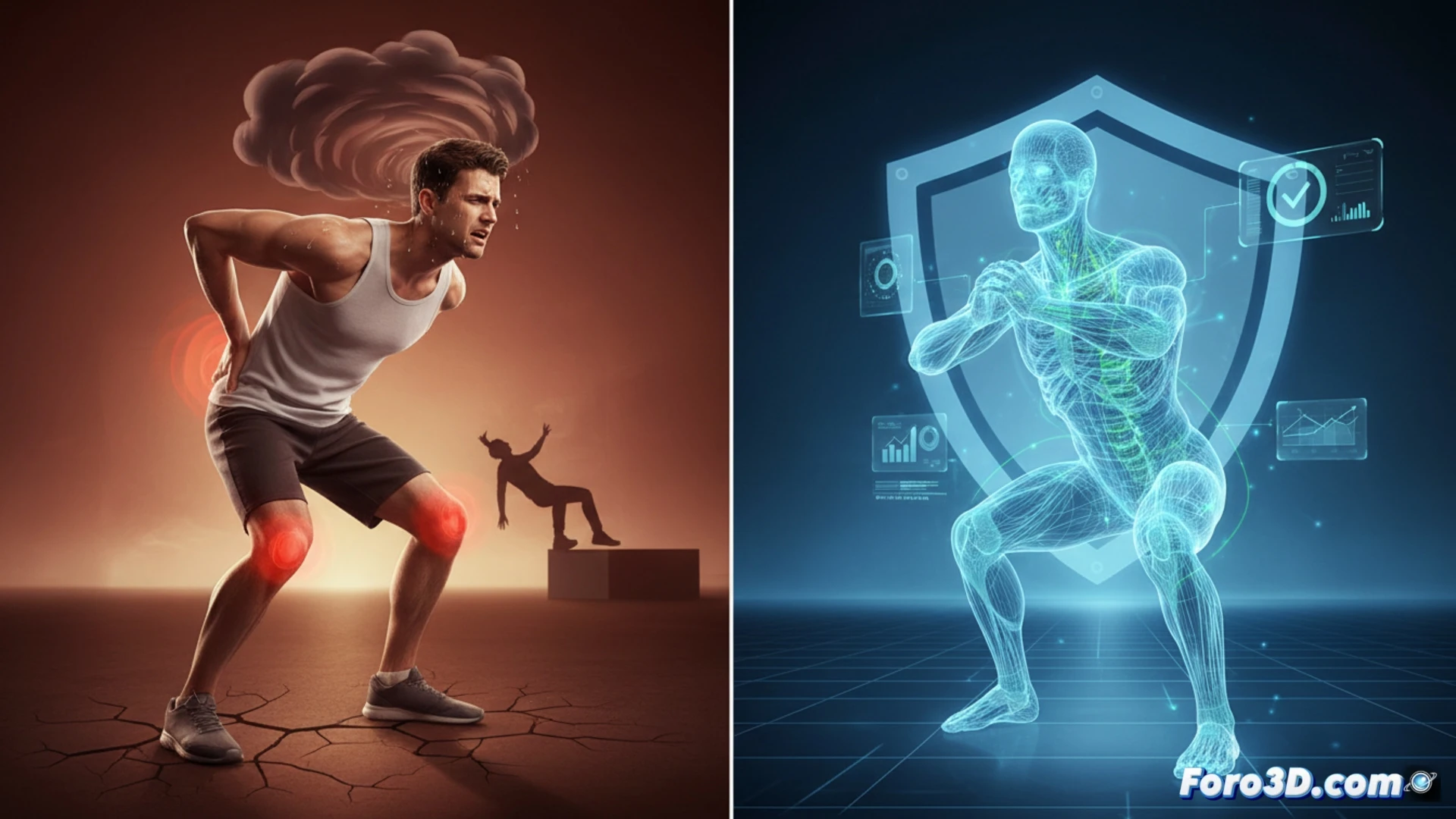
The physical trainer faces daily risks that go beyond routine planning. Overexertion when demonstrating exercises, musculoskeletal injuries such as strains or tendinitis, forced postures, stress from goals, and fatigue from long working hours are constant. Added to this are falls, exposure to noise in gyms, and risk of contagion. 3D technology emerges as a key solution to analyze and mitigate these dangers through virtual biomechanics.
Biomechanical simulation and motion capture for prevention 🏋️
Motion capture (mocap) and 3D modeling allow for the creation of digital avatars of the physical trainer. By simulating routines in a virtual environment, it is possible to identify dangerous joint angles and patterns of muscle overload that lead to tendinitis or strains. These tools calculate tension in real time, adjusting forced postures before executing them in the real world. Additionally, scenarios of fatigue or auditory distraction can be recreated to assess fall risks, offering precise data to redesign training sessions without exposing the professional to unnecessary injuries.
Towards safer work with digital twins 🛡️
The integration of digital twins into the physical trainer's routine not only protects their health but also optimizes their performance. By visualizing in 3D the accumulated stress from long working hours or the impact of environmental noise, rest periods and task rotations can be planned. This technology turns prevention into an interactive and measurable process, reducing the incidence of chronic injuries and improving the professional's quality of life. The future of safe training lies in virtual simulation before physical repetition.
How can 3D simulation of biomechanical movements replace the physical demonstration of high-impact exercises to prevent overexertion injuries in the physical trainer
(PS: player tracking is like following your cat around the house: lots of information and little control)