Traditional goldsmithing exposes professionals to a lethal combination of hazards: heavy metals such as lead, cadmium, and nickel, corrosive acids, toxic fumes, and extreme eye strain. However, integrating digital tools like 3D CAD and lost-wax printing allows for a redesigned workflow. This article analyzes how digitalization minimizes the physical and chemical risks of the craft, transforming a traditional workshop into a safer environment without sacrificing precision.
Chemical toxicity and eye strain: the cost of manual precision 🛡️
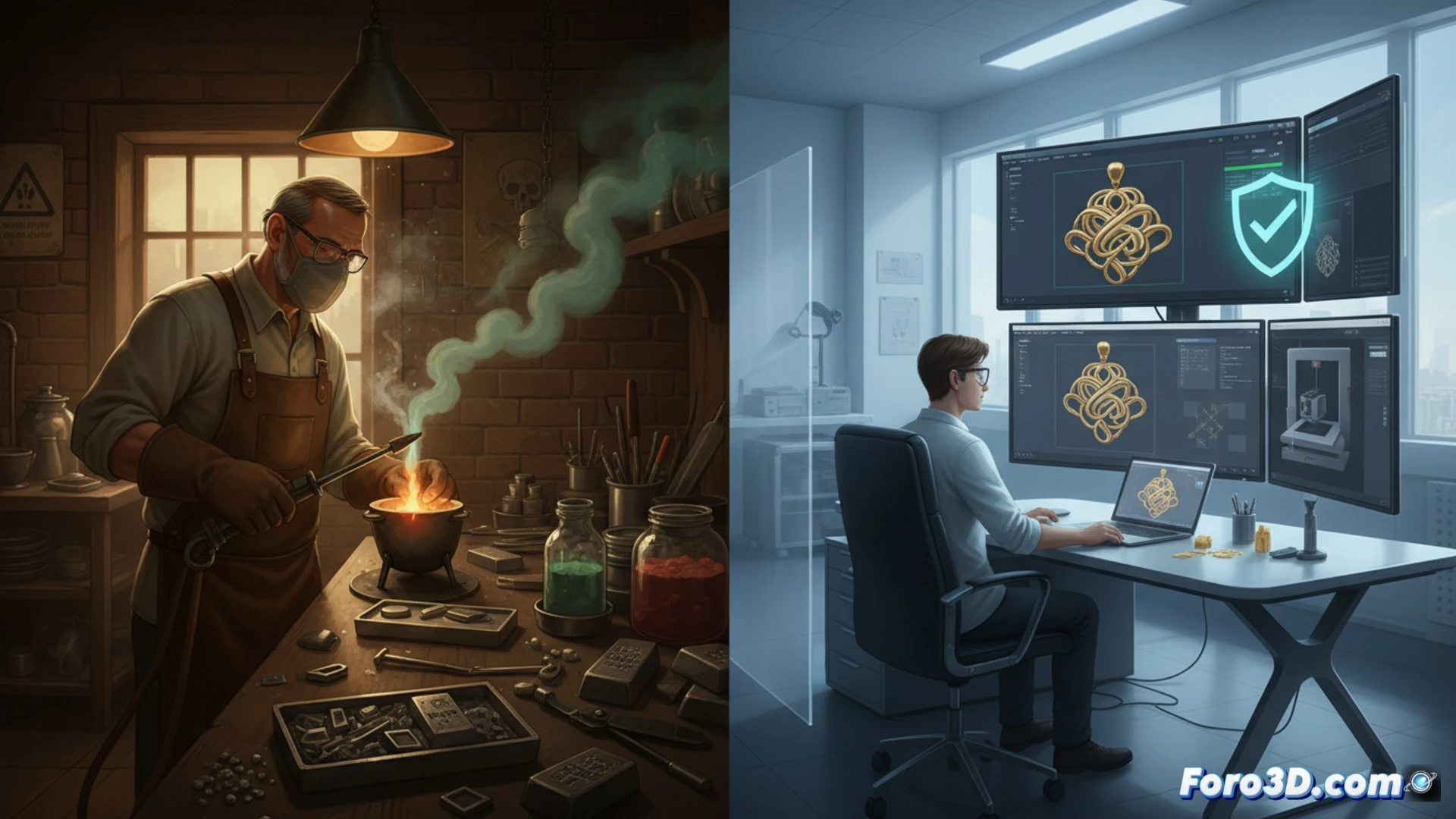
Direct handling of heavy metals and acids during polishing, soldering, and casting causes vapor poisoning and contact dermatitis. Added to this is eye strain from hours of work with magnifying glasses and fine tools, worsened by forced hand and neck postures. The solution lies in moving the design phase to a digital environment. By modeling pieces in 3D CAD software, the goldsmith drastically reduces the time exposed to toxic substances, as tests and adjustments are done virtually. Process simulation allows predicting deformations or stress points without handling molten metal, eliminating the risk of torch burns and particle projection.
Towards a hybrid workshop: safety without sacrificing craftsmanship 🔧
The future of the craft does not lie in abandoning manual techniques, but in complementing them with additive manufacturing. 3D printing of wax models for lost-wax casting eliminates cuts with fine tools and forced postures during carving. This hybrid workflow allows the goldsmith to concentrate physical effort only on the final finish, reducing exposure to heavy metals and acids. Digitalization does not replace human skill; it protects it, extending the professional's working life and minimizing the chronic risks of the profession.
How can 3D modeling replace traditional processes like polishing or manual finishing to eliminate exposure to toxic heavy metal dust in jewelry making?
(PS: 3D jewelry allows you to wear pieces that don't exist... until you print them.)