The practice of neurology exposes the specialist to a unique combination of physical and psychological risks. Chronic stress derived from diagnosing neurodegenerative diseases, forced postures during neurological examinations, exposure to biological agents during lumbar puncture, and aggression from patients with cognitive impairment create a complex risk profile. 3D biomedicine offers tangible tools to mitigate each of these factors.
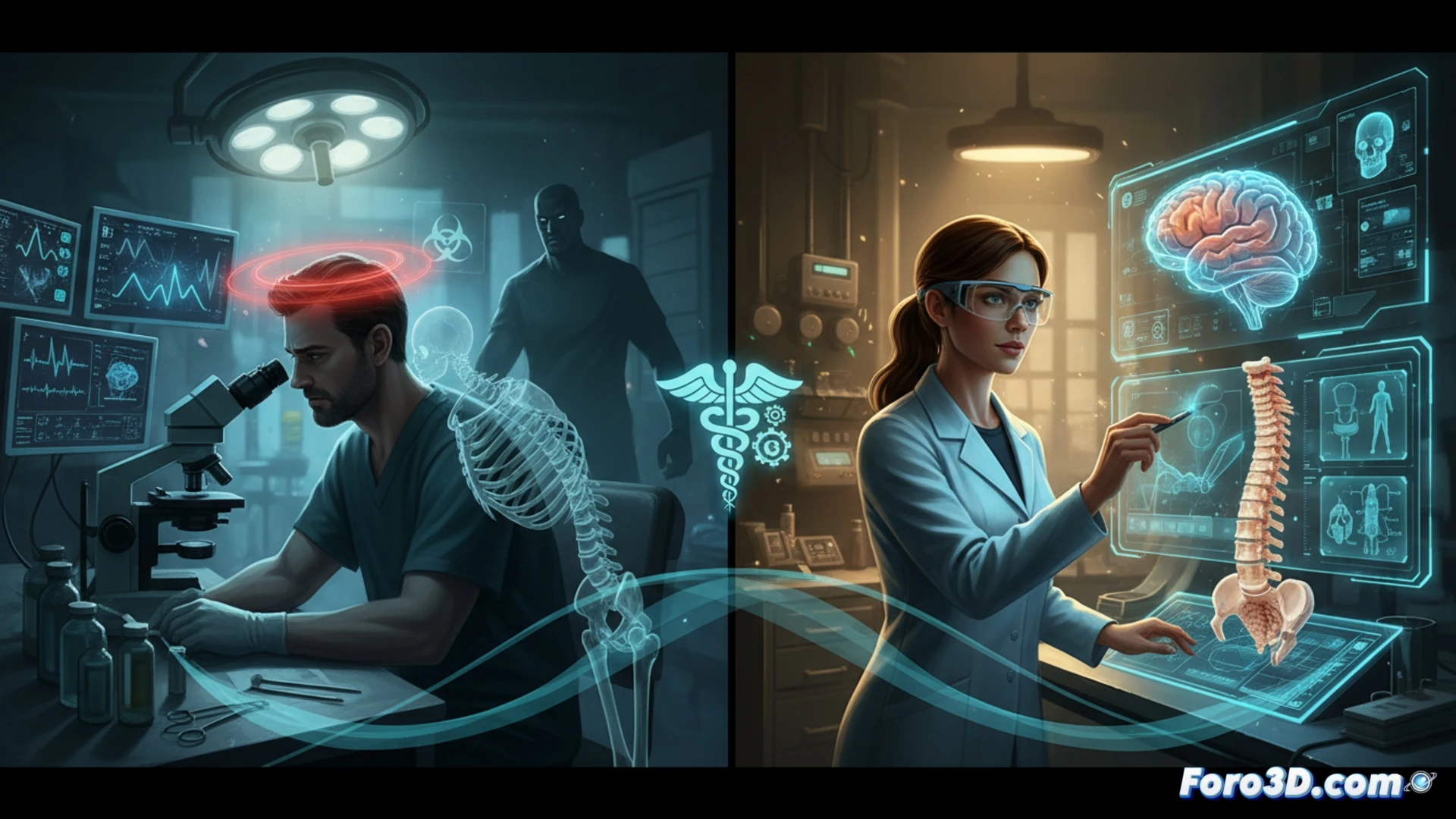
3D Simulation and Digital Twins for Reducing Biological and Ergonomic Risks 🧠
3D printing of high-fidelity anatomical models allows practicing lumbar punctures in a fluid-free environment, eliminating the risk of infection from HIV or meningitis. Furthermore, these models can be designed with pathological variations for training under realistic conditions. In parallel, virtual simulation using patient digital twins allows the neurologist to practice examination maneuvers and invasive procedures, optimizing the specialist's posture and reducing cervical and lumbar strain. This preparation decreases real exposure time to pathogens and improves ergonomics.
Empathetic Training and Stress Management in the Face of Cognitive Complexity 🛡️
Managing patients with dementia or behavioral disorders causes mental wear and tear and a risk of aggression that 3D technology can address. Immersive virtual reality environments, based on 3D models, allow the neurologist to simulate scenarios of agitation or refusal of treatment. This repetitive training reduces the physician's anxiety, improves their verbal de-escalation skills, and decreases the likelihood of violent incidents. Thus, 3D biomedicine protects not only the body but also the mental health of the professional.
Can 3D printing of high-fidelity anatomical models and neurological pathology simulators reduce chronic stress and psychological risks for the neurologist during surgical planning and diagnosis?
(PS: and if the printed organ doesn't beat, you can always add a little motor... just kidding!)