The figure of the personal trainer has grown exponentially in the last decade, but their work hides a paradox: while caring for their clients' health, their own body faces overexertion, tendinitis, hernias, and chronic fatigue. 3D technology, through motion capture and biomechanical simulation, offers a revolutionary way to analyze these risks in real-time and redesign safer work routines.
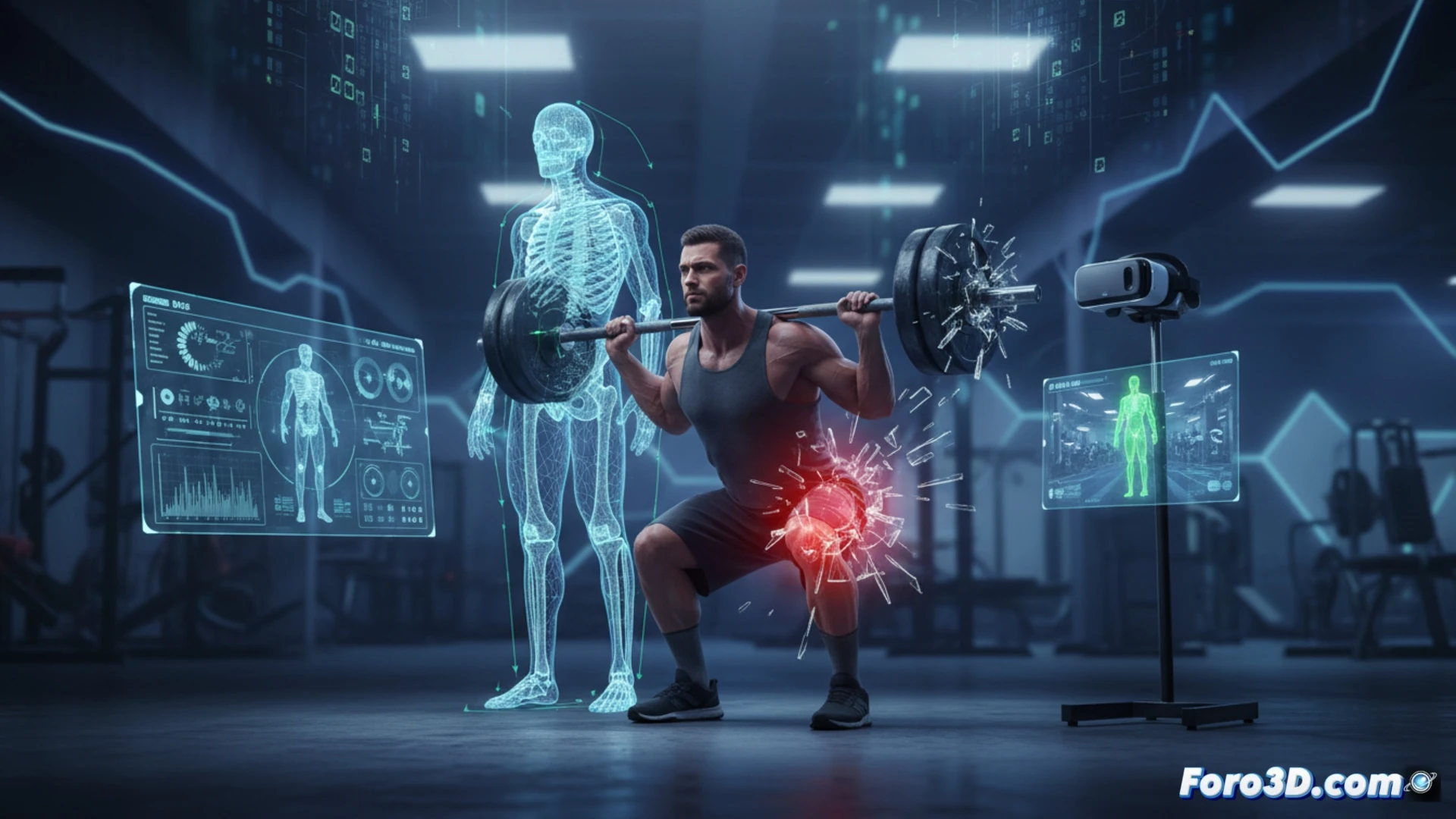
Virtual ergonomic analysis through motion capture 🏋️
Motion capture (mocap) allows recording every gesture of the trainer during exercise demonstrations. By modeling their skeleton in a 3D environment, dangerous joint angles and asymmetric loads on the lumbar spine are identified. For example, when simulating a barbell squat to correct a student, the software detects excessive pelvic rotation that, repeated 50 times a day, leads to a herniated disc. Additionally, inertial sensors measure accumulated muscle fatigue in the shoulders and wrists, alerting to the risk of rotator cuff tears or tendinitis. This technology allows adjusting the trainer's technique before the injury appears.
Routine simulation to mitigate stress and noise 🔊
The ambient noise of a gym (loud music, machines, voices) often exceeds 85 decibels, increasing auditory fatigue and stress for the trainer. Through 3D acoustic simulations, training zones can be designed with virtual barriers to reduce sound exposure. Likewise, optimized scheduling with digital twins allows distributing high-impact physical sessions into separate blocks, avoiding the accumulation of forced postures and mental exhaustion from client goals. 3D technology not only prevents injuries but also humanizes the workload of these professionals.
Can a 3D biomechanics system turn any personal trainer into a professional free from legal risks and injuries for their clients?
(PS: 3D VAR: now with replays from angles that didn't even exist)