Marine biology is a fascinating discipline, but it carries specific risks that often go unnoticed in academic training. From seasickness on deck to decompression injuries during scientific diving, as well as handling venomous fauna or exposure to laboratory reagents, the marine professional faces a complex work environment. To address this reality, we propose the development of an interactive 3D infographic that visualizes these hazards, combining anatomical models, physical simulations, and statistical data to improve awareness and safety in marine research institutes.
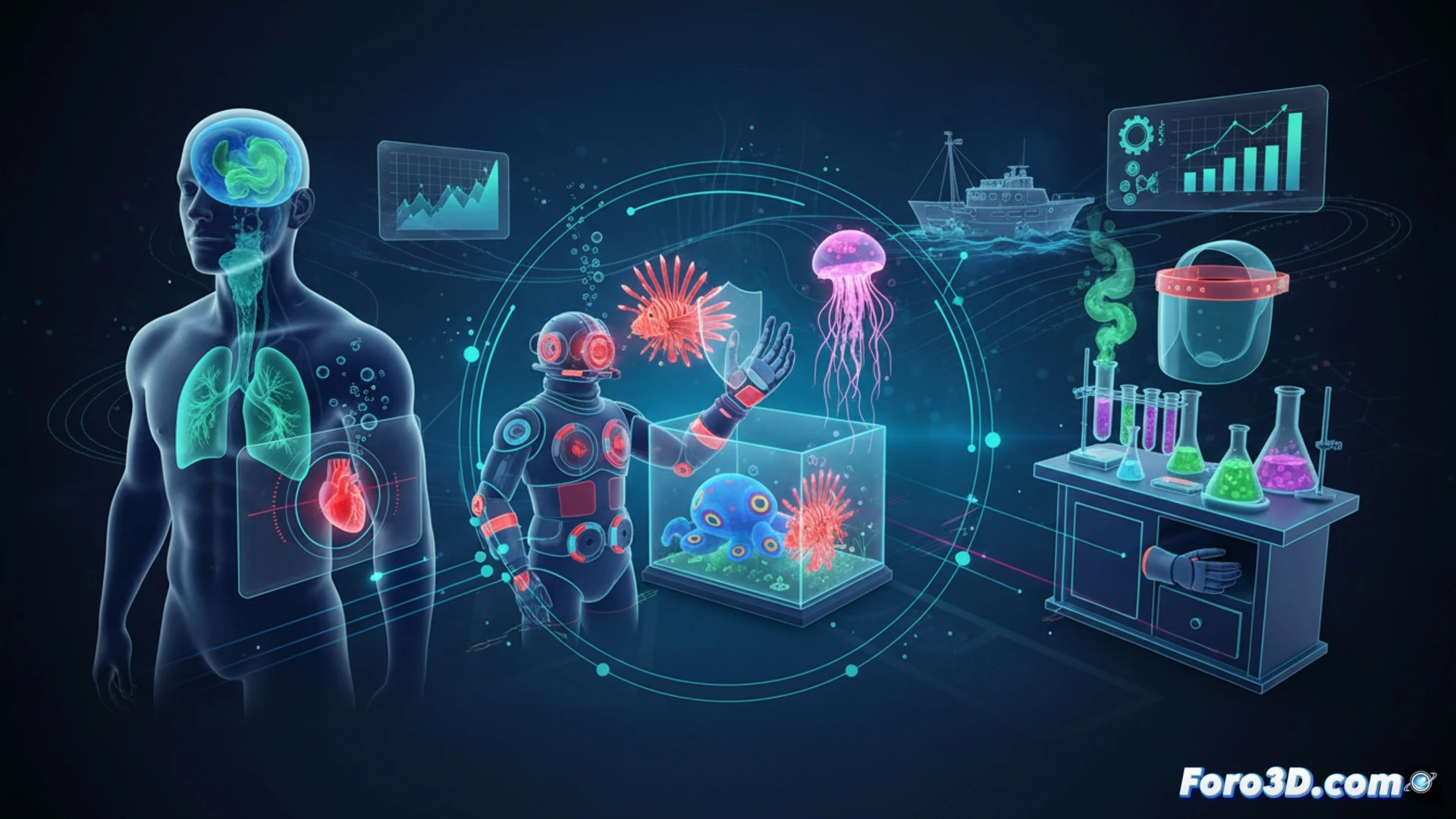
3D modeling of risk scenarios and accident simulation 🧊
The infographic would be structured into three main modules. The first would recreate a vessel with high-risk areas for falling into the water, using a tilted deck model and animated waves to simulate rolling. The second module would focus on scientific diving: a volumetric ascent simulation would show the formation of nitrogen bubbles in tissues, representing a decompression accident, along with a depth and bottom time indicator. The third module would present anatomical models of dangerous species (such as the stonefish or box jellyfish) with transparency layers to reveal venom glands and injection mechanisms. Each element would include statistical data on accident incidence and recommended prevention protocols.
Visualization as a training and cultural change tool 🧬
Beyond a mere catalog of dangers, this 3D representation seeks to transform the perception of risk in the scientific field. By immersively visualizing the consequences of poor practices (such as a rapid ascent or handling without gloves), the professional internalizes safety measures more effectively than with traditional manuals. The tool would allow research centers and maritime universities to conduct virtual drills, evaluate emergency protocols, and foster a prevention culture based on visual data, thereby reducing accident rates in a sector essential to science.
As a 3D visualization professional, what physical simulation and fluid modeling techniques do you consider most effective for realistically representing the risks of hypothermia, decompression, or encounters with dangerous fauna in a 3D infographic aimed at occupational prevention for marine biologists?
(PS: fluid physics to simulate the ocean is like the sea: unpredictable and you always run out of RAM)